Story code: ST-000164
Part 4: The Weight of the Silence
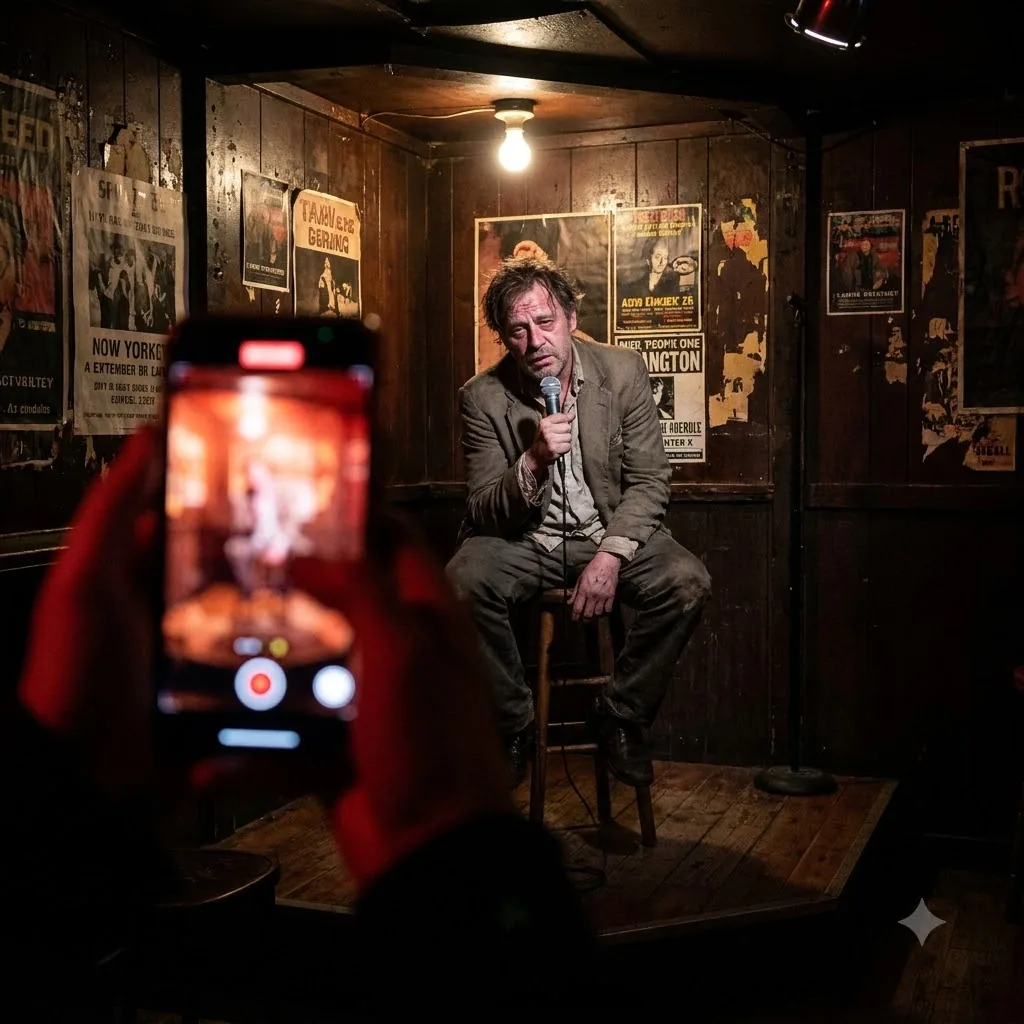
Arthur held the smartphone steady, his arm locked in place. The device felt entirely weightless compared to the staggering, suffocating mass of the secret he had dragged behind him for three long years. He waited for the teenager to reach out and take it, but the boy remained frozen. The kid’s hands were plastered flat against the torn vinyl of the booth, his knuckles bone-white, his fingers trembling violently. Behind the smudged lenses of his glasses, the teenager’s eyes were wide, glistening, and completely stripped of the digital armor that had made him so vicious just minutes ago.
He was no longer a predator hunting for a viral moment. He was just a terrified kid, suddenly and violently forced to look at the bleeding, open wound of a shattered father.
“Take it,” Arthur said, his voice flat, drained of all the frantic adrenaline that had spiked his heart rate.
The teenager shook his head in a frantic, jerky motion. He pressed himself harder into the booth, then scrambled frantically along the vinyl seat, putting as much physical distance as possible between himself and Arthur. When he reached the edge of the table, the boy stumbled to his feet, nearly tripping over the heavy wooden leg of a neighboring chair. He didn’t look at the phone. He didn’t look at the glowing screen containing his audience. He turned and bolted for the narrow staircase at the back of the basement. His panicked footsteps echoed wildly against the hollow floorboards, a frantic staccato that ended only when the heavy metal exit door at the top of the stairs slammed shut, cutting off his retreat.
Arthur stood entirely alone in the aisle. He looked down at the bright screen one last time. The relentless, cascading scroll of emojis and hateful text had died. In its place were scattered, hesitant comments, moving at a glacial, staggered pace. A few anonymous users typed out apologies. Others posted broken heart emojis. The frenzied digital mob had dissolved. They were no longer a unified, bloodthirsty swarm. They were just individuals sitting alone in their bedrooms, suddenly realizing there was a real, devastated human being breathing on the other side of their glass screens.
Arthur did not care about their delayed apologies. He did not want their pity, and he no longer feared their wrath. The terrible illusion that their collective judgment held any actual power over his soul had finally, irreparably shattered.
He crouched down, his knees popping, moving with the stiff, aching slowness of a man who had suddenly aged a decade in ten minutes. He set the smartphone gently onto the sticky, beer-soaked linoleum, leaving the cracked screen glowing and the camera pointed aimlessly up at the stained ceiling tiles.
The dive bar was dead silent. The hostile, electric energy that had suffocated the room only moments ago had completely evaporated. The woman in the back row, who had venomously called him a creep, was now staring blankly at the table, her hands folded tightly in her lap. The man in the trucker hat was suddenly deeply interested in peeling the damp label off his beer bottle. Carl, the burly bartender, stood frozen in the center of the aisle, his heavy arms hanging uselessly at his sides.
“Artie,” Carl murmured, the rough, commanding edge completely gone from his voice. “I didn’t… man, I didn’t know.”
“No one did, Carl,” Arthur replied softly, not meeting the bartender’s eyes. “It doesn’t matter now.”
Arthur turned his back on the silent audience and stepped up onto the low, creaking stage. He walked past the microphone, leaving it abandoned on the scuffed floorboards, and approached the wooden stool where his battered leather satchel rested. He slowly unzipped the bag and dropped his joke notebook inside-the pathetic little book filled with hollow observations and safe, meaningless bits he had frantically written to avoid facing the agonizing reality of his empty house. He would not need it anymore. He was never going to hide on dingy stages again, begging strangers for scraps of laughter to fill the gaping, unfixable hole David had left behind.
He zipped the bag shut and slung the canvas strap over his shoulder. The familiar weight of it settled against his collarbone.
Arthur walked off the stage for the final time. He moved slowly down the center aisle, his scuffed shoes peeling off the sticky floor with soft, rhythmic tears. Nobody spoke as he passed the scattered tables. Nobody reached into their pockets for their phones to record his exit. The oppressive, suffocating gaze of the public had finally let him go.
He pushed open the heavy wooden door at the front of the club and stepped out into the damp, cool air of the Tuesday night. A light, misty drizzle was falling, slicking the cracked pavement and turning the streetlights into blurred, glowing halos of orange and yellow. The city was quiet, the distant hum of highway traffic reduced to a gentle, rushing whisper.
Arthur pulled the collar of his cheap jacket up against the chill. He inhaled deeply, filling his lungs with the sharp scent of wet asphalt and exhaust, holding the breath for a long moment before letting it out in a thick white plume of fog. For the first time in three years, he wasn’t checking the shadows for cameras. He wasn’t bracing his nervous system for the next wave of internet outrage. He had lost his career, his reputation, and his only son, but as he began the long, quiet walk down the empty sidewalk, Arthur finally felt the crushing weight of the performance lift from his shoulders. He was utterly alone in the dark, but the silence was no longer a threat. It was just quiet.