Story code: ST-000166
Part 2: The Decorum of Greed
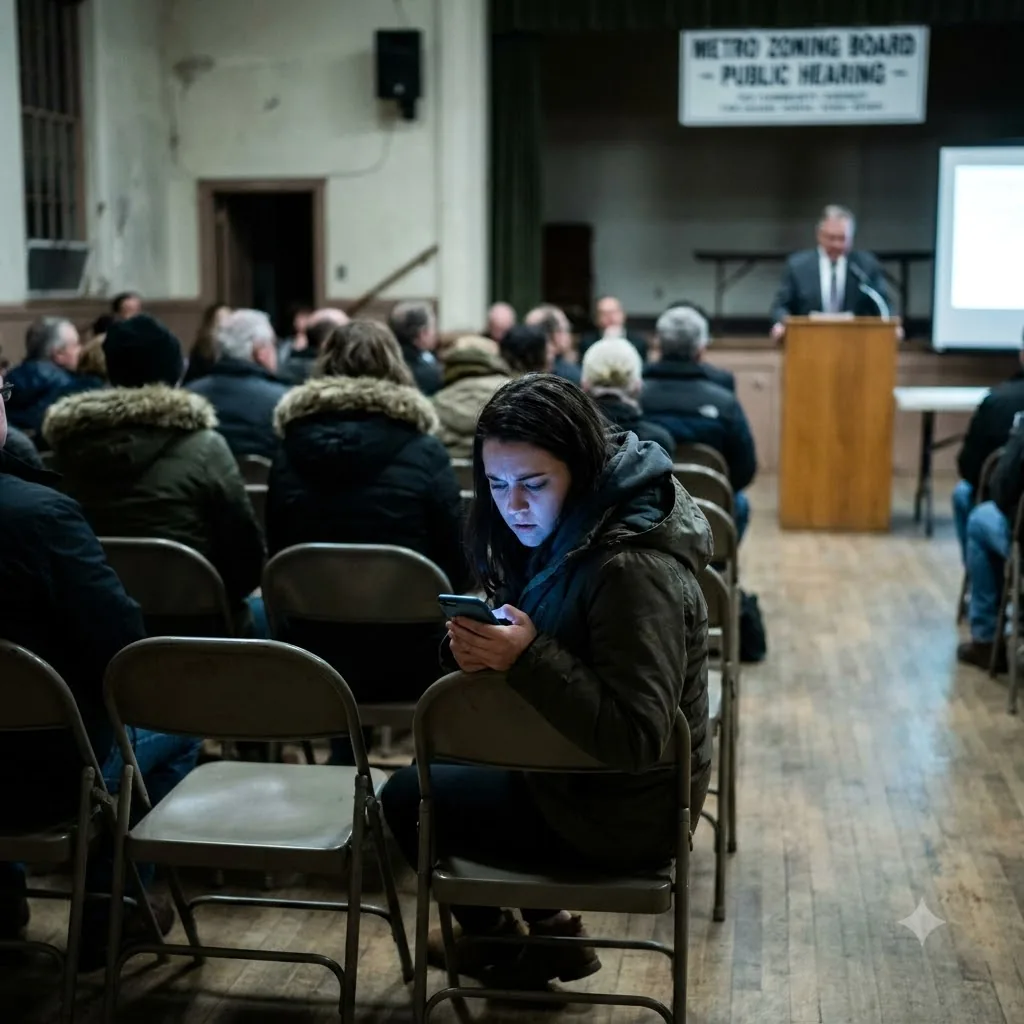
“Are you going to tell them about Silver Canopy Holdings, Julian?” I shouted, the name of his shell company ripping through the stifling air of the community center. The words tore out of me, jagged and unpolished, shattering the quiet, self-congratulatory atmosphere he had so carefully cultivated.
The silence that followed was suffocating. Dozens of heads swiveled in my direction. The older woman in the row beside me, who had just been nodding along to Julian’s folksy wisdom, recoiled. She clutched her faux-leather purse to her chest as if my lack of decorum were a contagious disease. Up on the small, carpeted stage, the zoning board members stared at me with wide, scandalized eyes.
Julian didn’t flinch. That was the most infuriating part. His mask of polite concern didn’t slip; it merely shifted into an expression of deep, paternal pity. He let out a soft, practiced sigh, leaning his forearms elegantly against the podium.
“Mr. Chairman,” Julian said, his voice dripping with honeyed patience, echoing smoothly through the PA system. “It’s quite all right. Emotions run incredibly high when we discuss the sanctity of our homes.” He turned his gaze directly to me. “You must be Maya. My realtor mentioned you were the competing offer on the Elm Street property this morning. I can only imagine how disappointing today has been for you.”
The sheer condescension hit me like a physical blow, knocking the breath from my lungs. The room’s collective tension immediately deflated, replaced by a low, unified murmur of disapproval aimed squarely at me. In a matter of seconds, Julian had stripped away my righteous anger and painted me as a disgruntled loser, a hysterical woman throwing a tantrum over a lost real estate bid.
“Don’t you dare patronize me,” I said, my voice trembling with a rage that had been fermenting for eight long years of double shifts and skipped meals. I held up my phone, the screen still glaring with the state registry document. “You’re standing up here preaching about the middle class and preserving the organic fabric of our neighborhood. But you’re the one artificially choking the supply! You outbid me with cash through a faceless LLC. You’re hoarding the starter homes so your own property values skyrocket, and now you’re trying to block the only affordable housing project this town has seen in a decade.”
The board chairman, a balding man with heavy jowls, aggressively hammered his wooden gavel against the folding table. “Miss, you are entirely out of order! This is a formal hearing, not a venue for your personal grievances.”
I ignored him, my eyes locked on Julian. “You’re weaponizing community preservation to protect your own hidden monopoly. How many other houses do you own on my street, Julian?”
Julian offered a sad, forgiving smile. It was the smile of a man who held all the cards and knew it. “Maya, Silver Canopy Holdings was formed by a small coalition of local residents-myself included-to protect vulnerable, historic properties from predatory, out-of-state developers. We step in with cash to ensure these cherished homes aren’t bulldozed for cheap, soulless multiplexes. If we hadn’t purchased the Elm Street house, a private equity firm would have. We are saving the neighborhood, not destroying it.”
It was a beautiful, seamless lie. And the room swallowed it whole.
I watched in bitter disbelief as the audience murmured their approval. They didn’t care about the monopoly. They didn’t care that I had been priced out of my own history. They only cared that Julian was keeping ‘those people’ out, wrapping their ugly, exclusionary NIMBYism in a warm, acceptable blanket of progressive-sounding buzzwords.
The system wasn’t broken. It was functioning exactly as it was designed to, protecting the entrenched wealth of the people sitting in this room. The rules of civility and decorum were just a shield they used to bludgeon anyone who dared to question their greed.
“Miss, I am giving you one final warning to take your seat, or I will have you removed,” the chairman barked into his microphone. At the back of the room, Officer Miller, the off-duty policeman who usually spent these meetings scrolling through his phone, began to amble down the center aisle. His hand rested casually, threateningly, on his heavy utility belt.
I was trapped. If I sat down, I surrendered. I would be swallowed by their polite society, erased and forgotten while Julian continued to buy up the town. If I stayed standing, I would be dragged out by an armed officer, cementing my status as the unhinged villain of the evening.
Julian leaned back into the microphone, ever the magnanimous lord of the manor. “Please, John, there’s no need for security. Let her stay. She’s hurting, but she clearly cares about this town. We all do. That’s exactly why we must vote down the zoning variance for this mixed-income project today.”
His faux-generosity made my stomach churn with bile. My thumb, shaking with adrenaline, dragged across my phone screen, inadvertently scrolling further down the state registry filing. I needed something undeniable, something that shattered his carefully constructed myth of local preservation.
The PDF jumped to the bottom of the page, revealing a secondary list of associated land deeds held by Silver Canopy LLC. My eyes darted across the tiny text, squinting against the harsh fluorescent glare of the community center.
There, nestled under the recent acquisition of my childhood home on Elm Street, was a pending commercial deed application. It wasn’t for a residential property. It was for the exact plot of undeveloped land the affordable housing project was slated to be built on.
I blinked, the bitter realization crashing over me like a wave of ice water. He wasn’t blocking the mixed-income project to save the neighborhood’s character. He was blocking it to tank the land’s value so his shell company could secure the deed for a massive, luxury boutique retail promenade he had already drafted plans for.
“Ma’am,” Officer Miller rumbled, stopping three feet away from me. His heavy hand clamped down firmly on my shoulder. “Let’s go. Now.”
I stared at the screen, the irrefutable proof burning a hole in my hand, as the officer’s grip tightened to pull me backward toward the exit.