Story code: ST-000166
Part 1: The Cash Offer
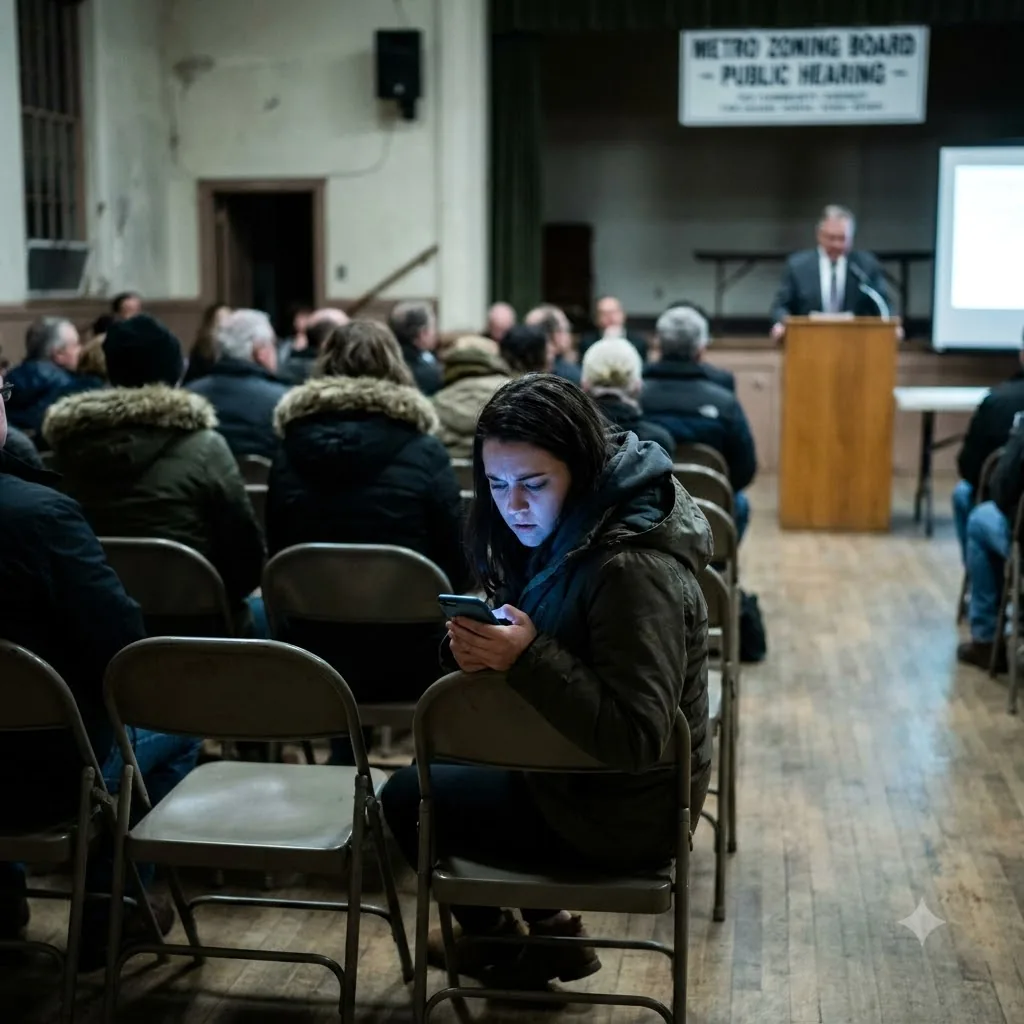
The rigid plastic of the folding chair dug a hard line into my spine as I stared at the fresh email from my realtor, the bright screen illuminating the words confirming I had been outbid by an all-cash LLC. Up at the front of the stifling community center, Julian adjusted the microphone stand to deliver his deeply empathetic plea for blocking the proposed mixed-income housing project. The air in the room felt thick, heavy with the scent of stale coffee and the quiet murmurs of property owners nodding in unison.
I read the realtor’s email again, letting the bitterness coat my throat. The house was on my childhood street, a small two-bedroom I had saved for over the span of eight years. I had submitted my absolute maximum offer, scraping together every cent I had to return to the neighborhood I grew up in. The email stated that Silver Canopy Holdings LLC had swept in, waiving all contingencies and dropping cash on the barrelhead. I was officially priced out of my own history.
At the front of the room, Julian leaned into the microphone with a look of pained sincerity. He wore a perfectly tailored knit sweater, emanating the casual, unbothered wealth of someone who never had to check a bank balance. He spoke in soft, measured tones about the sacred duty we had to protect our neighborhood character. He told the zoning board that bringing in higher-density housing would fracture the delicate ecosystem of our beloved community. He urged them to consider the historic integrity of our streets.
I locked my phone screen, but my thumb hovered over the power button. Julian was now using phrases like sustainable density and preserving the organic fabric of our town. He held his hands apart, framing an invisible picture of a serene, unchanged neighborhood. He claimed that outside developers would pave over the soul of our community just to turn a profit. The zoning board members leaned forward, captivated by his performance. He sounded like a true steward of the people, fighting the good fight against corporate greed.
My thumb pressed the button, waking my phone back up. I swiped over to the browser and opened the state business registry portal. The bitterness in my chest demanded a target, a faceless entity to project my anger onto. I typed Silver Canopy Holdings LLC into the search bar and hit the enter key. The loading bar crept across the top of the screen while Julian launched into a passionate defense of the middle class. He insisted that single-family zoning was the only way to ensure young people could eventually afford a piece of the American dream.
The registry page populated. I tapped on the filing history for the LLC. The registered agent was a generic legal proxy service, a standard maneuver to keep ownership hidden. I scrolled down to the annual reports, pulling up the PDF for the most recent year. The small text blurred for a moment under the harsh fluorescent lights of the community center. I zoomed in on the signature line for the managing member.
Julian was currently telling the crowd that we had to stand united against speculative buyers who treated our homes like portfolio assets. He placed a hand over his heart. He said he would fight tooth and nail to keep our neighborhood in the hands of real residents.
On my screen, the typed name under the managing member’s signature on the state document was Julian’s exact full name.
I blinked, forcing my eyes to focus on the illuminated document. I opened a new tab and typed in the business address listed next to his name. It belonged to a boutique real estate investment group located three towns over. The principal officer listed on the firm’s website matched the man standing at the microphone. I stared at his smiling headshot on my phone, then looked up at his somber, concerned face across the room.
He was the one doing it. He was the all-cash buyer snapping up properties on my childhood street under the guise of an anonymous shell company. He was blocking the affordable housing project to artificially choke the local housing supply, driving up the value of his own hidden monopoly. He was weaponizing the language of community preservation to protect his investments.
The sheer audacity of it made the blood pound in my ears. He paused his speech to take a sip of water, allowing the sympathetic murmurs of the audience to fill the silence. He wiped his mouth with a handkerchief and leaned back into the microphone, ready to deliver his closing remarks about trust and transparency.
I grabbed the back of the folding chair in front of me and shoved it aside. The metal legs screeched against the linoleum floor, a jagged, ugly noise that echoed off the cinderblock walls. Several people in the rows ahead of me turned their heads in irritation. Julian looked up from his notes, his brow furrowing in mild, polite confusion.
He started to form a sentence about the disruption.
I took two steps out into the center aisle and raised my voice over the hum of the air conditioner, cutting his speech off completely.
The rigid plastic of the folding chair dug a hard line into my spine as I stared at the fresh email from my realtor, the bright screen illuminating the words confirming I had been outbid by an all-cash LLC. Up at the front of the stifling community center, Julian adjusted the microphone stand to deliver his deeply empathetic plea for blocking the proposed mixed-income housing project. The air in the room felt thick, heavy with the scent of stale coffee and the quiet murmurs of property owners nodding in unison.
I read the realtor’s email again, letting the bitterness coat my throat. The house was on my childhood street, a small two-bedroom I had saved for over the span of eight years. I had submitted my absolute maximum offer, scraping together every cent I had to return to the neighborhood I grew up in. The email stated that Silver Canopy Holdings LLC had swept in, waiving all contingencies and dropping cash on the barrelhead. I was officially priced out of my own history.
At the front of the room, Julian leaned into the microphone with a look of pained sincerity. He wore a perfectly tailored knit sweater, emanating the casual, unbothered wealth of someone who never had to check a bank balance. He spoke in soft, measured tones about the sacred duty we had to protect our neighborhood character. He told the zoning board that bringing in higher-density housing would fracture the delicate ecosystem of our beloved community. He urged them to consider the historic integrity of our streets.
I locked my phone screen, but my thumb hovered over the power button. Julian was now using phrases like sustainable density and preserving the organic fabric of our town. He held his hands apart, framing an invisible picture of a serene, unchanged neighborhood. He claimed that outside developers would pave over the soul of our community just to turn a profit. The zoning board members leaned forward, captivated by his performance. He sounded like a true steward of the people, fighting the good fight against corporate greed.
My thumb pressed the button, waking my phone back up. I swiped over to the browser and opened the state business registry portal. The bitterness in my chest demanded a target, a faceless entity to project my anger onto. I typed Silver Canopy Holdings LLC into the search bar and hit the enter key. The loading bar crept across the top of the screen while Julian launched into a passionate defense of the middle class. He insisted that single-family zoning was the only way to ensure young people could eventually afford a piece of the American dream.
The registry page populated. I tapped on the filing history for the LLC. The registered agent was a generic legal proxy service, a standard maneuver to keep ownership hidden. I scrolled down to the annual reports, pulling up the PDF for the most recent year. The small text blurred for a moment under the harsh fluorescent lights of the community center. I zoomed in on the signature line for the managing member.
Julian was currently telling the crowd that we had to stand united against speculative buyers who treated our homes like portfolio assets. He placed a hand over his heart. He said he would fight tooth and nail to keep our neighborhood in the hands of real residents.
On my screen, the typed name under the managing member’s signature on the state document was Julian’s exact full name.
I blinked, forcing my eyes to focus on the illuminated document. I opened a new tab and typed in the business address listed next to his name. It belonged to a boutique real estate investment group located three towns over. The principal officer listed on the firm’s website matched the man standing at the microphone. I stared at his smiling headshot on my phone, then looked up at his somber, concerned face across the room.
He was the one doing it. He was the all-cash buyer snapping up properties on my childhood street under the guise of an anonymous shell company. He was blocking the affordable housing project to artificially choke the local housing supply, driving up the value of his own hidden monopoly. He was weaponizing the language of community preservation to protect his investments.
The sheer audacity of it made the blood pound in my ears. He paused his speech to take a sip of water, allowing the sympathetic murmurs of the audience to fill the silence. He wiped his mouth with a handkerchief and leaned back into the microphone, ready to deliver his closing remarks about trust and transparency.
I grabbed the back of the folding chair in front of me and shoved it aside. The metal legs screeched against the linoleum floor, a jagged, ugly noise that echoed off the cinderblock walls. Several people in the rows ahead of me turned their heads in irritation. Julian looked up from his notes, his brow furrowing in mild, polite confusion.
He started to form a sentence about the disruption.
I took two steps out into the center aisle and raised my voice over the hum of the air conditioner, cutting his speech off completely.