Story code: ST-000166
Part 4: The Price of Illusion
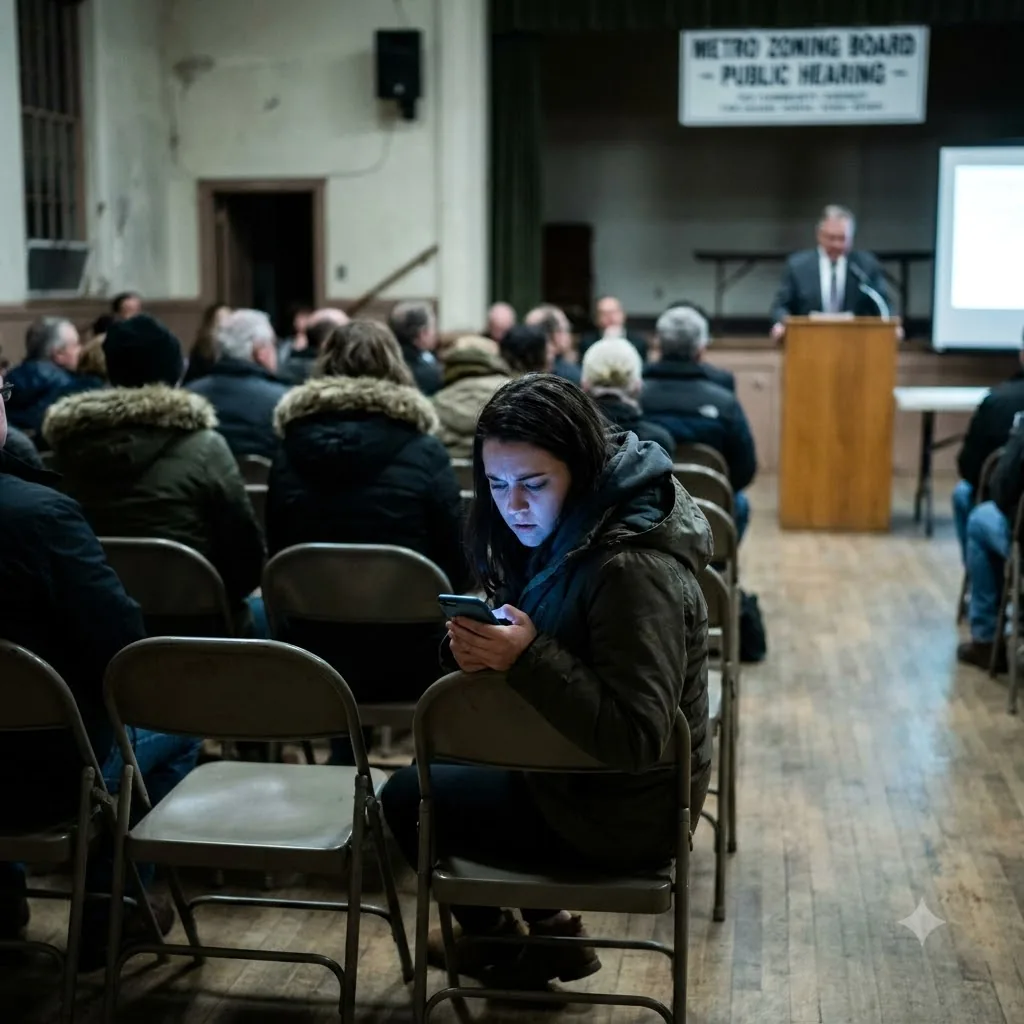
The blue light of the projector painted Julian’s face in a sickly, fluorescent hue. For a long, agonizing moment, the only sound in the stifling community center was the low hum of the A/V cart’s cooling fan. I stood there on the carpeted stage, chest heaving, the disconnected display cable dangling from my hand like a severed lifeline.
The silence didn’t last. The collective shock in the room curdled into outrage, but not the polite, muffled murmurs from before. The older woman in the front row stood up, her faux-leather purse clutched to her chest so tightly her knuckles were white.
“You’re turning our neighborhood into a… a tourist trap?” she stammered, pointing a trembling finger at the glowing map of short-term rentals on the screen. “You told me you were vetting a nice young couple for the Elm Street property!”
Julian’s mouth opened and closed. The paternal pity, the honeyed condescension-all of it dissolved, replaced by a twitching nerve at the corner of his jaw. He looked at the chairman, who was currently staring up at the retail promenade deed application with his mouth hanging open. The board members weren’t upset that Julian was hoarding housing; they were furious they hadn’t been cut in on the commercial redevelopment deal.
“It’s a strategic stabilization of local assets,” Julian finally spat out, but his voice cracked. It lacked the smooth, rehearsed cadence of his previous speech. “You people don’t understand the market dynamics at play-”
“We understand you lied to our faces!” someone yelled from the back of the room.
Officer Miller, who had been frozen halfway across the stage, slowly lowered his heavy hand from my shoulder. He took a distinct step back, suddenly very interested in not being associated with the man sinking on the podium.
The loss of control was too much for Julian. The polite facade shattered entirely. His perfectly tailored knit sweater seemed to restrict his breathing as his face flushed a blotchy, furious red.
“Oh, spare me the moral outrage!” Julian shouted, slamming his fist onto the plywood podium so hard the microphone squealed with shrill feedback. The crowd flinched. “Every single one of you sitting out there has watched your property taxes double in the last five years. You want the manicured lawns! You want the historical charm! But none of you want to actually pay for it!”
He snatched his silver MacBook off the cart, his movements jagged and erratic. “You think this town survives on your quaint little bake sales and community pride? It survives on capital. My capital. Without people like me curating this town, half your houses would be underwater, and the other half would be chopped up into section-eight duplexes!”
The ugly truth of it hung in the air, heavy and suffocating. He was throwing their own quiet prejudices back in their faces, stripping away the acceptable buzzwords and exposing the raw, transactional nature of their beloved neighborhood. They didn’t want him to say the quiet part out loud.
“You’re all hypocrites,” Julian sneered, shoving the laptop into his leather messenger bag. He glared at the balding board chairman. “If you deny that variance today, I’ll pull every cent of funding my firm has pledged for the downtown revitalization project. Let’s see how much you care about the organic fabric of this town when the municipal budget defaults.”
He didn’t wait for an answer. Julian turned on his heel and stormed off the stage, his expensive leather shoes stomping heavily down the wooden steps. He marched up the center aisle, violently shoving past a man who tried to ask him a question, and slammed his way through the double doors at the back of the hall.
The heavy doors swung shut with a hollow thud.
I stood on the stage, the adrenaline suddenly draining from my blood, leaving a cold, hollow ache in its wake. On the projector screen, my cracked phone display finally went to sleep, plunging the front of the room into shadows.
I pulled the USB-C cable from my phone and walked down the steps. The crowd parted for me. No one muttered about my lack of decorum. No one looked at me with pity. They couldn’t even meet my eyes. They were too busy staring at the floor, grappling with the fact that their idyllic community was nothing more than a hollowed-out investment portfolio.
I pushed through the same double doors Julian had just shattered.
The muggy, stale heat of the community center gave way to the sharp, cold dampness of an autumn storm. Rain was falling in heavy, diagonal sheets across the cracked asphalt parking lot. I zipped up my cheap polyester blazer, the thin fabric doing absolutely nothing to block the chill, and began the long walk toward the bus stop.
As I walked past the edge of the historic district, I looked at the dark silhouettes of the houses lining the street. The porch where my father used to read the Sunday paper was out there somewhere in the dark, sitting empty, waiting for a bachelor party or a corporate retreat to rent it out for the weekend.
The bitter truth settled in my chest, heavy and unmovable. I was never going to live here again. The town I grew up in was dead, paved over by nameless LLCs and short-term rentals, its soul sold to the highest bidder long ago. My eight years of double shifts and skipped meals hadn’t been enough to buy back my history, and they never would be. I was permanently priced out of my own home.
But as the rain plastered my hair to my cheeks, washing away the smell of stale coffee and bureaucratic dust, a small, dark ember of satisfaction glowed in my stomach. Julian had taken my house, but I had taken his mask. I had forced the entire town to look in the mirror, to see the rotting greed hiding behind their pristine, white picket fences. They could keep their hollow neighborhood. I had burned down their illusion, and the ashes were already washing away in the rain.