Story code: ST-000278
Part 2: The Resiliency Index
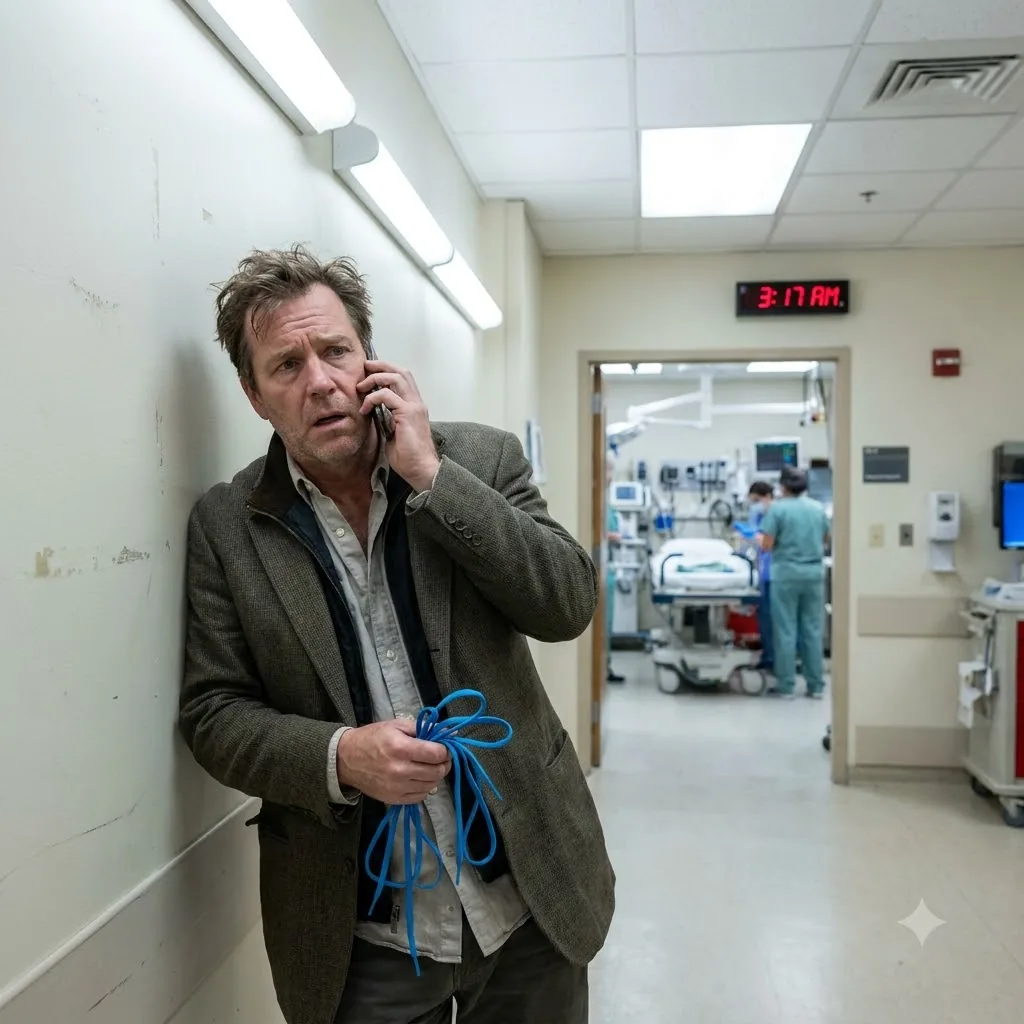
David lowered the phone from his ear, pressing the speaker against his thigh to muffle the tinny piano music. He kept his grip firm on the royal blue shoelaces, their hard plastic tips digging into his knuckles. The attending physician, whose badge read Dr. Evans, stepped closer, his voice dropping to a low, urgent murmur designed to cut through the ambient noise of the emergency room.
“Mr. Miller, I need you to listen to me right now,” Dr. Evans said, gesturing with the thick plastic clipboard. “Your son’s physical vitals are stabilizing. The lavage cleared the remaining unabsorbed medication from his stomach, and his heart rhythm is no longer showing the irregularities we saw during intake. But the crisis evaluator just finished her assessment, and the results are not something we can manage with a standard outpatient discharge.”
David felt a cold, leaden weight drop in his chest. He looked past Dr. Evans’s shoulder, staring through the narrow rectangular glass of Room 3, watching the slow, rhythmic rise and fall of his son’s chest under the thin hospital blanket.
“He confessed to the evaluator that he regrets surviving,” Dr. Evans continued, his eyes locked firmly on David’s. “He outlined exactly how he intends to try again if he is sent home tonight. He is actively suicidal, Mr. Miller. We cannot safely release him. I have exactly one bed left in the adolescent psychiatric ward upstairs, but the charge nurse is holding a transfer from another county. I have ten minutes to claim that bed for your son. I need an authorization code from your insurance company immediately, or Admitting will lock me out.”
David nodded mechanically, his mouth suddenly too dry to swallow. He lifted the phone back to his ear just as the hold music cut out, replaced by a sharp electronic click. A male voice came over the line, crisp and authoritative, introducing himself as Dr. Hayes, the regional medical director for the behavioral health network.
David did not wait for the formalities. He leaned his shoulder hard against the cold hospital wall, his voice trembling as he relayed Dr. Evans’s exact words. He explained the crisis evaluator’s findings, the immediate threat to life, and the strict ten-minute deadline for the psychiatric bed upstairs. He squeezed the blue shoelaces so hard his hand began to shake, demanding the authorization code so his son could be admitted safely.
“I understand this is a highly stressful moment, Mr. Miller,” Dr. Hayes said, his tone perfectly measured, devoid of any urgency. “I am looking at the secondary review file now. Janice compiled your son’s academic and extracurricular data, and I need to explain why a high school transcript is the primary metric we use in these specific authorizations. Our network utilizes a proprietary algorithm called the Predictive Resiliency Index.”
David pressed the phone harder against his ear, staring blankly at the scuffed linoleum floor. The emergency room buzzed around him, nurses rushing past with squeaking IV poles, but the sound seemed to fade behind the medical director’s clinical explanation.
“The Resiliency Index tracks behavioral health outcomes against academic baselines,” Dr. Hayes continued smoothly. “A student who maintains a 4.2 weighted GPA, excels in Advanced Placement coursework, and participates in highly structured activities like chamber orchestra demonstrates a profound level of cognitive organization and systemic coping skills. The matrix flags acute hospitalization as a severe over-treatment for this specific demographic.”
“He swallowed a bottle of pills!” David hissed, glancing nervously at Dr. Evans, who was now tapping his pen against his clipboard. “He is not coping. He told the evaluator he wants to die.”
“Acute residential wards are designed for patients lacking basic functional capacity,” Dr. Hayes countered, reading directly from the screen in front of him. “Putting a high-functioning, Type-A adolescent into a locked psychiatric facility exposes them to severe trauma from lower-functioning peers. Our data overwhelmingly shows that for a student with your son’s transcript, removing him from his academic routine and placing him in an acute ward actually exacerbates anxiety and increases the risk of long-term depression. We are denying the inpatient authorization because our model indicates it would be highly detrimental to his academic trajectory.”
David’s breath hitched in his throat. The cognitive dissonance was deafening. The insurance network was weaponizing his son’s academic success against him, using his late-night studying and flawless attendance as a justification to abandon him in the middle of a life-threatening crisis. They were legally arguing that not treating him was the safest medical treatment.
“What is the alternative?” David asked, his voice cracking. “What do you expect me to do when I take him home tonight?”
“We have authorized immediate enrollment in our digital peer-support application,” Dr. Hayes replied promptly. “And we will approve an expedited telehealth counseling session within forty-eight hours. The matrix shows a ninety-four percent positive outcome rate when high-achieving teens are kept in their familiar environments.”
Dr. Evans stepped into David’s line of sight, pointing a rigid finger at the digital clock mounted above the nurses’ station. The ten-minute window was closing rapidly. The doctor shook his head, silently mouthing the words, *Do you have the code?*
David looked back through the narrow window of Room 3. His son looked terribly small on the gurney, his wrists pale and fragile against the paper gown. The blue shoelaces dangled helplessly from David’s fist.
“If I bypass the insurance,” David said into the phone, his words rushing out in a desperate whisper. “If I self-pay for the inpatient bed right now to keep him safe. What does it cost?”
“If you choose to disregard the network’s medical advice and self-admit,” Dr. Hayes warned, his tone chillingly formal, “you will assume total financial liability. The facility fee for our out-of-network acute care is three thousand, eight hundred dollars a day. Admitting requires a seventy-two-hour minimum deposit upfront.”
Over eleven thousand dollars. Before any physician fees or medications. David felt the blood completely drain from his face. He didn’t have a fraction of that in his bank account. Before he could respond, Dr. Evans stepped forward and pressed the heavy plastic clipboard directly against David’s chest. On top of the stack of papers was a bright yellow financial liability waiver, waiting for a signature, while the phone line hummed with the quiet, devastating calculation of the insurance matrix.