Story code: ST-000278
Part 4: The Cost of Excellence
The silence on the line stretched until it snapped. When Dr. Hayes finally spoke, his voice was entirely stripped of its previous accommodating polish. It was the flat, impenetrable tone of corporate liability.
“Mr. Miller, the proprietary weighting of the Predictive Resiliency Index is legally protected corporate intellectual property,” Dr. Hayes said. “The formal denial letter will state only that the patient did not meet the medical necessity threshold based on our holistic functioning assessment. I am formally closing this review.”
Before David could draw a breath to reply, a sharp click echoed from the phone’s speaker. The line went dead.
David stared at the dark screen in his hand. The appeal had failed, snuffed out by a wall of legal phrasing and algorithmic opacity. There would be no written confession. The model minority myth coded into the matrix would continue operating in the dark, untouchable and silently denying care to countless other kids who looked just like his son.
“Mr. Miller,” Dr. Evans said softly, stepping into David’s periphery. “Two minutes.”
David looked at the physician, then down at the yellow financial liability waiver resting on the plastic clipboard. Eleven thousand, four hundred dollars. It was a staggering sum, an amount that would completely decimate the savings account he and his wife, Maya, had painstakingly built over the last sixteen years. That money was supposed to be for university tuition.
The cruelest irony hit David like a physical blow. The very college fund they had sacrificed to build was about to be emptied because their son had been too perfectly tailored for college.
David reached out and took the pen from Dr. Evans’s hand. His fingers shook slightly as he pressed the ballpoint against the yellow carbon paper. He signed his name on the bottom line, legally binding himself to the out-of-pocket cost. He handed the clipboard back.
“I’ll notify Admitting,” Dr. Evans said, a visible wave of relief washing over his tired features. “We’ve got the bed. I’ll have the psychiatric transport team down here in five minutes.”
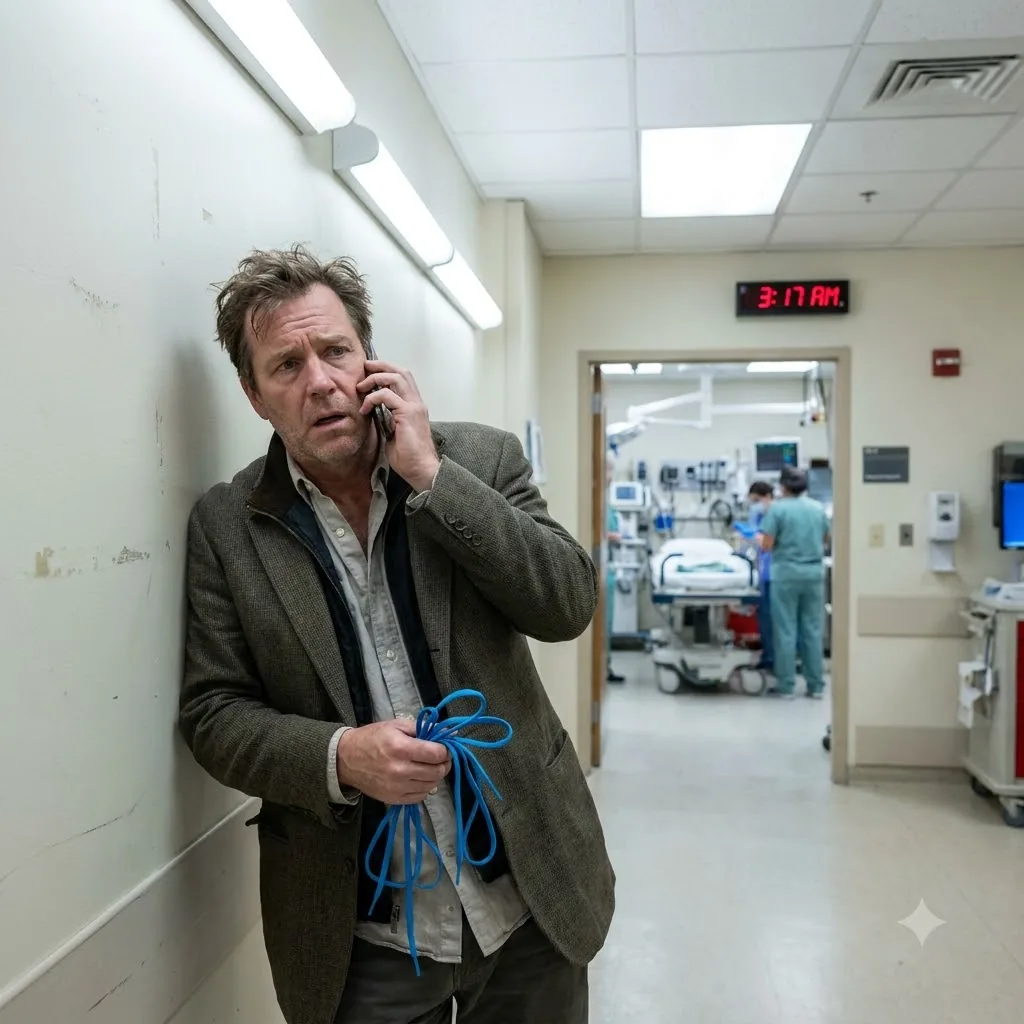
Dr. Evans hurried away down the corridor, leaving David alone outside the heavy wooden door of Room 3. David leaned his back against the wall and opened his text messages. He typed a rapid message to Maya, who was currently speeding down the interstate from her shift at the pharmacy. *They denied coverage. I signed the self-pay waiver. We are going to have to empty the savings account tomorrow morning. He got the bed.*
Maya’s reply came through almost instantly, bubbling up in a grey text bubble. *I don’t care about the money. Just keep him safe. I’m ten minutes away.*
David pocketed his phone. He pushed open the heavy door to the trauma bay. The air inside was freezing, smelling sharply of iodine and sterile cotton. Leo was still asleep on the narrow gurney, his chest rising and falling in shallow, rhythmic breaths beneath the thin hospital blanket. The oxygen monitor blinked a steady green on his pale index finger.
David pulled a stiff plastic chair to the side of the bed and sat down. He placed the confiscated royal blue shoelaces on the rolling tray table, laying them out straight next to a plastic pitcher of ice water.
He looked at his son’s face, studying the deep, exhausted shadows under the boy’s closed eyes. For years, David and Maya had pushed Leo to excel. They had paid for the expensive chamber orchestra violin rentals, driven him across the state to weekend debate tournaments, and celebrated every consecutive semester on the high honor roll. They had believed, with absolute conviction, that this relentless pursuit of excellence was a shield. They thought that if Leo was perfect, if he embodied every metric of success, society would respect him, protect him, and value his life.
Instead, the system had weaponized that exact excellence to erase his pain.
The insurance matrix had looked at Leo’s ethnicity, his flawless GPA, and his violin recitals, and mathematically calculated that his despair wasn’t real enough to cost them money. The perfection hadn’t protected Leo; it had built a gilded cage that trapped him inside his own silent agony, effectively rendering his humanity invisible to the people who held the purse strings of his healthcare.
David reached out and gently wrapped his hand around his son’s cold, pale fingers, careful not to disturb the IV line taped to the back of the boy’s wrist. The financial ruin looming over their family was a heavy, suffocating weight, but as David watched Leo breathe, the money ceased to matter. He would drain the accounts. He would take out loans. He would pay whatever the hospital demanded to keep the boy breathing.
The digital monitor beeped softly in the quiet room. David gripped his son’s hand tighter, sitting under the harsh fluorescent glare, fiercely guarding a life that the algorithm had deemed a statistical anomaly, waiting for the transport team to finally take them upstairs.