Story code: ST-000303
Part 2: Market Rate
The smudge of flour gave way under Elias’s rough thumb, smearing into a pale streak across the heavy, expensive paper. The printed digits beneath the powder were stark, black, and completely devoid of empathy.
Elias stared at the number. Eight thousand, five hundred dollars.
Below it, another bolded line indicated a shift to a triple-net lease, meaning he would now be responsible for a portion of the building’s property taxes, insurance, and maintenance. His current rent, negotiated a decade ago by the previous landlord who had known Elias’s father, was one thousand, eight hundred dollars a month.
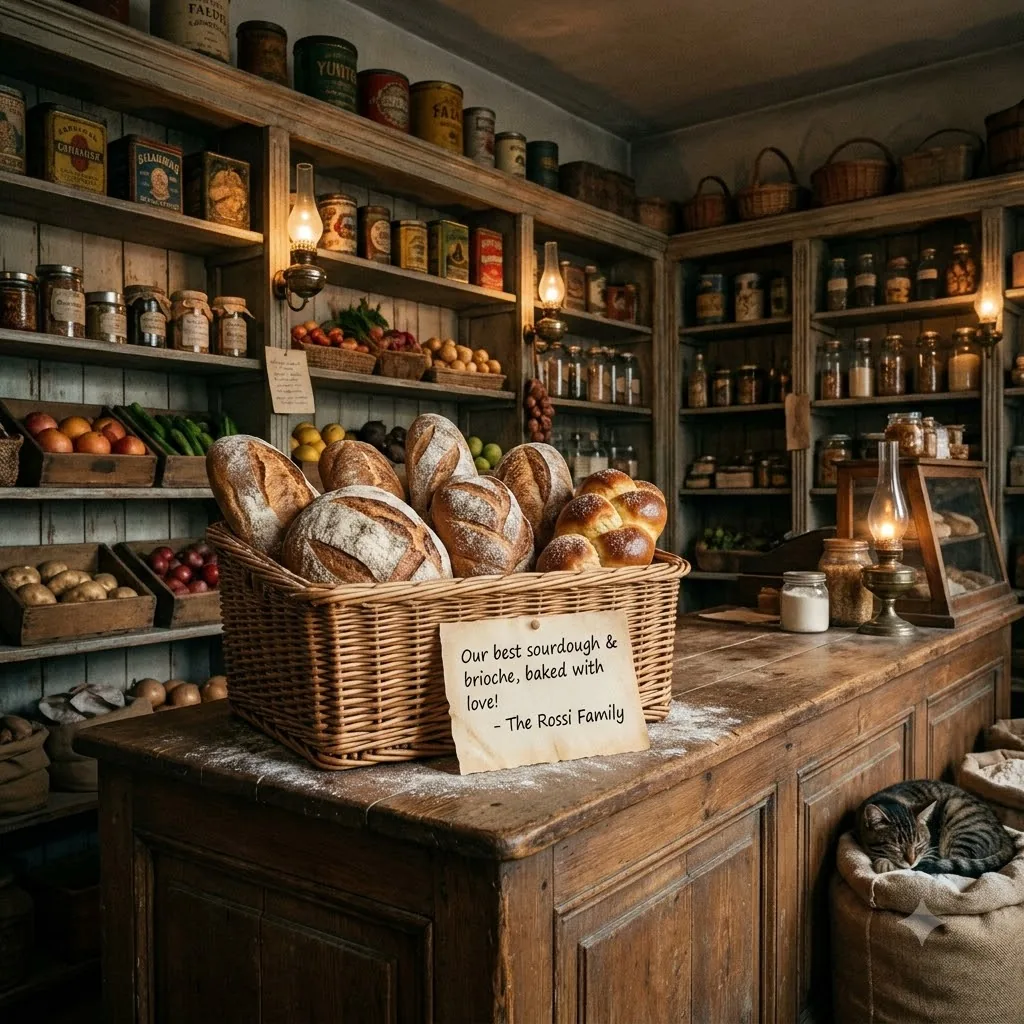
Elias’s chest tightened, the air suddenly trapped in his lungs. He looked up from the document, his gaze sweeping over the narrow, crowded aisles of his grocery store. He calculated the volume of ninety-cent cans of black beans, dollar-fifty bunches of cilantro, and two-dollar bags of yellow onions he would have to move just to cover the base increase. The math was impossible. It wasn’t a rent increase. It was an eviction notice, neatly typed on premium cardstock and delivered in a basket of artisan bread.
The cheerful chime of the front door bell broke the suffocating silence.
Elias instinctively slid the manila envelope under the wooden lip of the register, leaving only the sprawling basket of baked goods on display.
Julian practically bounded back into the store. He had swapped his flour-dusted canvas apron for a pristine leather one, and he carried a sleek, stainless-steel travel mug. The overwhelming scent of roasted espresso and lavender syrup followed him, aggressively masking the faint, familiar aroma of Elias’s ripening plantains.
“Forgot something!” Julian announced, his voice booming too loudly for the quiet market. He marched up to the checkout lane, resting his elbows on the Formica counter, completely ignoring the chocolate croissant Elias had crushed earlier. He slid a glossy, trifold brochure across the scratched surface. “The property managers asked me to drop this off, too. It’s the neighborhood revitalization aesthetic guidelines.”
Elias looked at the brochure. The cover featured a stock photo of smiling young people drinking wine under Edison bulbs. He didn’t reach for it. He kept his hands flat against the cool metal of his cash register.
“Did you get a chance to look at the paperwork?” Julian asked, taking a sip from his mug. He smiled, a bright, rehearsed expression that didn’t quite reach the calculating brightness in his eyes. “I know the new management company is making a lot of changes, but honestly, it’s going to be incredible for the block. They’re bringing all the legacy units up to market rate. It’s exactly the kind of push this street needs to attract the right demographic.”
Elias’s jaw clenched. “Market rate.”
“Exactly!” Julian beamed, oblivious to the frost in Elias’s tone. “I was looking at your window displays. You know, if you ripped out those neon beer signs and put in some reclaimed wood shelving, you could easily charge six bucks for those imported jams you have in the back. We have to elevate the neighborhood palate, Elias. Synergy.”
Before Elias could find the words to explain that his customers couldn’t afford six-dollar jam, the heavy glass door opened again.
Mrs. Higgins shuffled inside, leaning heavily on her aluminum walker. She was eighty-two, lived in the rent-controlled apartment directly above Elias’s store, and relied on a fixed monthly pension. She offered Elias a small, trembling smile and began her slow progression toward the bulk dry goods aisle.
Julian watched her go, tilting his head. He lowered his voice to a conspiratorial whisper. “See, that’s exactly what I mean. The new landlords were telling me about their vision. They want to phase out the low-margin bargain bins. They’re thinking boutique bodegas. Kombucha on tap, local honey, organic wines. The foot traffic from my bakery alone will double your gross.”
“My customers,” Elias said, his voice a low, steady rumble, “buy what they need to survive. They don’t buy organic wine.”
Julian laughed, a bright, dismissive sound. “Well, neighborhoods change, Elias. People adapt, or they move on.” He tapped the glossy brochure on the counter. “You really need to read the aesthetic addendum in that lease. The management company requires all storefronts to be fully renovated to match the new brick-and-mortar guidelines within ninety days of signing. Out of pocket, of course, but it’s an investment in your brand!”
Elias felt a cold dread pool in his stomach. He hadn’t read past the rent figure. “Renovations.”
“Oh, yeah. They want the drop ceiling gone, the linoleum pulled up to expose the concrete, the works,” Julian said cheerfully. “I have a great contractor. I can give you his number.”
Elias looked past Julian, watching Mrs. Higgins carefully weigh out exactly half a pound of dry pinto beans. The linoleum she was standing on was worn down to the backing from decades of footsteps. His father had laid that floor. The ceiling hid sixty-year-old plumbing that clattered every time the upstairs tenants took a shower. To gut the store would cost tens of thousands of dollars he didn’t have, on top of a monthly rent he couldn’t possibly pay.
Julian checked a heavy, silver watch on his wrist. “Anyway, I’ve got a batch of sourdough in the proofer. Just wanted to make sure you got everything.” He took a step back toward the door, then paused, snapping his fingers as if remembering a minor detail. “Oh! The property manager mentioned there’s a strict forty-eight-hour turnaround on that lease renewal. They need your signature by Friday at noon.”
Elias stared at the baker. “Friday.”
“Yeah. Just a heads-up,” Julian said, his smile stretching wider, taking on an almost predatory edge. “Between you and me, they told me if you decide you’re ready to retire-which, you know, wouldn’t be the worst thing, you’ve been doing this a long time-they promised me first right of refusal on your unit. I’d love to knock down that adjoining wall and put in a tasting room. But obviously, I hope you stay! We’ll be great neighbors.”
Julian gave a cheerful wave and pushed through the glass door, the bell jingling a merry farewell.
Elias stood frozen behind the counter. He pulled the manila envelope back out from under the register. The smell of expensive butter and yeast still clung to the pages. He looked at the bottom of the third page, below the impossible numbers.
There it was. A legally binding clause demanding a signature within forty-eight hours, or a formal eviction process would be initiated immediately. Furthermore, failure to sign served as automatic consent for the landlord’s contractors to begin demolition assessments the following Monday.
Mrs. Higgins slowly made her way to the counter, placing her small bag of pinto beans and two cans of generic tomato paste next to the massive, overflowing basket of artisanal bread. She opened a worn leather coin purse, her frail fingers digging for exact change.
Elias looked from the small pile of copper and silver coins to the glossy brochure, the eviction threat, and the wall that Julian was already planning to tear down.