Story code: ST-000303
Part 1: The Welcome Basket
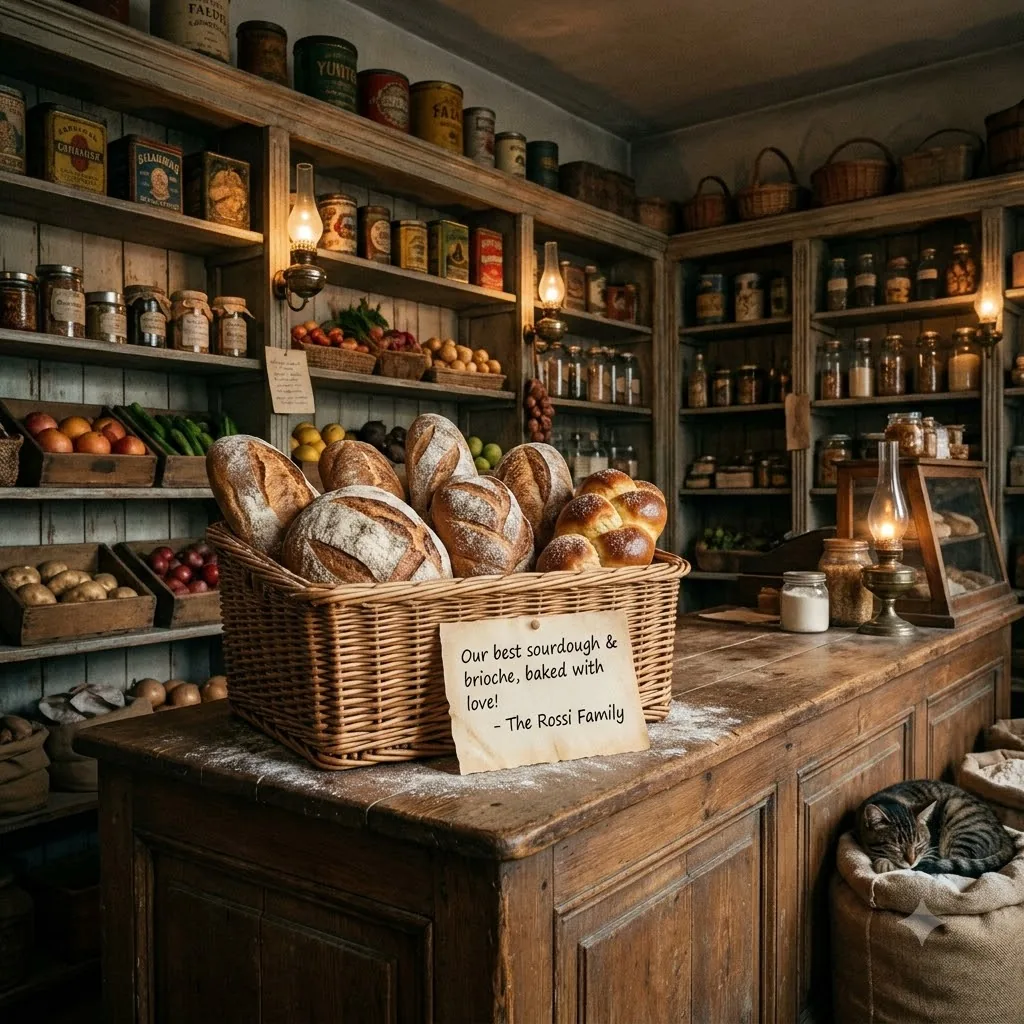
The heavy glass door swung shut, trapping the seventy-year-old market in a sudden, suffocating silence. Elias stood perfectly still behind the scratched Formica counter, his eyes locked on the massive, flour-dusted basket of sourdough and brioche left in the center of his checkout lane. The rich, buttery scent of expensive baking smothered the familiar, comforting odors of old floor wax, ripening plantains, and the dried oregano he kept in bulk bins.
Julian, the newly arrived baker from the adjacent storefront, had just departed in a whirlwind of canvas aprons and aggressive cheerfulness. Elias slowly lowered his gaze to the extravagant arrangement. The woven wicker was easily three feet wide, overflowing with deeply scarred boules, twisted baguettes, and pastries glazed to a mirror finish. It sat precisely where Elias usually rested the battered ledgers he used to track the neighborhood’s credit tabs.
Nestled atop a crusty loaf of olive bread sat a heavy cream-colored envelope. Elias reached out with a rough, weathered hand and pulled the card free. A fine mist of white flour drifted down to settle on the dark wood of the counter. He slid out the card. The handwriting was a sprawling, artistic script that felt entirely too loud for the quiet corners of his grocery.
The message bubbled with a relentless, toxic positivity. Julian wrote extensively about the incredible journey ahead for the neighborhood. He insisted they were going to elevate the community, bringing a much-needed renaissance to the aging street. The note boldly declared they would be saving the block together, elevating the local palate, and creating a curated lifestyle destination. At the very bottom, beneath a hand-drawn smiley face, Julian had added a postscript directing Elias to review the enclosed documents at his earliest convenience.
Elias let the card drop onto the register. The phrase about enclosed documents tightened his throat. His commercial lease expired at the end of the month. The building had changed hands quietly in the spring, purchased by a faceless holding company that only communicated through curt emails. A property manager had promised the new renewal terms would be hand-delivered today by a local representative. Julian had been the only person to cross the threshold all morning.
The vibrant, smiling artisanal baker was not just a neighbor dropping off excess inventory.
Elias stared at the basket of bread. The artisan loaves suddenly looked like a barricade constructed to hide the truth. He reached into the wicker arrangement, ignoring the delicate crusts. He pushed a massive sourdough boule aside, sending a shower of crust flakes and white powder across the scanner bed. He grabbed a pair of chocolate croissants and moved them to the side, his fingers sinking into the soft, buttery dough, crushing the laminated layers flat against the counter.
He needed to find the paperwork. His father had built the wooden shelving units lining the aisles by hand in the nineteen-fifties. The worn linoleum path leading from the front door to the back deli case held the scuff marks of three generations of loyal customers. Elias could not lose this space. The elderly residents in the apartments above relied on his affordable staples, his canned goods, his fresh produce priced for fixed incomes. Julian’s bakery sold single loaves of bread for more than Elias charged for three full bags of groceries.
He dug deeper into the basket. He pulled out a heavy glass jar of small-batch preserves and set it heavily beside the register, the glass clinking sharply against his metal coin tray. He moved a bundle of artisan breadsticks bound in twine. Flakes of coarse sea salt and dried rosemary scattered across his scuffed work boots. He reached the bottom layer of the basket, pushing aside a thick nest of decorative parchment paper and bound dried wheat stalks.
A stiff manila envelope lay flat against the woven wicker bottom.
Elias pulled it out. The surface was dusted in fine white baking flour, carrying the unmistakable scent of Julian’s trendy new enterprise. Elias stared at the blank exterior. The neon beer sign in the front window buzzed with a low, erratic hum, casting a flickering red glow over the envelope in his hands.
He slid his index finger under the unsealed flap. He pulled out a thick stack of legal-sized paper. The heavy stock felt foreign compared to the cheap, flimsy leases his previous landlord had printed out at the local library. The header bore the logo of an upscale commercial real estate firm. Elias bypassed the dense paragraphs of legal jargon regarding building modifications and aesthetic compliance codes.
He flipped directly to the third page. The schedule of rent always lived on the third page.
His eyes scanned down the strict, black-and-white columns, looking for the numbers that would dictate his future. He found the bolded section outlining the new monthly obligations. A thick smear of white flour, transferred directly from Julian’s pristine baked goods, covered the exact line detailing the new base rent. Elias stared at the powdery smudge. His breathing slowed to a deliberate halt as he lifted his right hand. He placed the calloused pad of his thumb against the white powder and rubbed the flour away.
The heavy glass door swung shut, trapping the seventy-year-old market in a sudden, suffocating silence. Elias stood perfectly still behind the scratched Formica counter, his eyes locked on the massive, flour-dusted basket of sourdough and brioche left in the center of his checkout lane. The rich, buttery scent of expensive baking smothered the familiar, comforting odors of old floor wax, ripening plantains, and the dried oregano he kept in bulk bins.
Julian, the newly arrived baker from the adjacent storefront, had just departed in a whirlwind of canvas aprons and aggressive cheerfulness. Elias slowly lowered his gaze to the extravagant arrangement. The woven wicker was easily three feet wide, overflowing with deeply scarred boules, twisted baguettes, and pastries glazed to a mirror finish. It sat precisely where Elias usually rested the battered ledgers he used to track the neighborhood’s credit tabs.
Nestled atop a crusty loaf of olive bread sat a heavy cream-colored envelope. Elias reached out with a rough, weathered hand and pulled the card free. A fine mist of white flour drifted down to settle on the dark wood of the counter. He slid out the card. The handwriting was a sprawling, artistic script that felt entirely too loud for the quiet corners of his grocery.
The message bubbled with a relentless, toxic positivity. Julian wrote extensively about the incredible journey ahead for the neighborhood. He insisted they were going to elevate the community, bringing a much-needed renaissance to the aging street. The note boldly declared they would be saving the block together, elevating the local palate, and creating a curated lifestyle destination. At the very bottom, beneath a hand-drawn smiley face, Julian had added a postscript directing Elias to review the enclosed documents at his earliest convenience.
Elias let the card drop onto the register. The phrase about enclosed documents tightened his throat. His commercial lease expired at the end of the month. The building had changed hands quietly in the spring, purchased by a faceless holding company that only communicated through curt emails. A property manager had promised the new renewal terms would be hand-delivered today by a local representative. Julian had been the only person to cross the threshold all morning.
The vibrant, smiling artisanal baker was not just a neighbor dropping off excess inventory.
Elias stared at the basket of bread. The artisan loaves suddenly looked like a barricade constructed to hide the truth. He reached into the wicker arrangement, ignoring the delicate crusts. He pushed a massive sourdough boule aside, sending a shower of crust flakes and white powder across the scanner bed. He grabbed a pair of chocolate croissants and moved them to the side, his fingers sinking into the soft, buttery dough, crushing the laminated layers flat against the counter.
He needed to find the paperwork. His father had built the wooden shelving units lining the aisles by hand in the nineteen-fifties. The worn linoleum path leading from the front door to the back deli case held the scuff marks of three generations of loyal customers. Elias could not lose this space. The elderly residents in the apartments above relied on his affordable staples, his canned goods, his fresh produce priced for fixed incomes. Julian’s bakery sold single loaves of bread for more than Elias charged for three full bags of groceries.
He dug deeper into the basket. He pulled out a heavy glass jar of small-batch preserves and set it heavily beside the register, the glass clinking sharply against his metal coin tray. He moved a bundle of artisan breadsticks bound in twine. Flakes of coarse sea salt and dried rosemary scattered across his scuffed work boots. He reached the bottom layer of the basket, pushing aside a thick nest of decorative parchment paper and bound dried wheat stalks.
A stiff manila envelope lay flat against the woven wicker bottom.
Elias pulled it out. The surface was dusted in fine white baking flour, carrying the unmistakable scent of Julian’s trendy new enterprise. Elias stared at the blank exterior. The neon beer sign in the front window buzzed with a low, erratic hum, casting a flickering red glow over the envelope in his hands.
He slid his index finger under the unsealed flap. He pulled out a thick stack of legal-sized paper. The heavy stock felt foreign compared to the cheap, flimsy leases his previous landlord had printed out at the local library. The header bore the logo of an upscale commercial real estate firm. Elias bypassed the dense paragraphs of legal jargon regarding building modifications and aesthetic compliance codes.
He flipped directly to the third page. The schedule of rent always lived on the third page.
His eyes scanned down the strict, black-and-white columns, looking for the numbers that would dictate his future. He found the bolded section outlining the new monthly obligations. A thick smear of white flour, transferred directly from Julian’s pristine baked goods, covered the exact line detailing the new base rent. Elias stared at the powdery smudge. His breathing slowed to a deliberate halt as he lifted his right hand. He placed the calloused pad of his thumb against the white powder and rubbed the flour away.