Story code: ST-000456
Part 1: The Viewfinder
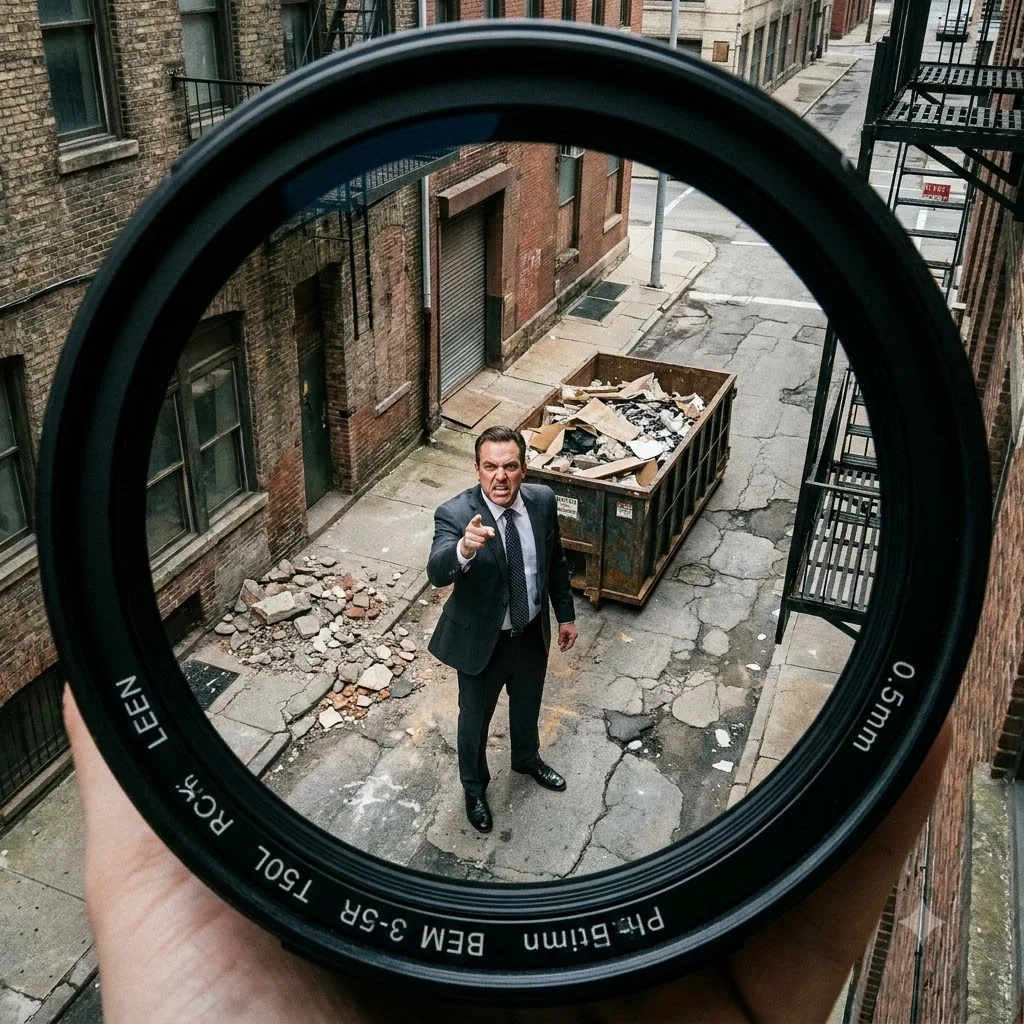
I focus the heavy six-hundred-millimeter lens on the green industrial dumpster below, cataloging the exact moment Mrs. Gable’s floral armchair hits the rusted metal bottom. The man in the tailored charcoal suit wipes dust from his hands, turning his back on the debris of a life displaced. Through the magnified optical glass, I watch him systematically erasing the last familiar pieces of my block.
I haven’t stepped past the peeling brown paint of my front door in exactly ten years. My entire world exists within the rectangular frame of this third-floor window, filtered through layers of expensive glass and mechanical zoom rings. I document everything from this perch. I document the mail carrier tripping on the cracked pavement every Tuesday. I document the stray cats fighting over scraps near the alleyway at dusk. Now, I document the methodical destruction of the only neighborhood I have left.
The man in the suit is the new owner of the entire street. He bought the bakery downstairs, the shoe repair shop next door, and the crumbling apartment building facing mine. One by one, the neighbors vanished. Today, it is Mrs. Gable. I press my eye tighter against the soft rubber of the viewfinder. Her heavy oak side table shatters against the thick steel side of the dumpster. Her precious leather-bound photo albums spill out across the wet asphalt, pages flapping in the wind. The developer does not flinch. He just checks his silver wristwatch and gestures for his hired crew to keep tossing the remnants of a sixty-year tenancy out the second-story window.
I adjust the focus dial with my thumb. The tactile, clicking resistance of the ring grounds my racing mind. As long as I am behind the camera, I am a ghost. I am untouchable, suspended thirty feet in the air in a fortress I cannot physically leave. My severe agoraphobia ensures that. The mere thought of the hallway outside my deadbolted door sends a violent, suffocating tremor through my chest. The window is safe. The lens is a one-way barrier. I see them, but they never see me.
Down on the street, the developer stops. He waves away the two men currently hauling Mrs. Gable’s mattress out the front door. He turns entirely away from the dumpster and faces my building. I keep the lens trained on him, assuming he is simply inspecting the cracked masonry of the vacant bakery below my floor. But his gaze does not stop at the ground level. His head tilts upward, tracking slowly past the faded awning and the second-floor fire escape.
Through the viewfinder, his face snaps into crisp, terrifying detail. He is looking directly into my camera lens.
My breath catches hard in my throat. People never look up. The rhythm of the city dictates that everyone stares straight ahead at their destination or down at their shoes. But this man’s dark eyes are locked onto mine, piercing through the thirty-foot gap and the heavy glass of my window. A slow, thin smile spreads across his face. He knows I am here. He knows I have been watching his every move.
I freeze, entirely paralyzed, as he reaches into the breast pocket of his charcoal suit. He pulls out a small, rectangular device with a digital screen. It is a laser distance measurer. He raises it to eye level and points it straight at my windowpane.
A bright red dot dances across the dirty brickwork outside, sliding up the wall before landing directly on the center of my glass. It hovers right over my chest. He taps a button on the side of the device. He is calculating the exact distance between his position on the sidewalk and my sanctuary. He is measuring the physical gap between us.
The red dot vanishes. He lowers the device and checks the glowing green digital readout. The thin smile remains fixed on his lips. He slides the tool back into his pocket, never breaking his upward stare. He nods once, a deliberate and chilling acknowledgment of my presence. Then he reaches into his opposite pocket and pulls out a sleek black smartphone.
My apartment building is ancient. We do not have a modern wireless callbox or an intercom tied to a phone line. We have a wired, analog intercom system installed in the late nineteen-seventies, meant strictly for buzzing in guests from the locked front vestibule downstairs. The directory panel outside has been missing its plastic cover for five years, and my name is certainly not on it. The buzzer corresponds to a frayed copper wire connected directly to a heavy plastic receiver mounted on my kitchen wall. It has not rung in eight years.
The man down on the street taps a few buttons on his phone screen. He lifts the device to his ear.
Behind me, in the dead silence of my apartment, the kitchen intercom screams.
It is a harsh, vibrating screech that rattles the dust on my countertops. It is completely impossible. He is standing out on the public sidewalk, thirty feet away, holding a standard cell phone. He is nowhere near my vestibule. He cannot trigger the hardwired analog buzzer from out there. Yet the yellowed plastic box on my wall continues its violent, mechanical shrieking.
I refuse to look away from the viewfinder. I watch his lips move down below. He speaks a few words into his phone, and the intercom buzzer cuts out, instantly replaced by a loud blast of static.
His voice echoes out of the plastic speaker in my kitchen, filling the space I have guarded for ten long years.
“I know you cannot come down, Elias. So I am coming up.”
I focus the heavy six-hundred-millimeter lens on the green industrial dumpster below, cataloging the exact moment Mrs. Gable’s floral armchair hits the rusted metal bottom. The man in the tailored charcoal suit wipes dust from his hands, turning his back on the debris of a life displaced. Through the magnified optical glass, I watch him systematically erasing the last familiar pieces of my block.
I haven’t stepped past the peeling brown paint of my front door in exactly ten years. My entire world exists within the rectangular frame of this third-floor window, filtered through layers of expensive glass and mechanical zoom rings. I document everything from this perch. I document the mail carrier tripping on the cracked pavement every Tuesday. I document the stray cats fighting over scraps near the alleyway at dusk. Now, I document the methodical destruction of the only neighborhood I have left.
The man in the suit is the new owner of the entire street. He bought the bakery downstairs, the shoe repair shop next door, and the crumbling apartment building facing mine. One by one, the neighbors vanished. Today, it is Mrs. Gable. I press my eye tighter against the soft rubber of the viewfinder. Her heavy oak side table shatters against the thick steel side of the dumpster. Her precious leather-bound photo albums spill out across the wet asphalt, pages flapping in the wind. The developer does not flinch. He just checks his silver wristwatch and gestures for his hired crew to keep tossing the remnants of a sixty-year tenancy out the second-story window.
I adjust the focus dial with my thumb. The tactile, clicking resistance of the ring grounds my racing mind. As long as I am behind the camera, I am a ghost. I am untouchable, suspended thirty feet in the air in a fortress I cannot physically leave. My severe agoraphobia ensures that. The mere thought of the hallway outside my deadbolted door sends a violent, suffocating tremor through my chest. The window is safe. The lens is a one-way barrier. I see them, but they never see me.
Down on the street, the developer stops. He waves away the two men currently hauling Mrs. Gable’s mattress out the front door. He turns entirely away from the dumpster and faces my building. I keep the lens trained on him, assuming he is simply inspecting the cracked masonry of the vacant bakery below my floor. But his gaze does not stop at the ground level. His head tilts upward, tracking slowly past the faded awning and the second-floor fire escape.
Through the viewfinder, his face snaps into crisp, terrifying detail. He is looking directly into my camera lens.
My breath catches hard in my throat. People never look up. The rhythm of the city dictates that everyone stares straight ahead at their destination or down at their shoes. But this man’s dark eyes are locked onto mine, piercing through the thirty-foot gap and the heavy glass of my window. A slow, thin smile spreads across his face. He knows I am here. He knows I have been watching his every move.
I freeze, entirely paralyzed, as he reaches into the breast pocket of his charcoal suit. He pulls out a small, rectangular device with a digital screen. It is a laser distance measurer. He raises it to eye level and points it straight at my windowpane.
A bright red dot dances across the dirty brickwork outside, sliding up the wall before landing directly on the center of my glass. It hovers right over my chest. He taps a button on the side of the device. He is calculating the exact distance between his position on the sidewalk and my sanctuary. He is measuring the physical gap between us.
The red dot vanishes. He lowers the device and checks the glowing green digital readout. The thin smile remains fixed on his lips. He slides the tool back into his pocket, never breaking his upward stare. He nods once, a deliberate and chilling acknowledgment of my presence. Then he reaches into his opposite pocket and pulls out a sleek black smartphone.
My apartment building is ancient. We do not have a modern wireless callbox or an intercom tied to a phone line. We have a wired, analog intercom system installed in the late nineteen-seventies, meant strictly for buzzing in guests from the locked front vestibule downstairs. The directory panel outside has been missing its plastic cover for five years, and my name is certainly not on it. The buzzer corresponds to a frayed copper wire connected directly to a heavy plastic receiver mounted on my kitchen wall. It has not rung in eight years.
The man down on the street taps a few buttons on his phone screen. He lifts the device to his ear.
Behind me, in the dead silence of my apartment, the kitchen intercom screams.
It is a harsh, vibrating screech that rattles the dust on my countertops. It is completely impossible. He is standing out on the public sidewalk, thirty feet away, holding a standard cell phone. He is nowhere near my vestibule. He cannot trigger the hardwired analog buzzer from out there. Yet the yellowed plastic box on my wall continues its violent, mechanical shrieking.
I refuse to look away from the viewfinder. I watch his lips move down below. He speaks a few words into his phone, and the intercom buzzer cuts out, instantly replaced by a loud blast of static.
His voice echoes out of the plastic speaker in my kitchen, filling the space I have guarded for ten long years.
“I know you cannot come down, Elias. So I am coming up.”