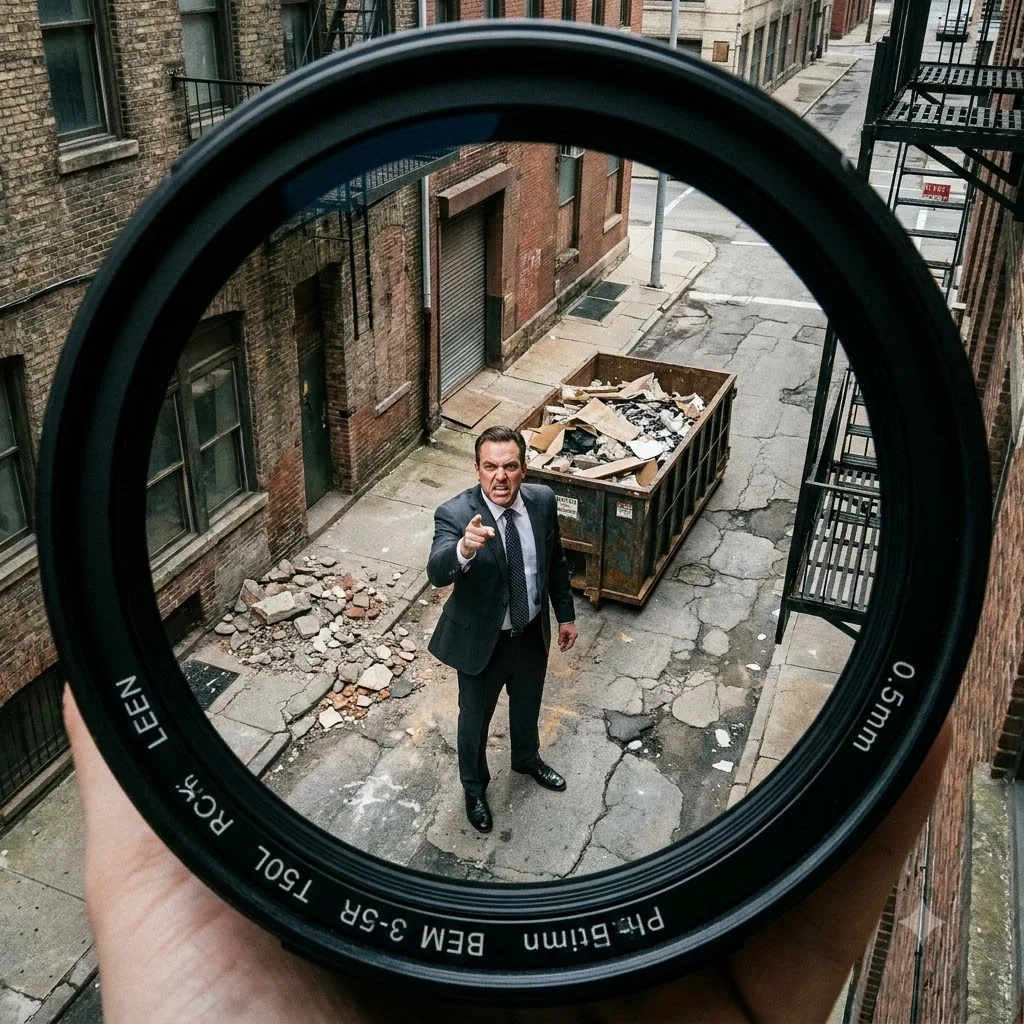
Story code: ST-000456
Part 3: The Liability
The third key slides into the top deadbolt. *Click.* The heavy brass mechanism disengages.
The doorknob twists. The heavy wooden door pushes inward, swinging exactly two inches before slamming into the solid mass of my two-hundred-pound oak filing cabinet. At the same moment, the thick steel security chain I mounted near the top hinge pulls taut with a violent, metallic snap.
Through the narrow vertical slit of open space, I see a slice of his charcoal suit.
“Move the barricade, Elias,” his voice filters through the crack, stripped of its earlier conversational warmth. “We are out of time.”
I stand paralyzed in the hallway, clutching the DSLR to my chest, my finger hovering over the shutter. I can barely breathe. My sanctuary has been breached.
“Very well,” the man says. He steps out of my narrow line of sight. I hear the heavy thud of a canvas bag hitting the landing tiles. A metallic clatter follows, then the unmistakable, high-pitched whine of a lithium-ion power drill revving up.
“As the legal owner of this property,” his voice projects loudly through the doorway, adopting a stiff, rehearsed cadence, “I am enacting a mandatory emergency inspection. There are severe reports of a gas leak and structural failure on this floor. Since you are refusing entry, I am compelled to breach the door for your own safety.”
It is a performance. He is laying down a legal audio track just in case anyone is listening, or in case my cell phone suddenly finds a signal.
The heavy drill bit bites into the brass housing of my top deadbolt. The noise is deafening-a screeching, mechanical grinding that vibrates through the floorboards and rattles my teeth. A shower of tiny metal shavings and sawdust sprays through the crack, dancing in the dim light of my hallway.
My heart hammers a frantic rhythm against my ribs. I look down at the heavy oak filing cabinet bracing the door. I look at the label on the top drawer. *2024 – Q4*.
Suddenly, the paralyzing fog of my panic parts, pierced by a sharp memory. Why the extreme measures? Why sever the phone lines, board the doors, and orchestrate a daytime raid? If a developer wants a tenant out, he files an eviction notice. He doesn’t bring a drill and cut off the outside world. He doesn’t look up at my specific window with a laser measurer unless he knows exactly what my lens has been pointed at.
The drill whines higher, the motor straining as it tears through the steel core of the lock.
He isn’t here to evict me. Silas Vance-the name I photographed on the demolition permits taped to the bakery door last week-is here for the hard drives in this cabinet.
Three weeks ago, during the unseasonably warm nights of late October, I couldn’t sleep. I had sat at my window, swapping my standard lens for an infrared-capable sensor. The bakery downstairs was being gutted. I watched Silas’s men hauling out massive, crumbling sheets of old insulation and ceiling tiles under the cover of darkness. There were no containment tents. No respiratory gear for the workers. No hazmat suits. They loaded the pulverized, dust-spewing debris into unmarked, rented box trucks.
Asbestos. Thousands of pounds of it, ripped out of a 1920s building and illegally dumped to save hundreds of thousands of dollars in EPA-mandated abatement costs.
I lunge forward, ignoring the screaming drill bit that is currently chewing through the doorframe just inches from my head. I grab the handle of the top drawer of the filing cabinet and yank it open.
My fingers scramble over the hanging green folders. *September. October.*
I find the manila folder labeled *Night-Haul*. I pull it out. Inside is a stack of 8×10 glossy prints I developed in my darkroom setup in the bathroom. They are crisp, perfectly exposed, and damning.
The security chain on the door gives way with a sickening crack, the long screws tearing out of the rotting woodframe. The door pushes inward another inch, now completely wedged against the heavy cabinet.
“Move back, Elias,” Silas shouts over the drill. “I’m cutting the hinges next!”
I drop to my knees on the dusty linoleum. The heavy brass mail slot at the bottom of my front door hasn’t been opened in ten years. The spring is stiff, resisting my fingers as I pry the flap inward.
I grab the first glossy photograph-a wide shot showing Silas standing next to the unmarked truck while two men toss a cloud of white, fibrous dust into the back. I slide it through the mail slot.
I grab the second photo-a tight, 600-millimeter zoom on Silas’s face, clear as day, illuminated by a streetlamp as he hands a thick wad of cash to the truck driver. I shove it through the slot.
I push three more photographs out onto the hallway tiles.
The drill stops.
The sudden silence in the hallway is heavy, broken only by my ragged, gasping breaths and the faint hum of my refrigerator in the kitchen.
I hear the rustle of stiff photographic paper. He is picking them up.
I press my face close to the gap between the door and the frame. I can’t see him, but I can hear his breathing now. It is shallow and erratic.
“The timestamp is embedded in the digital raw files,” I say, my voice shaking, yet louder than I have spoken in a decade. “The license plates on the rental trucks are legible. The faces of your crew are perfectly in focus.”
Silence radiates from the hallway.
“The EPA fine for illegal asbestos dumping is fifty thousand dollars per day, per violation,” I continue, the words pouring out of me as I grip the cold metal of the mail slot. “And federal prison time for the project manager directing it. I have three weeks of nightly documentation, safely backed up on an external server that automatically mirrors every forty-eight hours.”
A lie. My internet went down when he severed the lines, but he doesn’t know that.
I look through the narrow vertical crack. Silas steps back into my line of sight.
He is staring down at the photographs in his left hand. The heavy power drill dangles uselessly in his right. The thin, confident smile that he wore on the street is completely gone, replaced by a pale, rigid mask of realization. He isn’t looking at a helpless, agoraphobic squatter anymore. He is looking at a massive, radioactive financial liability that he just trapped himself inside a building with.
Silas opens his mouth to speak, but the smooth, rehearsed legal threats have evaporated. He stares at the glossy evidence of his felonies, utterly outmatched by the very lens he came to destroy.