Story code: ST-000456
Part 4: The Threshold
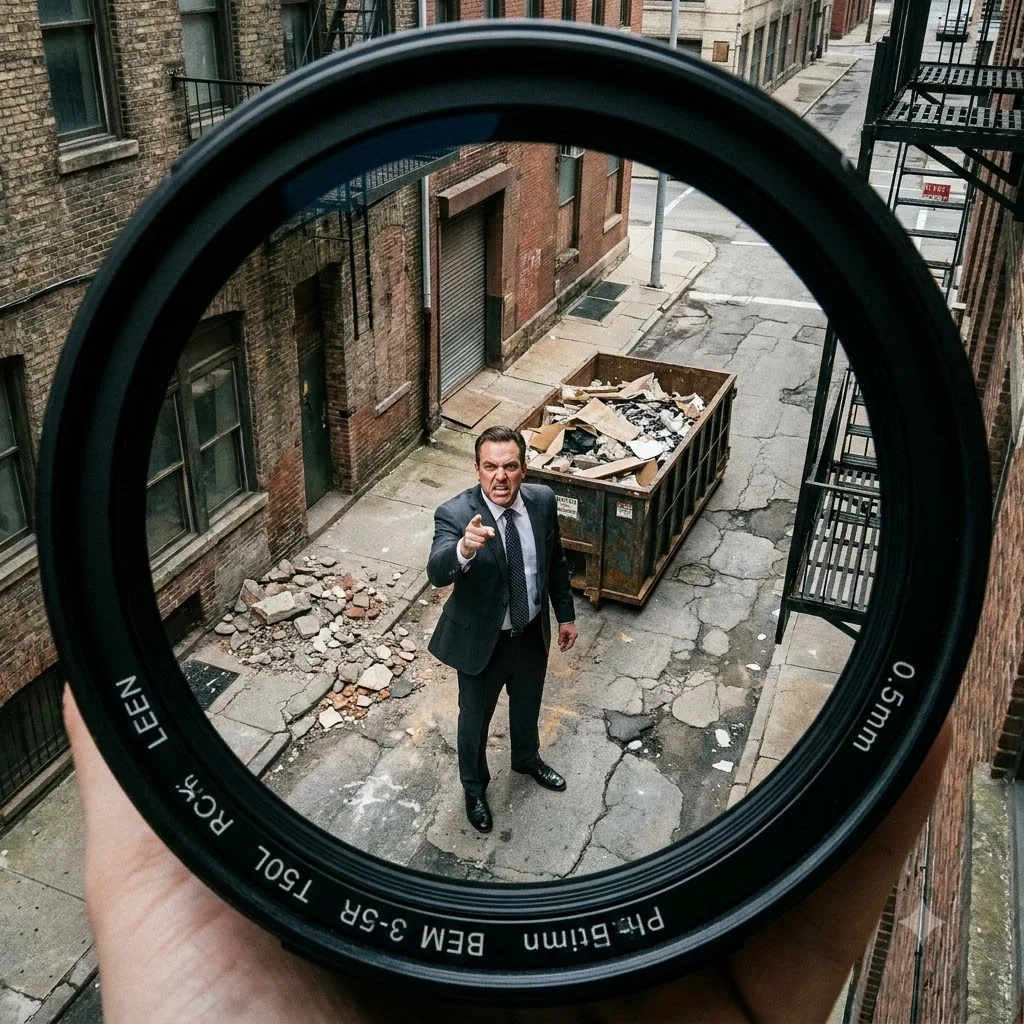
Through the two-inch gap between my splintered door and the heavy oak frame, I watch the color drain from Silas Vance’s face. He stares at the glossy prints in his hand, his thumb resting over the crisp, sixty-megapixel capture of him bribing a truck driver to haul away toxic waste.
He doesn’t yell. He doesn’t throw his weight against my two-hundred-pound barricade. The lithium-ion drill hangs limply at his side.
“You don’t have an internet connection, Elias,” he says finally, his voice stripped of the polished, theatrical authority he used just moments ago. It is a low, calculating rasp. “I cut the fiber line in the basement myself. Your automatic mirror server is unreachable.”
He is right. I know he is right. But I keep my eye aligned with the crack, forcing my trembling voice to remain steady. “The physical drives are hidden. And you are a smart enough man to know you cannot account for everything I’ve documented over ten years. Break this door down, and you invite the police. You invite an immediate, very public investigation into the asbestos, the bribes, and the safety violations. You ruin your empire.”
Silas looks at the gap, his eyes searching the darkness of my hallway. I can see him weighing his options, calculating the brutal math of his own survival. Breaking in now transforms a civil dispute and a quiet eviction into a violent crime scene involving a highly paranoid tenant who clearly holds the receipts.
He carefully tucks the photographs into the breast pocket of his charcoal suit. He bends down, unhurried, and unplugs the heavy battery from his drill. He tosses it into his canvas bag.
“We are at a stalemate, then,” Silas murmurs, looking one last time at the sliver of my face visible through the doorway. “I can’t come in. But you can’t come out.”
He turns his back to my shattered door. His leather shoes begin their descent down the stairs. *Clack. Clack. Clack.* The sound, previously a rhythm of impending violence, now echoes with a hollow, terrifying finality. I hear him reach the first floor. I hear the front vestibule door open. I hear him command the men outside.
“Leave the boards. Pack it up. We’re done for today.”
The heavy wrought-iron door slams shut. The rumble of the flatbed truck’s engine shakes the floorboards, and then it slowly fades down the street, leaving behind a silence so absolute it rings in my ears.
I do not move for a long time. My knees ache against the linoleum. The cold draft from the stairwell creeps through the two-inch gap, carrying the scent of damp plaster and century-old dust. It is the smell of the outside. It is inside my home.
I push myself up, my muscles trembling uncontrollably. I grab the edge of the heavy oak filing cabinet and pull. It takes three agonizing attempts, my breath hitching in my throat, before the metal base scrapes backward just enough to let the front door swing shut.
But it doesn’t shut. Not really. The hinges are strained, the wood splintered where the top deadbolt used to sit. The heavy brass cylinders I meticulously installed a decade ago are nothing but hollowed-out, jagged craters. I push the door flush against the frame, but it bounces back a fraction of an inch. It will never lock again. My fortress is broken.
I stumble backward into my dim living room. I look at my massive telephoto lens, still pointed at the empty street. I look at the walls that have held me safe, swaddled in a carefully controlled vacuum of isolation, for ten long years. They feel thin now. Like paper. The physical sanctuary of this apartment has been permanently violated. The illusion of safety has been drilled through and shattered on my hallway tiles.
I walk back to the filing cabinet. I pull open the heavy top drawer. Inside rests a sleek, black external hard drive containing the raw, unedited digital files of Silas’s illegal dumping. It is the key to ruining him. It is the evidence that will trigger the EPA, freeze his demolition permits, and save the building.
But Silas was right. The internet is severed. The analog phone line is dead. My cell phone displays a permanent banishment from the network. I cannot transmit this evidence from the safety of my desk. I cannot slip it into an anonymous email and remain a ghost.
I pick up the hard drive. It feels impossibly heavy in my palm.
I look at the splintered door. The gap is still there, a narrow sliver of the terrifying, unscripted world beyond my threshold. The hallway. The stairs. The boarded-up street. To destroy Silas Vance, to save the only home I have left, I have to carry this drive to a police station, or a news van, or a working phone.
My chest tightens, a familiar, suffocating band of iron wrapping around my lungs. The thought of stepping past the peeling brown paint sends a violent tremor down to my core. The air in the room suddenly feels too thin to breathe.
I won. I stopped him from taking my home today. But as I stand trembling in the ruins of my sanctuary, clutching the evidence that can finish him, I realize the bitter, inescapable cost of my victory. I have to open the door. And this time, I have to walk through it.