Story code: ST-000667
Part 1: The Intercept
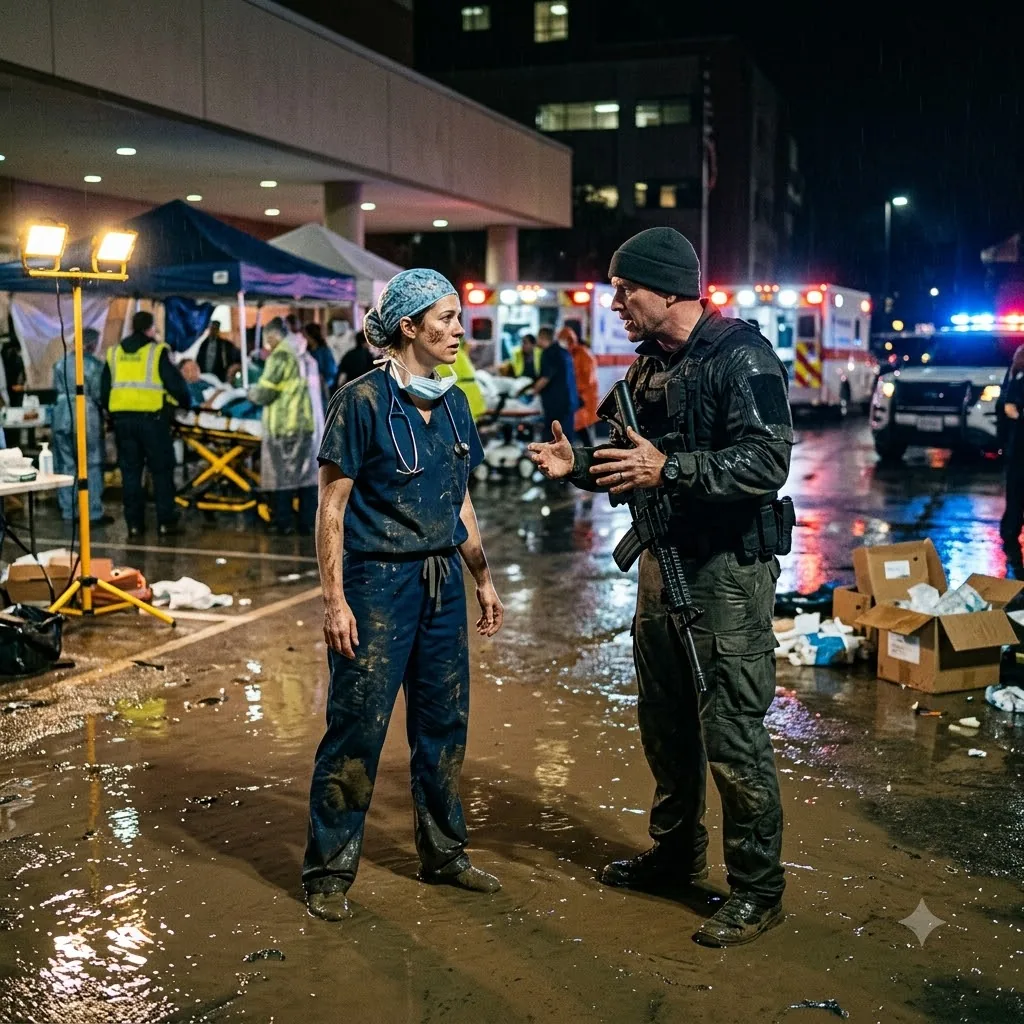
The generator exhaust tasted like diesel and copper, settling thick over the stagnant brown water that had swallowed the hospital parking lot. Dr. Sarah Lin dragged a blood-stained forearm across her forehead, trying to clear the mud from her eyes just as a man in dripping woodland camouflage pushed violently through the line of shivering, bleeding flood survivors. He was not a rescue worker.
Sarah dropped her trauma shears into a sterile metal tray with a sharp clatter. The valley had been completely underwater for thirty-six hours, forcing the entire emergency department out of the flooded first floor and into the brutal humidity of the upper lot. They were running on failing backup power, rationing clean bandages, and stepping over the dead. The sheer sensory crush of crying children, shouting paramedics, and the relentless drone of the Coast Guard helicopters should have masked any single sound. Yet the heavy, rhythmic crunch of tactical boots on wet asphalt cut through the chaos like a siren.
The man was massive, his broad shoulders squared beneath a heavy plate carrier that sagged with the weight of soaked nylon and ceramic body armor. A modified assault rifle hung on a rigid tactical sling across his chest, the black muzzle bouncing against his thigh with every aggressive stride. Sarah recognized the coiled snake insignia stitched in muted green thread on his shoulder patch. It was the emblem of a heavily armed local militia group that frequently ran tactical drills in the foothills, an organization known for their absolute, vocal distrust of government and institutional authority.
He was not limping. He held no injured child in his arms. He did not look left or right at the rows of folding cots holding the elderly and the crushed. A woman with a jagged laceration across her scalp reached out a trembling hand toward him, begging for a dry blanket. He knocked her arm away with the back of his wrist, his boots splashing through a puddle of crimson-stained rainwater as he marched directly past the primary medical evaluation zone.
Sarah felt a cold spike of adrenaline punch straight through her exhaustion. He was bypassing the trauma tents entirely. His eyes, shadowed beneath the drooping brim of a soaked tactical cap, were locked with terrifying intensity on the administration tables at the far end of the lot. Those flimsy folding tables held the satellite phones, the remaining supply of intravenous narcotics, and the shift coordinators managing the fragile logistics of the civilian evacuation.
An active shooter scenario in a flooded, open-air triage center would be an absolute slaughter. They had nowhere to run, no reinforced doors to lock, and no local police available within a fifty-mile radius of the highway washout.
A young triage nurse named Marcus froze in the center of the main aisle, a plastic clipboard trembling in his hands as the militiaman bore down on him. The armed man did not slow his pace. He simply lowered his shoulder, preparing to plow straight through the terrified nurse.
Sarah moved before her conscious mind could process the terrible risk. She stepped out from under the relative shelter of the trauma canopy, her boots sliding in the thick layer of river silt covering the pavement. She shoved Marcus hard to the right, sending the young nurse stumbling into a stack of empty wooden pallets just as the towering man in camouflage closed the remaining distance.
Sarah planted her feet squarely in the center of the path, blocking the narrow gap between the generator housing and the medical supply truck. She was five feet four inches of exhausted, mud-soaked surgeon, standing completely unarmed in the path of a man who looked ready to burn the camp to the ground.
The militiaman stopped short, his heavy combat boots skidding less than an inch from the toes of her ruined sneakers. Up close, the smell of him was overwhelming. It was a suffocating wave of swamp water, pungent gun oil, and sour, panicked sweat. His massive chest heaved against the rigid tactical plates. Muddy water dripped from the brim of his cap onto the black steel of his rifle receiver.
Sarah held her ground, forcing her hands to remain visible and unclenched at her sides. She stared directly into his bloodshot, wild eyes, bracing for the brutal crack of a rifle butt to her jaw or the deafening roar of a muzzle flash. She prepared to shout a warning to the administration staff scrambling behind her.
Instead of raising the rifle, the man let out a ragged, desperate sound from the back of his throat. He tore his right hand away from the weapon’s pistol grip and lunged toward his chest rig. His thick, scarred fingers ripped violently at the heavy velcro flap of a primary ammunition pouch.
Sarah flinched backward, bracing for the worst as he yanked something out of the tactical pocket.
The generator exhaust tasted like diesel and copper, settling thick over the stagnant brown water that had swallowed the hospital parking lot. Dr. Sarah Lin dragged a blood-stained forearm across her forehead, trying to clear the mud from her eyes just as a man in dripping woodland camouflage pushed violently through the line of shivering, bleeding flood survivors. He was not a rescue worker.
Sarah dropped her trauma shears into a sterile metal tray with a sharp clatter. The valley had been completely underwater for thirty-six hours, forcing the entire emergency department out of the flooded first floor and into the brutal humidity of the upper lot. They were running on failing backup power, rationing clean bandages, and stepping over the dead. The sheer sensory crush of crying children, shouting paramedics, and the relentless drone of the Coast Guard helicopters should have masked any single sound. Yet the heavy, rhythmic crunch of tactical boots on wet asphalt cut through the chaos like a siren.
The man was massive, his broad shoulders squared beneath a heavy plate carrier that sagged with the weight of soaked nylon and ceramic body armor. A modified assault rifle hung on a rigid tactical sling across his chest, the black muzzle bouncing against his thigh with every aggressive stride. Sarah recognized the coiled snake insignia stitched in muted green thread on his shoulder patch. It was the emblem of a heavily armed local militia group that frequently ran tactical drills in the foothills, an organization known for their absolute, vocal distrust of government and institutional authority.
He was not limping. He held no injured child in his arms. He did not look left or right at the rows of folding cots holding the elderly and the crushed. A woman with a jagged laceration across her scalp reached out a trembling hand toward him, begging for a dry blanket. He knocked her arm away with the back of his wrist, his boots splashing through a puddle of crimson-stained rainwater as he marched directly past the primary medical evaluation zone.
Sarah felt a cold spike of adrenaline punch straight through her exhaustion. He was bypassing the trauma tents entirely. His eyes, shadowed beneath the drooping brim of a soaked tactical cap, were locked with terrifying intensity on the administration tables at the far end of the lot. Those flimsy folding tables held the satellite phones, the remaining supply of intravenous narcotics, and the shift coordinators managing the fragile logistics of the civilian evacuation.
An active shooter scenario in a flooded, open-air triage center would be an absolute slaughter. They had nowhere to run, no reinforced doors to lock, and no local police available within a fifty-mile radius of the highway washout.
A young triage nurse named Marcus froze in the center of the main aisle, a plastic clipboard trembling in his hands as the militiaman bore down on him. The armed man did not slow his pace. He simply lowered his shoulder, preparing to plow straight through the terrified nurse.
Sarah moved before her conscious mind could process the terrible risk. She stepped out from under the relative shelter of the trauma canopy, her boots sliding in the thick layer of river silt covering the pavement. She shoved Marcus hard to the right, sending the young nurse stumbling into a stack of empty wooden pallets just as the towering man in camouflage closed the remaining distance.
Sarah planted her feet squarely in the center of the path, blocking the narrow gap between the generator housing and the medical supply truck. She was five feet four inches of exhausted, mud-soaked surgeon, standing completely unarmed in the path of a man who looked ready to burn the camp to the ground.
The militiaman stopped short, his heavy combat boots skidding less than an inch from the toes of her ruined sneakers. Up close, the smell of him was overwhelming. It was a suffocating wave of swamp water, pungent gun oil, and sour, panicked sweat. His massive chest heaved against the rigid tactical plates. Muddy water dripped from the brim of his cap onto the black steel of his rifle receiver.
Sarah held her ground, forcing her hands to remain visible and unclenched at her sides. She stared directly into his bloodshot, wild eyes, bracing for the brutal crack of a rifle butt to her jaw or the deafening roar of a muzzle flash. She prepared to shout a warning to the administration staff scrambling behind her.
Instead of raising the rifle, the man let out a ragged, desperate sound from the back of his throat. He tore his right hand away from the weapon’s pistol grip and lunged toward his chest rig. His thick, scarred fingers ripped violently at the heavy velcro flap of a primary ammunition pouch.
Sarah flinched backward, bracing for the worst as he yanked something out of the tactical pocket.