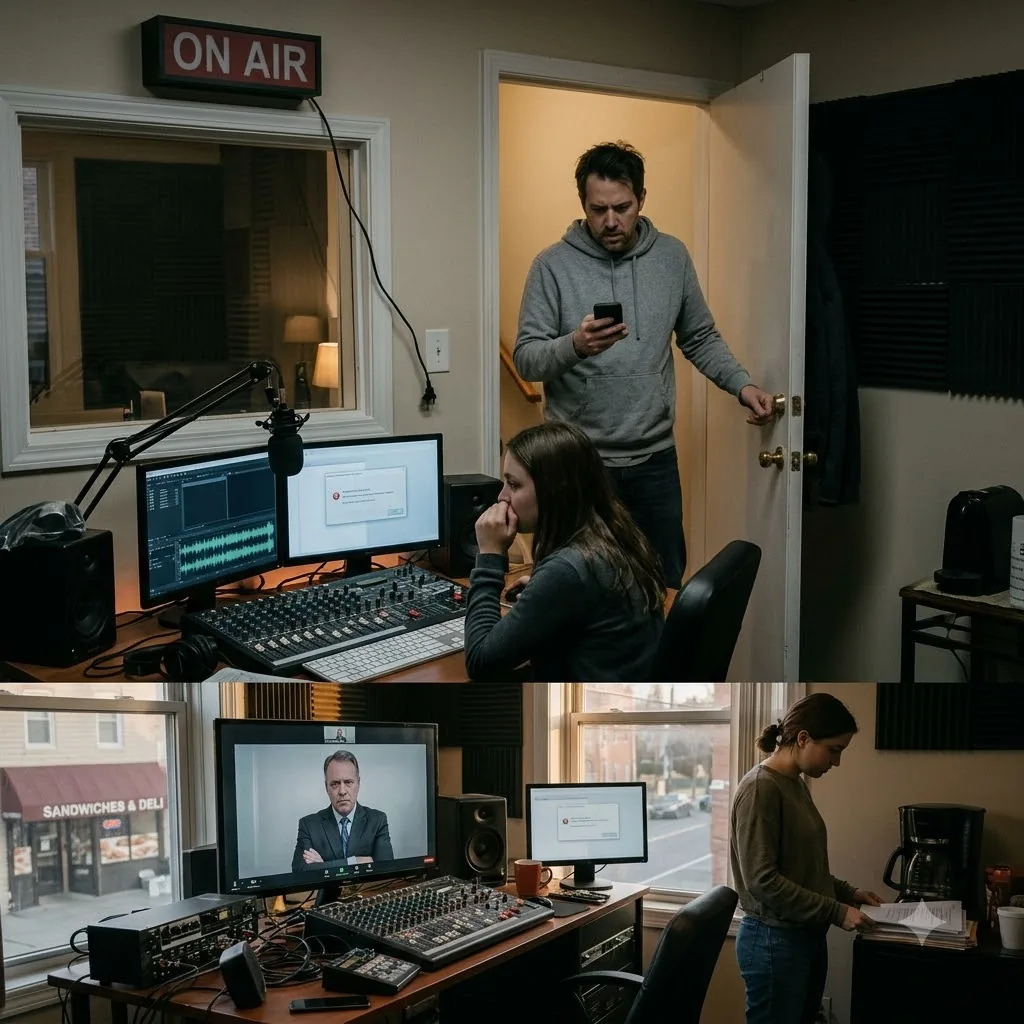
Story code: ST-001590
Part 1: Before the Mic Went Live
The red tally light above Studio B was dark.
Nico stopped in the doorway with one hand still on the push bar, gym bag sliding down his shoulder, coffee cooling against his palm. At this hour the room should have been noisy in a practiced way. Chairs scraping, segment cards changing hands, someone arguing over levels from the booth. Instead, every sound seemed trimmed down and placed carefully. A headset crackled once. Someone lowered it at once.
Three people looked up when he came in, and all three looked away too fast.
His cohost’s chair sat empty under the makeup lights. The monitor that usually ran the live countdown showed the station logo frozen on a blue screen. By the producer’s desk, Marisol stood with both hands flat on a stack of papers she wasn’t reading. She gave him a tight smile that reached nowhere near her eyes.
“You’re early,” she said.
“I’m two minutes early,” Nico said. His voice came out lighter than the room felt. “Did the building lose internet or did everyone decide to rehearse a funeral.”
No one laughed. Even the camera operator, Glen, who usually laughed before he knew whether something was funny, bent to fuss with a cable that was already taped down.
That was when Nico saw the conference screen rolled out beside the soundboard.
A woman filled the frame from a bright office somewhere else, all clean glass and white shelves and a company logo positioned over one shoulder. Sponsor branding. He recognized her from a dinner last spring, though he had only spoken to her for thirty seconds between a panel and dessert. Dana Keene. Strategic communications, or executive partnership response, or one of those titles that sounded helpful until it wasn’t.
She was already looking directly at him, as if she had been waiting for the shape of his body to appear in the doorway.
“There he is,” she said.
No one introduced them. No one needed to.
Nico set his coffee down on the nearest flat surface and missed the coaster by a few inches. “Morning.”
Dana did not return the greeting. “We need to move quickly.”
Marisol stepped toward him, then seemed to think better of touching his arm. “Can you come over here.”
He walked to the desk, feeling every eye in the room move with him and then pretend not to. On the edge of Marisol’s paperwork lay his run sheet for the day, but half the segments had been crossed out in thick black marker. The opening monologue was gone. The actor interview at eight-fifteen was gone. The sponsor read before the second break was circled so hard the paper had creased.
“What happened,” he said.
Marisol gave a tiny glance toward the staff around them, then lowered her voice without actually making it private. “There’s a clip.”
He waited for the rest. It did not come.
“A clip of what.”
Dana answered for her. “A clip of your remarks from after yesterday’s taping. It has spread overnight, and we are now in active response mode.”
The phrase landed in the room like furniture being set down. Active response mode. As if there were colored tabs for this. As if all they needed was the correct binder.
Nico looked from the screen to Marisol. “My remarks.”
Marisol licked her lip. “In the greenroom hallway. You were still miked for a minute.”
That made him stand a little straighter. Not because it clarified much, but because it narrowed the fog. Hallway. After taping. He remembered the crush of bodies, someone from wardrobe trying to get past him with a steamer, a junior producer saying they had to cut three minutes from the last block. He remembered being tired in the particular way that made every request sound like an accusation.
“I said a lot of things yesterday.”
No one contradicted him. No one volunteered the exact one.
Dana folded her hands. “The issue is not whether you remember. The issue is that our clients and affiliate partners are seeing a version of your statement detached from context, and that version is unacceptable.”
The coffee smell had gone sour in Nico’s nose. “Then play it.”
Glen looked at Marisol. Marisol looked at Dana. For one strange second the whole room seemed arranged around the right to press a button.
Dana spoke first. “That would not be productive at this stage.”
Nico gave a short laugh. “So I’m supposed to apologize to a ghost.”
“No,” Dana said. “You are going to address the audience, acknowledge harm, and thank the partners who support accountability.”
There it was, plain enough to hear. Not the sentence itself, not whatever the clip had captured and thrown out into the world, but the shape of the punishment waiting for him.
Marisol slid a single page free from the stack. “We paused the livestream start. We have maybe six minutes before stations need a decision. If we go dark, that becomes its own story by the top of the hour.”
“So the sponsor shuts the valve unless I read a statement.”
Marisol did not answer. She passed him the page.
He took it. The paper was warm from her hands. At the top, under the station letterhead, someone had typed his name and the word Statement in calm black font. Beneath that, the lines were short and spaced for breath marks, built to sound sincere on the first read. Nico’s eyes moved over words like regret and responsibility and learning. Midway down, one sentence had been highlighted in pale yellow.
He read that one twice.
Dana’s voice came through the speaker, crisp and practiced. “That language is essential.”
Nico looked up. “Essential to who.”
“To rebuilding trust,” Dana said. “You will also avoid improvising, avoid defensiveness, and avoid reference to your early career role except as written.”
Early career role.
The phrase snagged. Not because it was mysterious. Because it was precise. Because it reached backward with two neat fingers toward the thing everyone always mentioned first when they introduced him, the thing that had opened doors and kept opening them long after he stopped wanting to walk through that version of himself.
Marisol shifted her weight. “Nico.”
He looked at the page again. The yellow line sat there with a kind of cheerful brutality. It was not enough that he say he was sorry. The sentence wanted him grateful. It wanted him to bow while doing it.
From the booth, someone counted down the minutes to local carriage in a whisper, as if saying numbers too loudly might break what little was holding.
Nico drew a breath and lifted the paper higher. “Good morning,” he began, though no cameras were live. His voice sounded wrong in the silent room, too polished by habit. He swallowed and kept going. “Before we begin today’s show, I want to address comments I made yesterday and thank our partners for holding me accountable as I take this moment to-”
He stopped.
The red tally light above Studio B was dark.
Nico stopped in the doorway with one hand still on the push bar, gym bag sliding down his shoulder, coffee cooling against his palm. At this hour the room should have been noisy in a practiced way. Chairs scraping, segment cards changing hands, someone arguing over levels from the booth. Instead, every sound seemed trimmed down and placed carefully. A headset crackled once. Someone lowered it at once.
Three people looked up when he came in, and all three looked away too fast.
His cohost’s chair sat empty under the makeup lights. The monitor that usually ran the live countdown showed the station logo frozen on a blue screen. By the producer’s desk, Marisol stood with both hands flat on a stack of papers she wasn’t reading. She gave him a tight smile that reached nowhere near her eyes.
“You’re early,” she said.
“I’m two minutes early,” Nico said. His voice came out lighter than the room felt. “Did the building lose internet or did everyone decide to rehearse a funeral.”
No one laughed. Even the camera operator, Glen, who usually laughed before he knew whether something was funny, bent to fuss with a cable that was already taped down.
That was when Nico saw the conference screen rolled out beside the soundboard.
A woman filled the frame from a bright office somewhere else, all clean glass and white shelves and a company logo positioned over one shoulder. Sponsor branding. He recognized her from a dinner last spring, though he had only spoken to her for thirty seconds between a panel and dessert. Dana Keene. Strategic communications, or executive partnership response, or one of those titles that sounded helpful until it wasn’t.
She was already looking directly at him, as if she had been waiting for the shape of his body to appear in the doorway.
“There he is,” she said.
No one introduced them. No one needed to.
Nico set his coffee down on the nearest flat surface and missed the coaster by a few inches. “Morning.”
Dana did not return the greeting. “We need to move quickly.”
Marisol stepped toward him, then seemed to think better of touching his arm. “Can you come over here.”
He walked to the desk, feeling every eye in the room move with him and then pretend not to. On the edge of Marisol’s paperwork lay his run sheet for the day, but half the segments had been crossed out in thick black marker. The opening monologue was gone. The actor interview at eight-fifteen was gone. The sponsor read before the second break was circled so hard the paper had creased.
“What happened,” he said.
Marisol gave a tiny glance toward the staff around them, then lowered her voice without actually making it private. “There’s a clip.”
He waited for the rest. It did not come.
“A clip of what.”
Dana answered for her. “A clip of your remarks from after yesterday’s taping. It has spread overnight, and we are now in active response mode.”
The phrase landed in the room like furniture being set down. Active response mode. As if there were colored tabs for this. As if all they needed was the correct binder.
Nico looked from the screen to Marisol. “My remarks.”
Marisol licked her lip. “In the greenroom hallway. You were still miked for a minute.”
That made him stand a little straighter. Not because it clarified much, but because it narrowed the fog. Hallway. After taping. He remembered the crush of bodies, someone from wardrobe trying to get past him with a steamer, a junior producer saying they had to cut three minutes from the last block. He remembered being tired in the particular way that made every request sound like an accusation.
“I said a lot of things yesterday.”
No one contradicted him. No one volunteered the exact one.
Dana folded her hands. “The issue is not whether you remember. The issue is that our clients and affiliate partners are seeing a version of your statement detached from context, and that version is unacceptable.”
The coffee smell had gone sour in Nico’s nose. “Then play it.”
Glen looked at Marisol. Marisol looked at Dana. For one strange second the whole room seemed arranged around the right to press a button.
Dana spoke first. “That would not be productive at this stage.”
Nico gave a short laugh. “So I’m supposed to apologize to a ghost.”
“No,” Dana said. “You are going to address the audience, acknowledge harm, and thank the partners who support accountability.”
There it was, plain enough to hear. Not the sentence itself, not whatever the clip had captured and thrown out into the world, but the shape of the punishment waiting for him.
Marisol slid a single page free from the stack. “We paused the livestream start. We have maybe six minutes before stations need a decision. If we go dark, that becomes its own story by the top of the hour.”
“So the sponsor shuts the valve unless I read a statement.”
Marisol did not answer. She passed him the page.
He took it. The paper was warm from her hands. At the top, under the station letterhead, someone had typed his name and the word Statement in calm black font. Beneath that, the lines were short and spaced for breath marks, built to sound sincere on the first read. Nico’s eyes moved over words like regret and responsibility and learning. Midway down, one sentence had been highlighted in pale yellow.
He read that one twice.
Dana’s voice came through the speaker, crisp and practiced. “That language is essential.”
Nico looked up. “Essential to who.”
“To rebuilding trust,” Dana said. “You will also avoid improvising, avoid defensiveness, and avoid reference to your early career role except as written.”
Early career role.
The phrase snagged. Not because it was mysterious. Because it was precise. Because it reached backward with two neat fingers toward the thing everyone always mentioned first when they introduced him, the thing that had opened doors and kept opening them long after he stopped wanting to walk through that version of himself.
Marisol shifted her weight. “Nico.”
He looked at the page again. The yellow line sat there with a kind of cheerful brutality. It was not enough that he say he was sorry. The sentence wanted him grateful. It wanted him to bow while doing it.
From the booth, someone counted down the minutes to local carriage in a whisper, as if saying numbers too loudly might break what little was holding.
Nico drew a breath and lifted the paper higher. “Good morning,” he began, though no cameras were live. His voice sounded wrong in the silent room, too polished by habit. He swallowed and kept going. “Before we begin today’s show, I want to address comments I made yesterday and thank our partners for holding me accountable as I take this moment to-”
He stopped.