Story code: ST-001589
Part 4: What They Called Process
By the time Marisol saw Tino again, the story had already started shedding its first skin.
Not online. Not in any brave, public way. In hallways. In forwarded screenshots. In the careful new tone people used when they realized a lie had been told too early in front of too many witnesses.
Tino came through the front door just before dark with his jaw set and his borrowed badge gone. He looked wrung out, not triumphant. Marisol met him in the kitchen, where she had spent the last hour pretending to read the same three lines of an old discharge-planning binder she had brought home months ago.
“What happened?” she asked.
He put his phone on the table between them. “The consultant sent emails before somebody could pin it all on her in the room.”
On the screen was a thread of messages, each one photographed from somebody else’s device, then passed again. Mina’s name sat at the top beside a hospital foundation address. In clipped, frightened paragraphs she had sent contemporaneous notes, draft folders, and timestamps to the event moderator, two board members, and a foundation accountant she called “for record preservation.” She named donor calls. She named Sandra Vale. She named Celia. She wrote that language about “household risk” and “family instability” had been shaped in advance so later complaints could look organic. In one message, a donor liaison had asked whether “the nurse spouse can be frozen out quietly before this turns sympathetic.”
Marisol read that line twice.
Frozen out quietly.
The kitchen seemed to pull inward around it. Her badge. Her locker. The wellness task force. The warning not to speak to anyone. Not over concern. Not even over the edited clip, really. Because someone wanted her cooled down, isolated, and easy to move.
“Who has this now?” she asked.
“Enough people,” Tino said. “Not everybody. Enough that they can’t tuck it back in the folder and call it miscommunication.”
Her phone vibrated almost on cue. For one second she thought it might be another blocked number, another picture from the street. Instead it was the same HR representative as before, leaving a voicemail in a voice stripped so flat it sounded prewritten.
Ms. Alvarez, we are revising the status of your administrative review pending further internal clarification. You are requested not to report tonight, but your leave will be coded paid through the week. We will follow up regarding task-force participation and badge restoration.
Marisol deleted nothing. She just set the phone down.
“Paid through the week,” she said.
Tino let out one humorless breath. “So now they found a softer word for what they did.”
By morning the hospital had one story for inside and another for outside. Inside, staff heard there had been process failures, premature action, and an unfortunate breakdown in communication between foundation contacts and administrative review channels. Outside, through a brief statement sent to local reporters, St. Agnes said it remained committed to fairness, employee dignity, and the careful separation of donor interests from personnel matters.
No one called it retaliation. No one called it a campaign.
But Marisol’s unit manager called before noon and sounded as if she had aged five years overnight.
“I should have pushed harder,” she said without preamble. “I was told this was above me and time-sensitive. I signed off on coverage before I asked enough questions.”
Marisol stood by the sink, looking out at the side yard where wind kept worrying the same bent section of fence. “Are they putting me back on the schedule?”
“Tentatively, yes. Maybe next week. They haven’t restored system access yet.” A pause. “And the task force chair asked whether you’d still be willing to come back once they make it official.”
Willing. As if willingness were the only thing damaged.
“I don’t know,” Marisol said.
That answer seemed to surprise them both.
At the docks, Tino got less. His foreman texted that the site was reviewing assignments and that he might be brought back after the delay vote on the wind staging contract, depending on “overall temperature.” No apology. No paid leave. No promise of hours. Just another way of saying wait while other people decide how expensive your name has become.
The local council held the vote that evening anyway. The project survived by one narrow margin, but the staging expansion near the south harbor was delayed for more review, sold as a concession to community trust. Men on television called it balance. Tino watched in silence from the couch, one hand over his mouth, while a councilmember thanked residents on all sides for keeping the debate civil.
Marisol did not ask him what that word did to him. She knew.
By the second day, Sandra Vale had stepped away from two visible foundation roles “while procedures were assessed.” Celia did worse and better at once. She did not resign. She appeared at a podium in a cream jacket and said she was deeply troubled by how concerns had moved through informal channels, that no family should feel threatened, and that she had always urged proper process. She spoke as if process had risen on its own like bad weather and drenched everyone equally.
Marisol watched the clip once and shut it off.
At church that Sunday, three people hugged her too hard, two avoided her entirely, and one woman from the foundation auxiliary touched her wrist and said, “I’m sure nobody meant harm.” Marisol looked at her until the woman finally took her hand back.
The smaller losses kept arriving where no statement could reach them. Elena came home from school asking why someone’s mother had told her friend that her dad yelled at rich ladies for a living. Tino’s sister stopped sending updates from the family group chat after Marisol learned she had repeated the rumor-page version of the forum to “keep everybody informed.” A neighbor who had borrowed their ladder twice in one summer suddenly waved only from the sidewalk, as if closeness itself might become a fileable risk.
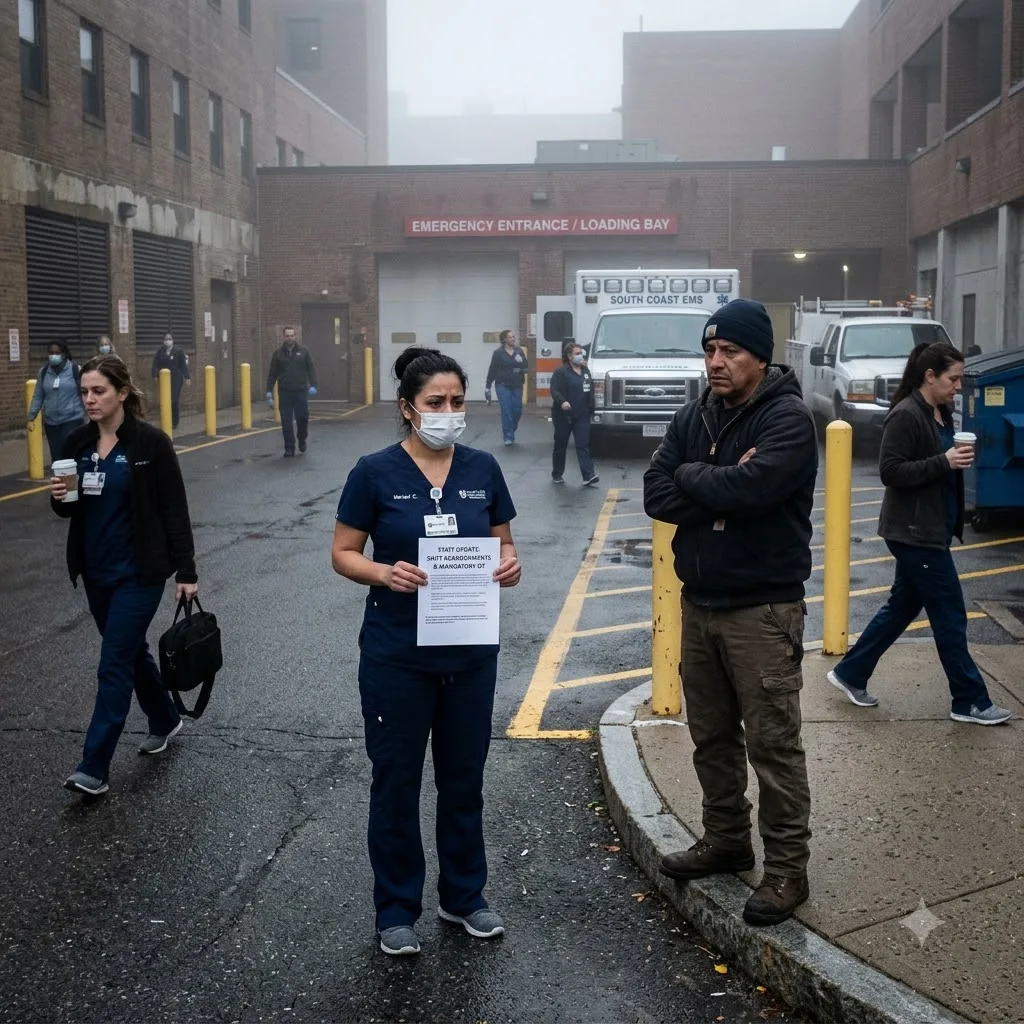
When Marisol finally returned to the hospital the following Tuesday, her old badge worked again, but not at the staff wellness office. Systems had restored her unit access and payroll first. Committee permissions, she was told, would take another day or two.
She stood outside that locked door longer than she meant to. Through the narrow wired glass she could see the round table where she had once stayed late stuffing survey envelopes, the bulletin board where she had pinned resource lists, the cheap basket of tea bags she had bought with her own money because the budget had never covered small comforts until donors could put their names on them.
A passing nurse slowed, then kept going.
Marisol touched the badge against the reader once more, knowing it would stay red. The click never came.
It was such a small thing, a door not opening. Still, it held the whole week inside it. The threat at the house. The paid leave that was not kindness. The statements about dignity from people who had tested how much humiliation could be done in careful language. Tino waiting on hours that might not return. Elena learning, too early, that class power rarely sounds like hatred when it is doing its work well.
Marisol let the badge fall back against her scrub top. Then she turned from the locked office and went to start her shift carrying the plain, durable hurt of knowing that in her world the language of care could be made to serve cruelty, and still arrive dressed as responsibility.