Story code: ST-000858
Part 1: The Digital Wall
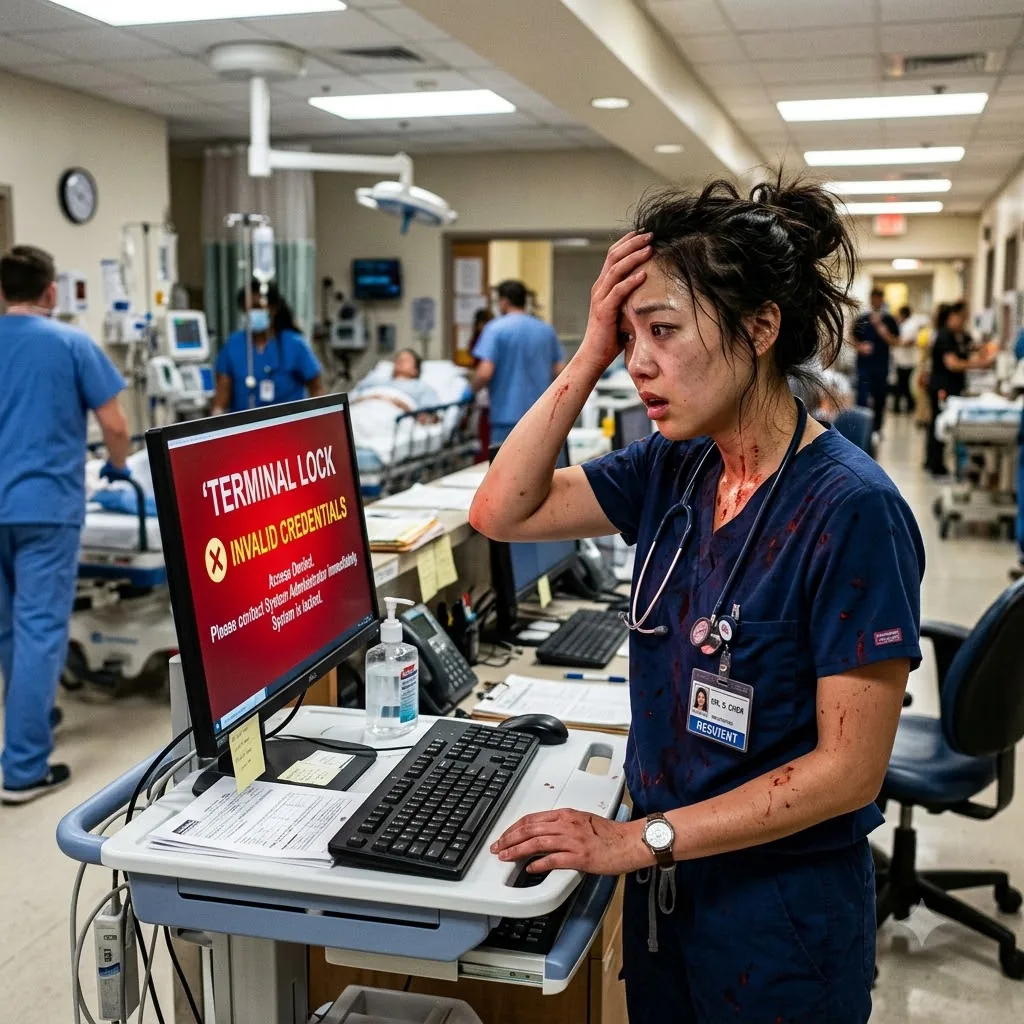
The monitors in Trauma Bay One screamed a frantic, jagged rhythm as Mateo pressed his palm flat against the chest of the crushed motorcyclist. “Pushing two units uncrossmatched,” a nurse shouted over the mechanical hiss of the ventilator. Mateo nodded, his scrubs already soaked through at the knees from kneeling on the blood-slicked tile. He lunged toward the wall-mounted workstation to authorize the massive transfusion protocol and tapped his ID badge against the proximity reader. A sharp double-beep cut through the room noise, and the screen flashed a solid, unforgiving crimson. ACCESS DENIED – CREDENTIALS INVALID.
Mateo wiped a streak of sweat from his forehead with the back of a gloved wrist and slammed the plastic card against the reader a second time. The screen held its glaring red error message. The motorcyclist’s blood pressure continued its lethal plummet on the overhead monitor.
“Mateo, the protocol,” the charge nurse snapped, holding a line of tubing in her hands. She stared at him, waiting for the digital clearance that would unlock the blood cooler.
He typed his manual override code into the keyboard. The keys clattered under his rapid strikes, but the system immediately spat back the same bright red text. His entire profile was gone, wiped completely from the hospital’s electronic health record system. There was no loading icon, no maintenance warning, just a digital brick wall in the middle of a dying man’s resuscitation.
“My badge is dead,” Mateo said, pivoting away from the useless terminal. “Verbal order, emergent override. Sarah, badge in on your credentials and document a verbal from me. Get that blood in him now.”
Sarah did not hesitate. She swiped her own badge, the screen flashing an accommodating green, and the cooler lock clicked open. Mateo returned to the bedside, pushing the digital impossibility out of his mind. He focused entirely on the physical reality of the patient. He packed gauze into the pelvic wound, his hands moving with the practiced, aggressive precision of a top-tier resident in his element. The next twenty minutes dissolved into a blur of tearing tape, snapping clamps, and the heavy metallic smell of copper.
Slowly, the frantic tempo of the room downshifted. The monitors settled into a steady, sustainable hum. The surgical team arrived, taking control of the gurney and rolling the stabilized patient out the double doors toward the operating rooms.
Mateo stood alone in the center of the emptied trauma bay. He stripped his bloody gloves off, tossing them into the biohazard bin with a wet slap. His chest heaved as the adrenaline began its slow, inevitable retreat. He walked over to the workstation and stared at the dark screen. He tapped his badge against the reader one more time.
The red screen returned instantly.
System outages happened, but they affected the whole floor. The computers would freeze, or the central server would lag. They did not surgically erase a single physician’s credentials in the middle of a code. He reached into his pocket and pulled out his phone, expecting to see a mass email from IT about a server migration or a routine system error.
His lock screen was entirely clear of IT notifications. Instead, a single text message sat at the top of his alerts, flagged with the high-priority red exclamation point reserved for internal emergencies. It was not from the chief resident. It was not from the trauma attending.
The sender ID read: HOSPITAL ADMINISTRATION – HUMAN RESOURCES.
Mateo opened the message. The text was brief, devoid of the usual corporate pleasantries, and bore a timestamp matching the exact second his badge had failed at the terminal. Dr. Mateo Ruiz. Your clinical privileges are suspended pending immediate review. Report to the fourth-floor executive conference room upon receipt of this message. Do not interact with patients.
He read the words three times. The sterile fluorescent lights of the trauma bay seemed to buzz louder. A suspension required a massive clinical error, a catastrophic failure in judgment, or a gross violation of hospital policy. He was the top resident in his cohort. He had just saved a man’s life.
Mateo left the trauma bay and walked down the main corridor. The usual chaotic energy of the emergency department swirled around him, but he felt entirely detached from it. He passed the security desk, the automated sliding doors of the ambulance bay, and stepped into the staff elevator. He pressed the button for the fourth floor.
The doors parted to reveal the quiet, carpeted hallway of the executive suite. The contrast to the bloody tile of the trauma bay was jarring. Mateo walked toward the heavy glass doors of the conference room. He could see the silhouettes of three people sitting around the polished mahogany table waiting for him. He reached for the handle, bracing himself for whatever accusation lay on the other side. Before his fingers could make contact with the metal, the door was pulled open from the inside by a man holding a thick, unmarked manila folder.
The monitors in Trauma Bay One screamed a frantic, jagged rhythm as Mateo pressed his palm flat against the chest of the crushed motorcyclist. “Pushing two units uncrossmatched,” a nurse shouted over the mechanical hiss of the ventilator. Mateo nodded, his scrubs already soaked through at the knees from kneeling on the blood-slicked tile. He lunged toward the wall-mounted workstation to authorize the massive transfusion protocol and tapped his ID badge against the proximity reader. A sharp double-beep cut through the room noise, and the screen flashed a solid, unforgiving crimson. ACCESS DENIED – CREDENTIALS INVALID.
Mateo wiped a streak of sweat from his forehead with the back of a gloved wrist and slammed the plastic card against the reader a second time. The screen held its glaring red error message. The motorcyclist’s blood pressure continued its lethal plummet on the overhead monitor.
“Mateo, the protocol,” the charge nurse snapped, holding a line of tubing in her hands. She stared at him, waiting for the digital clearance that would unlock the blood cooler.
He typed his manual override code into the keyboard. The keys clattered under his rapid strikes, but the system immediately spat back the same bright red text. His entire profile was gone, wiped completely from the hospital’s electronic health record system. There was no loading icon, no maintenance warning, just a digital brick wall in the middle of a dying man’s resuscitation.
“My badge is dead,” Mateo said, pivoting away from the useless terminal. “Verbal order, emergent override. Sarah, badge in on your credentials and document a verbal from me. Get that blood in him now.”
Sarah did not hesitate. She swiped her own badge, the screen flashing an accommodating green, and the cooler lock clicked open. Mateo returned to the bedside, pushing the digital impossibility out of his mind. He focused entirely on the physical reality of the patient. He packed gauze into the pelvic wound, his hands moving with the practiced, aggressive precision of a top-tier resident in his element. The next twenty minutes dissolved into a blur of tearing tape, snapping clamps, and the heavy metallic smell of copper.
Slowly, the frantic tempo of the room downshifted. The monitors settled into a steady, sustainable hum. The surgical team arrived, taking control of the gurney and rolling the stabilized patient out the double doors toward the operating rooms.
Mateo stood alone in the center of the emptied trauma bay. He stripped his bloody gloves off, tossing them into the biohazard bin with a wet slap. His chest heaved as the adrenaline began its slow, inevitable retreat. He walked over to the workstation and stared at the dark screen. He tapped his badge against the reader one more time.
The red screen returned instantly.
System outages happened, but they affected the whole floor. The computers would freeze, or the central server would lag. They did not surgically erase a single physician’s credentials in the middle of a code. He reached into his pocket and pulled out his phone, expecting to see a mass email from IT about a server migration or a routine system error.
His lock screen was entirely clear of IT notifications. Instead, a single text message sat at the top of his alerts, flagged with the high-priority red exclamation point reserved for internal emergencies. It was not from the chief resident. It was not from the trauma attending.
The sender ID read: HOSPITAL ADMINISTRATION – HUMAN RESOURCES.
Mateo opened the message. The text was brief, devoid of the usual corporate pleasantries, and bore a timestamp matching the exact second his badge had failed at the terminal. Dr. Mateo Ruiz. Your clinical privileges are suspended pending immediate review. Report to the fourth-floor executive conference room upon receipt of this message. Do not interact with patients.
He read the words three times. The sterile fluorescent lights of the trauma bay seemed to buzz louder. A suspension required a massive clinical error, a catastrophic failure in judgment, or a gross violation of hospital policy. He was the top resident in his cohort. He had just saved a man’s life.
Mateo left the trauma bay and walked down the main corridor. The usual chaotic energy of the emergency department swirled around him, but he felt entirely detached from it. He passed the security desk, the automated sliding doors of the ambulance bay, and stepped into the staff elevator. He pressed the button for the fourth floor.
The doors parted to reveal the quiet, carpeted hallway of the executive suite. The contrast to the bloody tile of the trauma bay was jarring. Mateo walked toward the heavy glass doors of the conference room. He could see the silhouettes of three people sitting around the polished mahogany table waiting for him. He reached for the handle, bracing himself for whatever accusation lay on the other side. Before his fingers could make contact with the metal, the door was pulled open from the inside by a man holding a thick, unmarked manila folder.