Story code: ST-001854
Part 1: The Red Slip
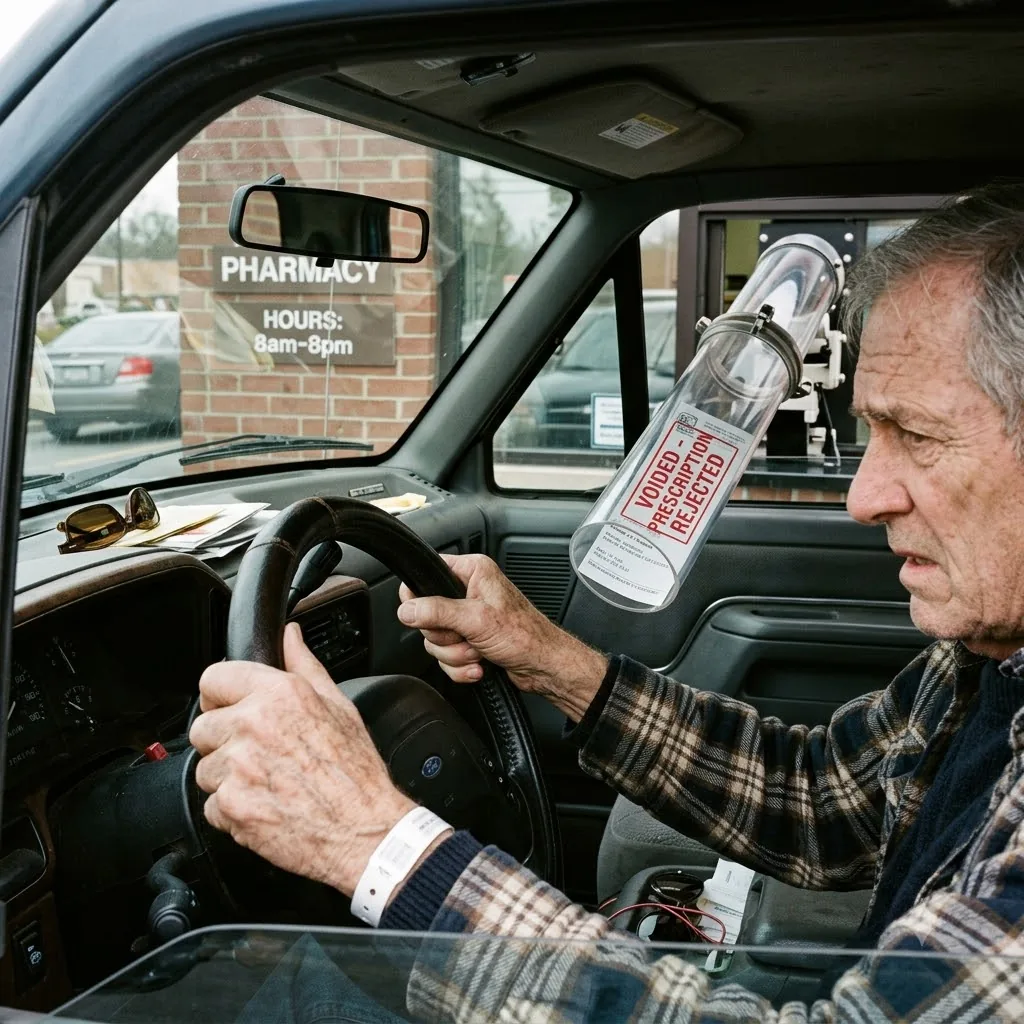
The plastic capsule shot down the pneumatic tube and slammed into the metal delivery bin with a hollow thud. Elias reached out his driver’s side window, his breath catching as the simple rotation of his torso pulled at the fused vertebrae in his lower back. He popped the cylindrical capsule open, expecting the familiar, reassuring rattle of his amber pill bottle. Instead, his thick fingers brushed a single slip of paper. It was bright red. A bold, capitalized stamp across the top read REJECTED – SEE PHARMACIST. The intercom speaker on the metal box crackled to life. A muffled, distorted voice instructed him to pull his vehicle forward and clear the lane immediately, offering no further explanation. Elias stared at the red slip, his heart hammering against his ribs. His prescription was not early. His doctor had authorized the refill exactly on schedule, just as he had every month for the past four years.
A horn blared close behind his bumper. Elias dropped the red slip onto his lap and gripped the steering wheel with both hands. He pressed his right foot toward the gas pedal, intending to inch forward, but a jagged spike of white-hot agony shot from his damaged lumbar spine straight down through his sciatic nerve. His leg seized instantly, trembling violently against the floorboard. He gasped, squeezing his eyes shut as a sudden cold sweat broke out across his forehead and the back of his neck. The pain was not a dull, manageable ache. It was a solid, physical wall, thick and sharp, slicing through his muscle tissue like a serrated blade. He desperately tried to shift his weight to leverage his arms, needing to turn the heavy steering wheel to navigate the tight, concrete curve of the drive-thru exit lane. As his shoulders rotated, the locking mechanism in his spine felt as if it were grinding broken glass directly into his nerve endings.
He froze, paralyzed halfway through the turn, his breath coming in shallow, ragged bursts. The car remained entirely motionless. Behind him, the horn sounded again, longer and more aggressive this time, joined by the muffled, angry shout of a woman in a silver sedan. Elias rolled his window up halfway, trying to block out the escalating noise and the glaring afternoon sun. He looked down at the red slip resting on his thigh. He had followed every single rule the medical board mandated. He submitted to the random, degrading urine screens. He drove in for the mandatory monthly pill counts. He signed the endless forms attesting to his strict compliance. The pain management clinic was his only lifeline, the singular reason he could walk upright, the only reason he could hold down his job as a construction estimator. Now, without a single warning, the legitimate medical system had locked its doors and shut him out.
The digital clock on the dashboard blinked steadily, marking the minutes he was supposed to be back at his desk reviewing blueprints. The pain radiated upward into his ribs now, a sickening, relentless throb that made his vision blur at the edges. A sharp, rhythmic rap on the driver’s side glass startled him. A pharmacy technician in a blue smock stood outside in the narrow lane, pointing aggressively toward the exit, her mouth moving in silent, furious commands. Elias pointed frantically at his back, shaking his head, his face pale and slick with sweat. He shoved the gear shift into park because his trembling leg could no longer hold the brake pedal down.
The technician threw her hands up in exasperation and stormed back toward the rear door of the building, pulling a radio from her belt. The line of cars behind his sedan now stretched all the way out to the main road, a chaotic chorus of horns echoing off the brick facade of the pharmacy. Elias slumped against the headrest, completely trapped in a prison of his own failing anatomy. He could not drive. He could not walk inside the store to demand answers. The searing agony had reduced his entire world to the front seat of his car. He reached for his phone on the center console, his fingers clumsy and numb. He opened his contacts and scrolled past his coworkers, past his doctor’s office, down to a name he had sworn to himself he would never dial again. The screen illuminated the name Marcus. Six years of absolute silence sat between them, a massive gulf built on broken laws, violence, and unpaid debts. Elias stared at the ten digits, his chest tight with a heavy, suffocating shame. He watched through the rearview mirror as the technician marched back outside, followed closely by a security guard in a high-visibility vest. Elias hit the green call button and pressed the phone to his ear.
The plastic capsule shot down the pneumatic tube and slammed into the metal delivery bin with a hollow thud. Elias reached out his driver’s side window, his breath catching as the simple rotation of his torso pulled at the fused vertebrae in his lower back. He popped the cylindrical capsule open, expecting the familiar, reassuring rattle of his amber pill bottle. Instead, his thick fingers brushed a single slip of paper. It was bright red. A bold, capitalized stamp across the top read REJECTED – SEE PHARMACIST. The intercom speaker on the metal box crackled to life. A muffled, distorted voice instructed him to pull his vehicle forward and clear the lane immediately, offering no further explanation. Elias stared at the red slip, his heart hammering against his ribs. His prescription was not early. His doctor had authorized the refill exactly on schedule, just as he had every month for the past four years.
A horn blared close behind his bumper. Elias dropped the red slip onto his lap and gripped the steering wheel with both hands. He pressed his right foot toward the gas pedal, intending to inch forward, but a jagged spike of white-hot agony shot from his damaged lumbar spine straight down through his sciatic nerve. His leg seized instantly, trembling violently against the floorboard. He gasped, squeezing his eyes shut as a sudden cold sweat broke out across his forehead and the back of his neck. The pain was not a dull, manageable ache. It was a solid, physical wall, thick and sharp, slicing through his muscle tissue like a serrated blade. He desperately tried to shift his weight to leverage his arms, needing to turn the heavy steering wheel to navigate the tight, concrete curve of the drive-thru exit lane. As his shoulders rotated, the locking mechanism in his spine felt as if it were grinding broken glass directly into his nerve endings.
He froze, paralyzed halfway through the turn, his breath coming in shallow, ragged bursts. The car remained entirely motionless. Behind him, the horn sounded again, longer and more aggressive this time, joined by the muffled, angry shout of a woman in a silver sedan. Elias rolled his window up halfway, trying to block out the escalating noise and the glaring afternoon sun. He looked down at the red slip resting on his thigh. He had followed every single rule the medical board mandated. He submitted to the random, degrading urine screens. He drove in for the mandatory monthly pill counts. He signed the endless forms attesting to his strict compliance. The pain management clinic was his only lifeline, the singular reason he could walk upright, the only reason he could hold down his job as a construction estimator. Now, without a single warning, the legitimate medical system had locked its doors and shut him out.
The digital clock on the dashboard blinked steadily, marking the minutes he was supposed to be back at his desk reviewing blueprints. The pain radiated upward into his ribs now, a sickening, relentless throb that made his vision blur at the edges. A sharp, rhythmic rap on the driver’s side glass startled him. A pharmacy technician in a blue smock stood outside in the narrow lane, pointing aggressively toward the exit, her mouth moving in silent, furious commands. Elias pointed frantically at his back, shaking his head, his face pale and slick with sweat. He shoved the gear shift into park because his trembling leg could no longer hold the brake pedal down.
The technician threw her hands up in exasperation and stormed back toward the rear door of the building, pulling a radio from her belt. The line of cars behind his sedan now stretched all the way out to the main road, a chaotic chorus of horns echoing off the brick facade of the pharmacy. Elias slumped against the headrest, completely trapped in a prison of his own failing anatomy. He could not drive. He could not walk inside the store to demand answers. The searing agony had reduced his entire world to the front seat of his car. He reached for his phone on the center console, his fingers clumsy and numb. He opened his contacts and scrolled past his coworkers, past his doctor’s office, down to a name he had sworn to himself he would never dial again. The screen illuminated the name Marcus. Six years of absolute silence sat between them, a massive gulf built on broken laws, violence, and unpaid debts. Elias stared at the ten digits, his chest tight with a heavy, suffocating shame. He watched through the rearview mirror as the technician marched back outside, followed closely by a security guard in a high-visibility vest. Elias hit the green call button and pressed the phone to his ear.