Story code: ST-001854
Part 3: The Culled List
The heavy mahogany conference table in the downtown mediation center felt cool against Elias’s damp palms. The room smelled of lemon polish and freshly brewed coffee, a sterile, civilized atmosphere that stood in jarring contrast to the chaotic terror of the pharmacy drive-thru three weeks ago. Elias sat rigid in his leather chair, wearing his best charcoal suit. His wife, Sarah, sat close to his left side, her hand resting firmly over his knuckles. Her presence was a steady, warm anchor, a testament to the righteous battle they were fighting together.
Directly across the table sat Dr. Vance. The pain management specialist looked entirely out of his element without his white coat. His shoulders were slumped, his tie slightly askew, and he kept averting his eyes, staring fixedly at the condensation gathering on a crystal water pitcher.
Elias shifted his weight, waiting for the familiar, agonizing grind of bone on bone in his lumbar spine. It did not come. His lower back was blissfully, artificially silent. The chalky, blue pressed pills Marcus had provided-the pills Elias now kept carefully concealed in a plastic baggie inside his breast pocket-had built a thick, chemical wall against the pain. But the absolute numbness carried a heavy, terrifying toll. For the past three days, Elias had felt a strange, deep-seated flutter beneath his ribs. His breath carried a faint odor of ammonia, his mouth tasted persistently of rust, and a cold, waxy sheen covered his forehead. He ignored the profound nausea churning in his gut, attributing it to the nerves of the lawsuit. He just needed to get through today. He needed to prove he was right.
“Let’s review the timeline again, because my client’s suffering is not a matter of debate,” Brenner, Elias’s attorney, said. Brenner tapped a silver pen against a pristine legal pad. “Four years of perfect compliance. Perfect pill counts. Clean urinalysis. Then, on the afternoon of the twelfth, without a single phone call, email, or certified letter, you canceled his prescription at the pharmacy level. You abandoned your patient.”
“We have submitted the clinic’s policy regarding discretionary discharges,” Dr. Vance’s lawyer interrupted, her tone sharp and practiced. “A physician retains the right to terminate the doctor-patient relationship if they believe the current course of treatment is no longer safe or viable.”
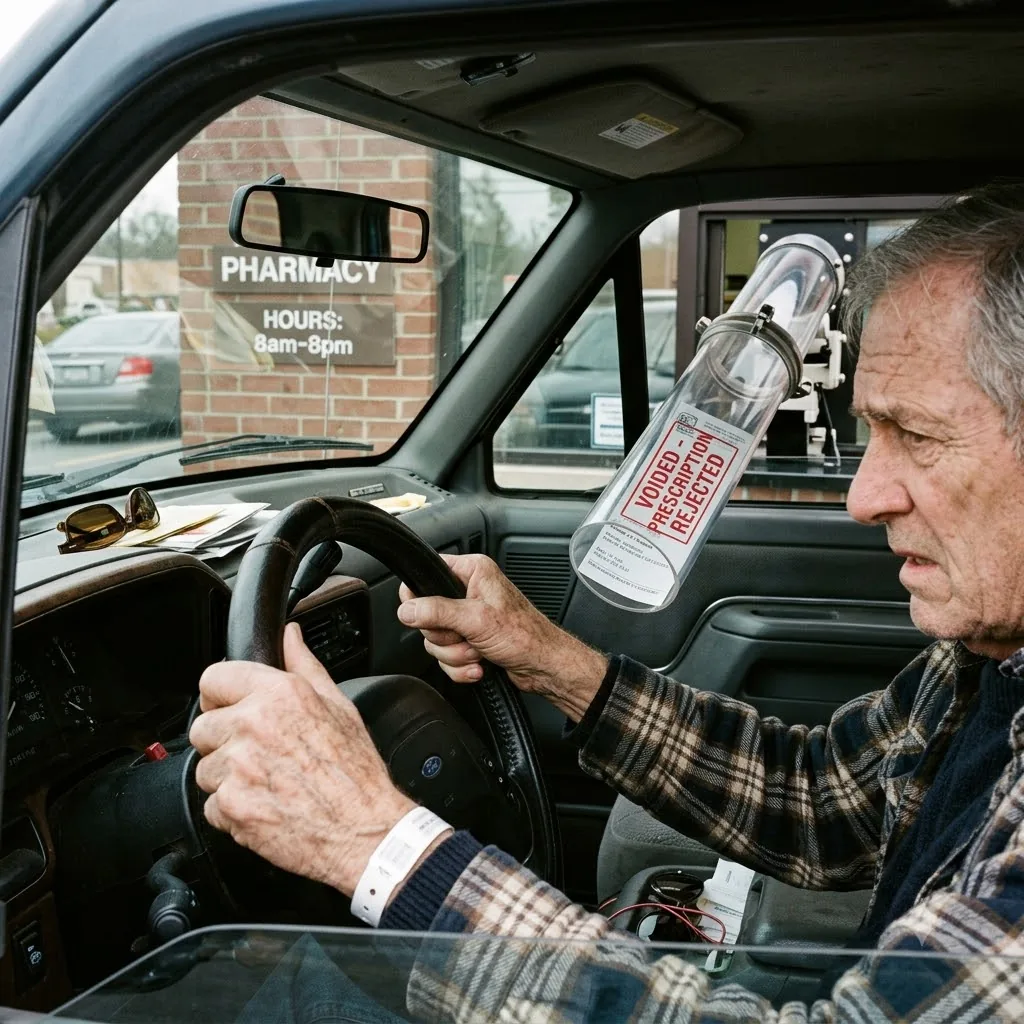
“Safe?” Brenner snapped, sliding a laminated copy of the bright red REJECTED slip across the mahogany table. “My client was trapped in a vehicle, experiencing a severe neurological pain event. He was nearly arrested for public intoxication because the security guard assumed he was a street junkie. He suffered profound public humiliation and extreme physical trauma because Dr. Vance abruptly severed a high-dose opioid dependency with zero tapering protocol. That is not discretion, counselor. That is malpractice.”
Elias squeezed Sarah’s hand, his heart hammering against his ribs. The irregular, skipping beat made his chest feel hollow. The nausea spiked, a sickening wave of heat radiating from his liver up through his esophagus, but he gritted his teeth and forced himself to look directly at the man who had ruined his life.
“Why did you do it?” Elias rasped. His voice sounded thin, breathless. “I followed every single rule you gave me. I submitted to your tests. I paid my co-pays. Why did you lock me out?”
Dr. Vance flinched. He looked up, his eyes bloodshot and ringed with dark, exhausted shadows. He glanced at his lawyer, who immediately raised a hand in warning.
“Dr. Vance, do not answer that on the record,” she cautioned.
“No, I’m done,” Dr. Vance said, his voice cracking. He rubbed his hands over his face, a gesture of profound defeat. “I’m done hiding behind the insurance reps. Mr. Brenner is going to subpoena the clinic’s master registry anyway. It’s going to come out.”
“Don’t do this, Greg,” his lawyer hissed.
Dr. Vance ignored her. He looked straight at Elias, his expression crumbling into a miserable mixture of guilt and defensive panic. “The DEA sent a preliminary audit notice to our administrative office on the tenth. They use an algorithm now. They flag clinics by sheer prescription volume and total Morphine Milligram Equivalents. If a clinic’s numbers sit in the red zone, they freeze your medical license pending a federal investigation. They shut the doors. Three thousand patients would have lost their care.”
Elias stared at him, the buzzing in his ears growing louder. “What are you saying?”
“I had to cull the list,” Dr. Vance confessed, his voice dropping to a shameful whisper. “I had forty-eight hours to artificially lower our clinic’s risk profile before the automated audit hit. I took the top tier of chronic patients-the ones requiring the highest MME doses-and I terminated their files. I canceled the scripts in the pharmacy system. It wasn’t medical, Elias. It was math. I sacrificed you to save my practice.”
Silence slammed down on the conference room. Sarah let out a quiet, horrified gasp, her fingers tightening painfully around Elias’s hand. Brenner leaned back in his chair, a predatory gleam in his eye, already calculating the massive settlement this confession just guaranteed.
Elias felt a massive, rushing wave of vindication sweep through his trembling body. He wasn’t a junkie. He wasn’t a failure. The righteous path he had walked for four years had been real, and the system had brutally, illegally betrayed him. He had been right all along.
He planted his hands on the edge of the mahogany table, determined to stand up, to look down at the cowardly doctor and deliver the furious condemnation he had earned.
He pushed himself up out of the chair.
As Elias locked his knees, the buzzing in his ears erupted into a deafening roar. The floor violently tilted. The heavy, localized numbness in his spine vanished, instantly replaced by a catastrophic, blinding agony exploding from deep inside his abdomen. It felt as though his organs were boiling, shutting down in rapid, cascading succession under the toxic load of the unregulated fentanyl analogs he had been swallowing for three weeks.
His vision went completely black at the edges.
“Elias?” Sarah cried out, her voice sounding as if it were underwater.
Elias tried to speak, but only a wet, choking gasp escaped his lips. His legs buckled beneath him. He pitched forward, crashing hard onto the polished wood of the conference table. As his chest struck the surface, the interior breast pocket of his suit jacket snagged on the edge of a heavy glass ashtray. The fabric tore.
The plastic baggie slipped free.
Elias lay paralyzed, his face pressed against the cold mahogany, his lungs refusing to draw air. Through the narrowing, dark tunnel of his fading vision, he watched the plastic baggie hit the table and split open. Dozens of crude, chalky, inconsistently dyed blue pills spilled out, scattering like cheap dice across Brenner’s pristine legal pads and resting directly on top of the red REJECTED slip.
No one moved. The sterile silence of the mediation room returned, absolute and suffocating, as Sarah, Brenner, and Dr. Vance sat frozen, staring down at the undeniable proof of the mud Elias had stepped into.