Story code: ST-001121
Part 1: The Citation
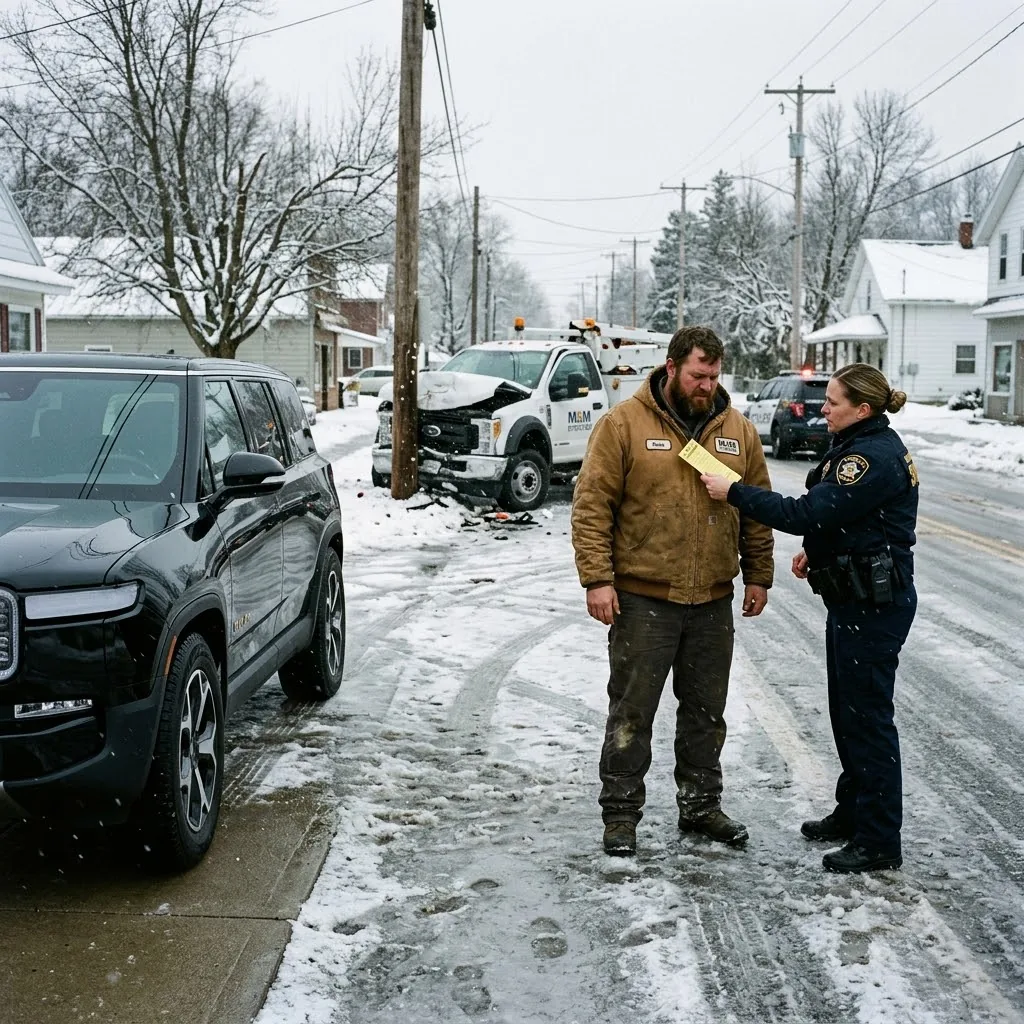
The ringing in Frank’s ears dialed down to a dull hum, leaving only the sharp tick of a severed radiator hose spitting green fluid onto the hot asphalt. Shards of white fiberglass from his utility canopy glittered across the centerline like scattered ice. Deputy Miller stood perfectly still amidst the wreckage, his heavy black boots crunching over Frank’s ruined livelihood as he clicked a ballpoint pen and began writing meticulously on a yellow citation pad.
Frank pressed a grease-stained rag against his temple, trying to stop the slow bleed from where his head had slammed the B-pillar. His work truck, a heavy-duty Ford he had maintained for eleven years, was folded inward at a sickening ninety-degree angle. The passenger side tires hovered entirely off the pavement. The steel tool chests had burst open under the impact, scattering ratchets, a digital multimeter, and heavy copper fittings across the rural dirt shoulder. That truck was his entire electrical contracting business, paid off and carefully organized, now reduced to scrap metal in a fraction of a second.
Ten feet away sat the other vehicle. It was a slate-gray SUV, built like a military vault and bearing the badge of a European manufacturer not sold at any dealership within two hundred miles. It had struck Frank’s parked truck at fifty miles an hour without even touching the brakes. Miraculously, the SUV’s front bumper showed nothing more than a solitary scuff in the ceramic clear coat. The massive engine idled with a barely perceptible purr. Its windows were pitch-black, rolled up tight, sealing the driver inside a soundproof, climate-controlled bubble while Frank stood bleeding in the July heat.
Deputy Miller did not walk over to the luxury tank. He did not shine his heavy flashlight into the tinted glass to check on the driver. He simply finished writing, tore the yellow slip from his book, and walked over to where Frank leaned heavily against the guardrail.
Miller extended his hand. Frank reached out, expecting a clipboard for an accident report or a request for his insurance card. Instead, the deputy pressed the slick thermal paper of a citation against Frank’s chest, leaving it there for Frank to grab or let fall.
Frank caught the paper. He looked down at the box checked in heavy black ink. The fine was for three hundred and fifty dollars. The violation read, Improper stopping on a municipal thoroughfare, creating an unavoidable road hazard.
Frank looked from the paper to Miller’s face. He pointed a trembling, blood-flecked finger at the gravel shoulder. He stated that he had been parked behind a reflective traffic cone, actively splicing a municipal line for the county. The truck had been two feet off the actual pavement. He had been completely stationary.
Miller held Frank’s gaze with a flat, bored expression. The deputy adjusted his duty belt, resting his thumb casually near his radio. He stated that the local ordinance required a four-foot clearance from the white line, and Frank had only provided three.
Frank gestured wildly at the gray SUV. He stated that the driver had crossed the double yellow line on a straightaway. He stated that the driver had hit a stationary, neon-yellow utility vehicle in broad daylight without even leaving skid marks.
Miller shook his head slowly. He informed Frank that the other driver’s trajectory was entirely irrelevant to Frank’s parking violation. The deputy explained that the hazard created by the illegal parking was the proximate cause of the incident.
The sheer, bureaucratic absurdity of the moment locked Frank’s jaw. He stared at the crushed metal of his livelihood. The insurance payout would barely cover the chassis, let alone the specialized equipment scattered in the dirt. He was looking at bankruptcy, handed to him on a yellow slip of paper by a cop he had known for a decade.
A soft, electric whir broke the tense silence. The passenger-side window of the slate-gray SUV slid downward exactly three inches.
Cold air poured out of the narrow gap, carrying the scent of expensive leather and an overpowering, sharp citrus cologne. Frank stepped forward, expecting to finally see a shaken driver, someone reaching for a phone to call an ambulance or offer an apology.
A pale hand wearing a platinum watch rested on the window ledge. The man inside did not look out at Frank. He did not look at the crushed utility truck or the debris field.
The man spoke to the deputy in a voice laced with profound exhaustion. He stated that he had a tee time at the private club across the county line. He complained that the detour through this miserable stretch of dirt was already a massive inconvenience, and now his steering alignment felt slightly stiff. He demanded to know if the town had a car wash capable of removing fiberglass dust without scratching custom paint.
Miller immediately touched the brim of his hat. The deputy apologized for the delay. He assured the man in the SUV that the road would be cleared immediately so he could proceed.
Frank’s vision narrowed to that pale hand resting on the tinted glass. He dropped the grease rag in the dirt. He moved toward the SUV, the citation crumpling into a tight ball in his fist, ignoring the sharp ache in his bruised ribs.
He made it exactly two steps before Miller intercepted him. The deputy did not use his hands to push Frank back. He simply stepped directly into Frank’s path, unclasped the leather retention strap on his holster with a sharp snap, and issued a single, low command.
The ringing in Frank’s ears dialed down to a dull hum, leaving only the sharp tick of a severed radiator hose spitting green fluid onto the hot asphalt. Shards of white fiberglass from his utility canopy glittered across the centerline like scattered ice. Deputy Miller stood perfectly still amidst the wreckage, his heavy black boots crunching over Frank’s ruined livelihood as he clicked a ballpoint pen and began writing meticulously on a yellow citation pad.
Frank pressed a grease-stained rag against his temple, trying to stop the slow bleed from where his head had slammed the B-pillar. His work truck, a heavy-duty Ford he had maintained for eleven years, was folded inward at a sickening ninety-degree angle. The passenger side tires hovered entirely off the pavement. The steel tool chests had burst open under the impact, scattering ratchets, a digital multimeter, and heavy copper fittings across the rural dirt shoulder. That truck was his entire electrical contracting business, paid off and carefully organized, now reduced to scrap metal in a fraction of a second.
Ten feet away sat the other vehicle. It was a slate-gray SUV, built like a military vault and bearing the badge of a European manufacturer not sold at any dealership within two hundred miles. It had struck Frank’s parked truck at fifty miles an hour without even touching the brakes. Miraculously, the SUV’s front bumper showed nothing more than a solitary scuff in the ceramic clear coat. The massive engine idled with a barely perceptible purr. Its windows were pitch-black, rolled up tight, sealing the driver inside a soundproof, climate-controlled bubble while Frank stood bleeding in the July heat.
Deputy Miller did not walk over to the luxury tank. He did not shine his heavy flashlight into the tinted glass to check on the driver. He simply finished writing, tore the yellow slip from his book, and walked over to where Frank leaned heavily against the guardrail.
Miller extended his hand. Frank reached out, expecting a clipboard for an accident report or a request for his insurance card. Instead, the deputy pressed the slick thermal paper of a citation against Frank’s chest, leaving it there for Frank to grab or let fall.
Frank caught the paper. He looked down at the box checked in heavy black ink. The fine was for three hundred and fifty dollars. The violation read, Improper stopping on a municipal thoroughfare, creating an unavoidable road hazard.
Frank looked from the paper to Miller’s face. He pointed a trembling, blood-flecked finger at the gravel shoulder. He stated that he had been parked behind a reflective traffic cone, actively splicing a municipal line for the county. The truck had been two feet off the actual pavement. He had been completely stationary.
Miller held Frank’s gaze with a flat, bored expression. The deputy adjusted his duty belt, resting his thumb casually near his radio. He stated that the local ordinance required a four-foot clearance from the white line, and Frank had only provided three.
Frank gestured wildly at the gray SUV. He stated that the driver had crossed the double yellow line on a straightaway. He stated that the driver had hit a stationary, neon-yellow utility vehicle in broad daylight without even leaving skid marks.
Miller shook his head slowly. He informed Frank that the other driver’s trajectory was entirely irrelevant to Frank’s parking violation. The deputy explained that the hazard created by the illegal parking was the proximate cause of the incident.
The sheer, bureaucratic absurdity of the moment locked Frank’s jaw. He stared at the crushed metal of his livelihood. The insurance payout would barely cover the chassis, let alone the specialized equipment scattered in the dirt. He was looking at bankruptcy, handed to him on a yellow slip of paper by a cop he had known for a decade.
A soft, electric whir broke the tense silence. The passenger-side window of the slate-gray SUV slid downward exactly three inches.
Cold air poured out of the narrow gap, carrying the scent of expensive leather and an overpowering, sharp citrus cologne. Frank stepped forward, expecting to finally see a shaken driver, someone reaching for a phone to call an ambulance or offer an apology.
A pale hand wearing a platinum watch rested on the window ledge. The man inside did not look out at Frank. He did not look at the crushed utility truck or the debris field.
The man spoke to the deputy in a voice laced with profound exhaustion. He stated that he had a tee time at the private club across the county line. He complained that the detour through this miserable stretch of dirt was already a massive inconvenience, and now his steering alignment felt slightly stiff. He demanded to know if the town had a car wash capable of removing fiberglass dust without scratching custom paint.
Miller immediately touched the brim of his hat. The deputy apologized for the delay. He assured the man in the SUV that the road would be cleared immediately so he could proceed.
Frank’s vision narrowed to that pale hand resting on the tinted glass. He dropped the grease rag in the dirt. He moved toward the SUV, the citation crumpling into a tight ball in his fist, ignoring the sharp ache in his bruised ribs.
He made it exactly two steps before Miller intercepted him. The deputy did not use his hands to push Frank back. He simply stepped directly into Frank’s path, unclasped the leather retention strap on his holster with a sharp snap, and issued a single, low command.