Story code: ST-000925
Part 3: The Architect
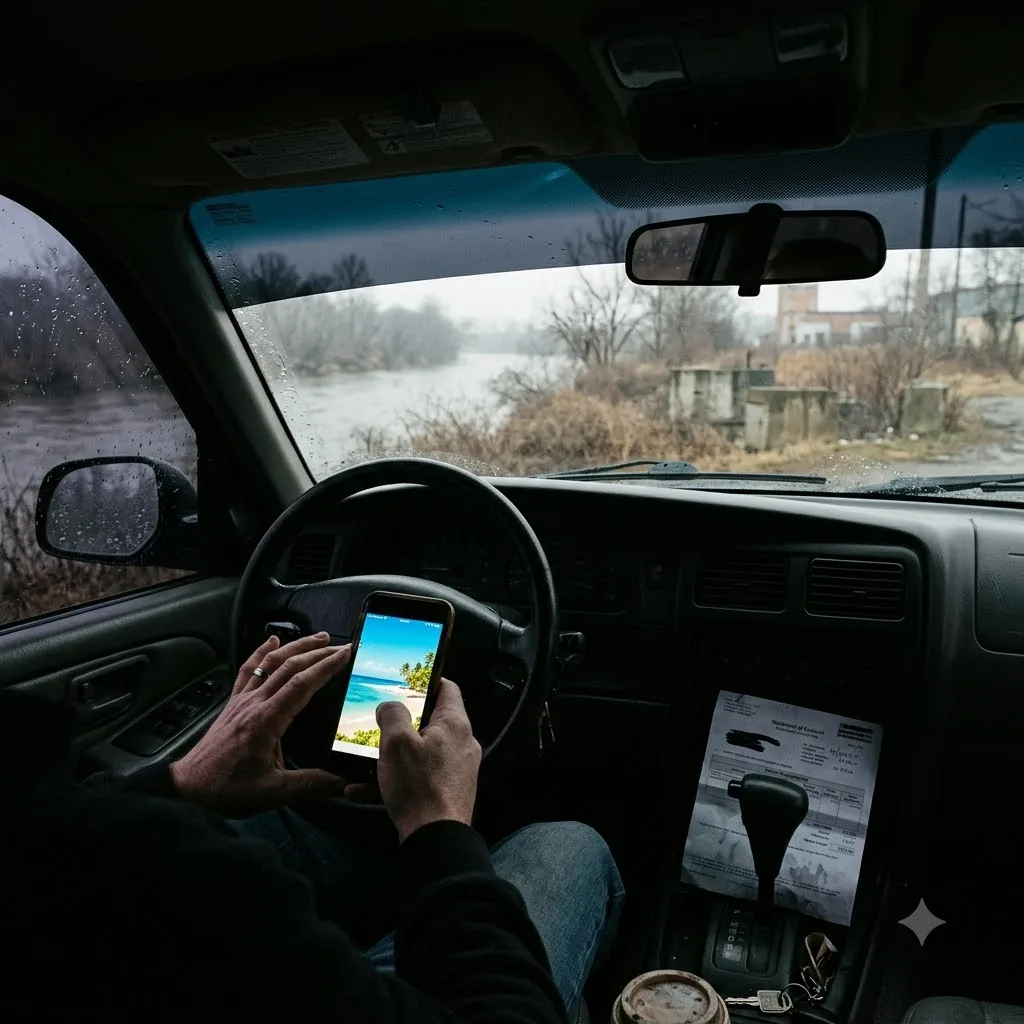
The heavy SUV tires tore through the saturated earth, churning up thick, black mud that splattered against the wheel wells like wet cement. I killed the headlights, plunging us into darkness, and navigated entirely by the dim, orange glow of the dashboard and the moonlight reflecting off the toxic sheen of the marsh. In the rearview mirror, the flashing strobe lights of the security patrol shrank to frantic, distant pinpricks. We were deep inside Sector One now, the absolute epicenter of the spill.
“You’re out of your mind,” Sarah choked out, her hands gripping the door handle. She peered through the rain-streaked window at the floating carcasses of silver-bellied carp bumping against the shoreline.
“Nobody comes into Sector One without a Level-A hazmat suit and direct authorization from the federal incident commander,” I said, my voice steady, strictly professional. I shifted the vehicle into park but left the engine running, ensuring the HEPA cabin filtration system kept the positively pressurized air circulating. Outside, the atmosphere was thick with benzene and raw sulfur, a literal death trap. Inside, it smelled like expensive leather and the faint trace of my vanilla perfume. “It will take corporate security at least thirty minutes to gear up and requisition a specialized transport vehicle to reach us.”
I turned in my seat to face her, the soft dome light casting long shadows across the dashboard. “Which means we have half an hour to solve this like adults. Give me the phone and the recorder, Sarah.”
She pulled the devices tighter to her chest, her jaw set in that familiar, stubborn line I hadn’t seen since our dorm days. “I’m not giving you anything. You can’t keep us trapped in a toxic swamp all night.”
“I don’t have to,” I replied. I reached over to the passenger-side floorboard, ignoring the way she flinched, and retrieved my leather briefcase. I laid it across the center console and unclasped the brass locks. “Your independent news site, *The Daily Vanguard*, is hemorrhaging cash. Don’t look so surprised. I run financial background checks on every media outlet on my press list. You missed your server payments last month, and your primary angel investor pulled out. You are completely bankrupt, Sarah. You need a miracle to keep your lights on just as much as I need my severance package to keep my mother in her memory care facility.”
I pulled a thick, blue legal folder from the briefcase and held it out to her.
“What is this?” she asked, not taking it.
“A lifeline,” I said. “It’s an exclusive embargo agreement. Sign the nondisclosure clause, hand over the raw EPA leak, and tomorrow at exactly 8:00 AM, I will personally feed you a curated data packet. It will contain a full, on-the-record admission of civil negligence from our CEO, along with the announcement of a fifty-million-dollar community settlement fund. It’s the scoop of the decade. You’ll break the biggest corporate environmental payout in state history. The traffic alone will secure your funding for the next five years.”
Sarah stared at the folder, the journalist in her warring with the moralist. Slowly, she reached out and took it. She flipped open the cover, leaning closer to the center console to read by the amber glow of the navigation screen.
For a moment, the only sound in the SUV was the rhythmic, heavy thumping of the windshield wipers pushing away the toxic rain. I let myself take a slow, deep breath, feeling the tight coil of panic in my chest begin to loosen. It was the perfect compromise. The company avoided a DOJ investigation, the town got a massive cash injection, Sarah saved her career, and my mother’s medical bills remained paid. This was what I did best. I managed the disaster.
“Condition Four,” Sarah read aloud, her brow furrowing. “Publication must strictly attribute the spill to ‘spontaneous infrastructural fatigue’ and exclude any mention of… ‘deliberate pressure venting’.” She stopped reading and looked up, her eyes wide. “Deliberate venting? The pipeline didn’t rupture. You vented it into the marsh.”
“It was an operational necessity,” I said smoothly, reciting the talking points I had rehearsed in my head a hundred times. “If the pressure backed up into the main refinery, the entire facility could have detonated. Venting the line minimized the immediate loss of human life. It limits our legal liability.”
Sarah didn’t look convinced. She looked horrified. She turned the page, her eyes scanning the dense blocks of legalese faster now. “This indemnification strategy… it’s designed specifically to bypass the EPA’s criminal negligence triggers under the Safe Drinking Water Act. If the company admits to a mechanical failure and pays a massive civil fine upfront, the federal government won’t pursue criminal charges for the groundwater contamination.”
“It’s standard corporate damage control, Sarah. Civil torts are manageable. Criminal indictments destroy companies. Sign the paper.”
Her eyes dropped to the bottom of the page, locking onto the metadata printed in the footer. She went entirely still.
“This wasn’t drafted tonight,” Sarah whispered. She dragged her finger across the header. “This contingency framework is dated six months ago.” Her gaze shifted from the date to the signature block, and the last remnants of her journalistic triumph vanished, replaced by a cold, hollow dread. She looked at me as if she were sitting next to a stranger. “Author: Maya Lin, Senior Director of Strategic Liability.”
I didn’t blink. I just held her stare.
“You told me the seventh floor ordered this cover-up,” Sarah said, her voice dropping to a trembling rasp. “You acted like you were just a reluctant middleman scrubbing photos so you wouldn’t lose your mom’s care fund. But you didn’t just follow orders tonight, Maya. You wrote the order. Six months ago.”
“I identified a structural vulnerability in an aging pipeline,” I said, my voice hardening, stripping away the PR polish. “I drafted a legal framework to ensure that if a breach happened, the company would survive the fallout. It is literally my job.”
Sarah flipped to the final addendum, reading the text aloud, her breath fogging the cold glass of her window. “Recommendation: In the event of a critical pressure spike, vent the toxic payload directly into the Sector One wetland. The resulting groundwater contamination of the municipal wells will be severe, but legally defensible as a civil tort, whereas a refinery explosion would trigger immediate federal criminal charges.”
The printed words hung in the heavy, filtered air of the cabin, stark and damning.
Sarah dropped the blue folder into her lap, her knuckles white as she gripped her audio recorder. “You knew,” she breathed. “Six months ago, you knew the pipes were failing. And instead of fixing them, you wrote a legal strategy to dump the chemicals into the marsh, knowing it would drain straight into the town’s well water.”
“Silver Pines costs eight thousand dollars a month, Sarah,” I snapped, the raw truth finally clawing its way up my throat. “Ideals don’t pay for dementia care. The company wasn’t going to spend two billion dollars replacing the pipeline. That was never on the table. My job was to figure out how to keep us out of prison when it eventually burst.”
“You chose to poison an entire town’s drinking water because a civil payout was cheaper than a criminal indictment,” she said, shaking her head slowly. “You aren’t protecting yourself from the executives, Maya. You *are* the executive. You’re the architect.”
I stared back at her, the red-stamped medical invoice burning like a coal in my blazer pocket, the absolute silence of the toxic swamp pressing against the glass.