Story code: ST-000825
Part 1: The Discrepancy in the Queue
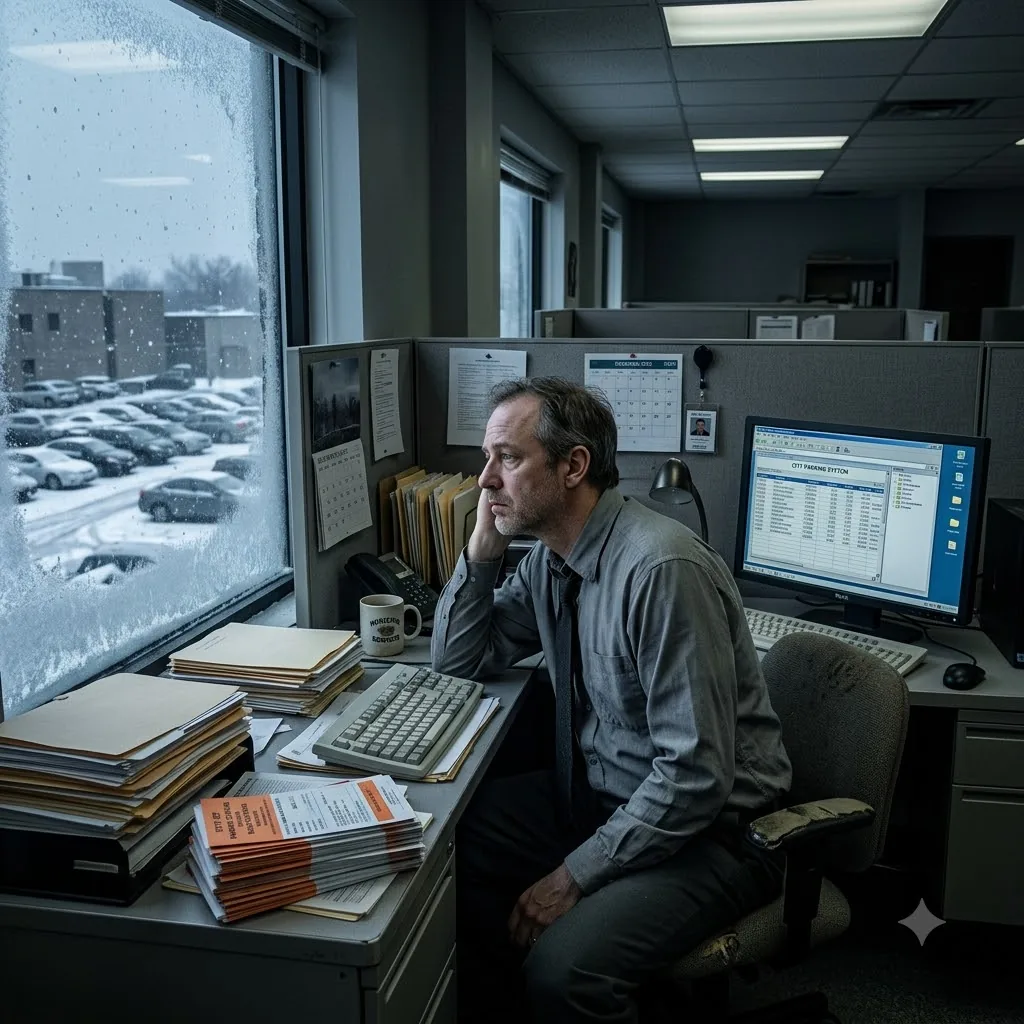
The cursor hovered over the red execution button in the sterile, fluorescent quiet of the third-floor processing pool. It was Friday afternoon, fifteen minutes before the weekend exodus, and Elias was methodically clearing the queue of non-compliant claims. He tapped the mouse, sending another auto-denial into the digital archive, and pulled up the next file.
Case number 4409. Arthur Pendelton.
The screen displayed the standard red banner indicating a failure to comply with agency mandates. The algorithm had already calculated the outcome, flagging the file for automatic administrative closure. The offense was strictly procedural. Pendelton had missed his ninety-day recertification, followed by his thirty-day grace period check-in, followed by his final warning appointment. Three missed mandatory appearances triggered a complete revocation of active status.
Elias moved the cursor to the decline button. His job was not to investigate the circumstances of the absentees. His job was to process the workflow and keep the queue moving.
A yellow icon pulsed at the bottom of his dual-monitor setup. It was an automated data-scraping attachment, a system update that pulled municipal and police records tied to the claimant’s social security number. Elias clicked the icon to clear the notification before permanently closing the file.
A PDF populated on his right monitor. It was a continuous feed of municipal parking citations, scanned and uploaded by the precinct’s automated ticketing system.
Elias scrolled through the scanned slips. There were six citations in total. The first was dated Monday morning at two-fifteen. The most recent was dated early Friday morning at three-fourteen. All of them cited the identical ordinance violation. Code 404: Overnight parking in a commercial zone between the hours of two and six in the morning.
The digital scans included low-resolution photographs taken by the parking enforcement dashcam. The first photo showed a gray sedan parked under a streetlight. By the third photo, a thick layer of white covered the windshield. The final photo, taken twelve hours ago, showed little more than a lump of ice with a hastily wiped rectangle revealing the license plate.
He looked at the vehicle registration details populated below the citations. A 2008 Ford sedan, gray. The license plate ended in the alphanumeric sequence seven-four-K-R.
The system required him to log the discrepancy or dismiss it entirely. Elias reviewed the location data printed on the first ticket. 400 West Terminal Avenue. Sector Four.
He read the address again. He glanced at the standard-issue agency letterhead sitting in his physical inbox tray. The Department of Administrative Services, 400 West Terminal Avenue.
The tickets were not from a random street in the city limits. They were issued in the surface lot directly outside the building.
Elias cross-referenced the dates of the missed appointments. Pendelton had missed his final warning appointment on Tuesday at nine in the morning. The parking authority had issued a citation to his vehicle in the agency lot on Tuesday at three in the morning. The vehicle had received another citation on Wednesday, another on Thursday, and a final citation this morning in the freezing dark.
The veteran had missed his mandatory check-ins inside the building, but his vehicle had been parked outside the entire time.
Elias looked at the digital thermometer on his taskbar. The current external temperature was twelve degrees. The local weather data showed that a severe cold front had moved into the valley on Monday night, dropping temperatures well below freezing and depositing four inches of snow by Wednesday afternoon. The temperatures had not risen above twenty degrees since.
The cubicle farm was completely silent. The other processors had already logged off, their workstations dark and their chairs pushed in. Elias sat perfectly still. The ambient hum of the HVAC unit pushed recycled, dry air through the ceiling vents.
He stood up. He did not lock his screen.
He walked down the carpeted aisle, passing rows of empty fabric-walled cubicles. He bypassed the elevator bank and pushed open the heavy wooden door to the staff breakroom. The room was empty, smelling faintly of burnt coffee and industrial floor cleaner. The far wall consisted of floor-to-ceiling windows overlooking the south employee parking lot.
Elias stepped up to the glass.
The afternoon light was failing, replaced by the harsh, sodium-orange glow of the security lamps spaced along the perimeter fence. The lot was a vast, flat expanse of dirty white. The plows had cleared the main lanes on Thursday, pushing heavy mounds of dirty ice and snow against the concrete retaining walls at the far edge of the property.
Only three cars remained in the employee section.
Elias looked past them, scanning the visitor section near the back fence. The visitor spaces were supposed to be vacated by six every evening. Against the furthest retaining wall, isolated from the cleared lanes, sat a solitary mound of undisturbed white.
It was a vehicle, entirely buried under a thick crust of ice and accumulated snow. It had not moved since the storm hit on Monday. The plows had simply driven around it, boxing it in with a wall of frozen slush and street salt.
Elias pressed his hand against the cold pane of glass. He squinted through the glare of the overhead lamps. The wind had scoured a small patch of snow away from the rear bumper, exposing a rectangle of gray metal and a strip of reflective plate.
The visible digits on the license plate were seven-four-K-R.
Elias turned away from the window. He did not return to his desk to retrieve his winter coat. He walked straight to the emergency exit stairwell, pushed the heavy fire door open, and began descending the concrete steps toward the freezing lot.
The cursor hovered over the red execution button in the sterile, fluorescent quiet of the third-floor processing pool. It was Friday afternoon, fifteen minutes before the weekend exodus, and Elias was methodically clearing the queue of non-compliant claims. He tapped the mouse, sending another auto-denial into the digital archive, and pulled up the next file.
Case number 4409. Arthur Pendelton.
The screen displayed the standard red banner indicating a failure to comply with agency mandates. The algorithm had already calculated the outcome, flagging the file for automatic administrative closure. The offense was strictly procedural. Pendelton had missed his ninety-day recertification, followed by his thirty-day grace period check-in, followed by his final warning appointment. Three missed mandatory appearances triggered a complete revocation of active status.
Elias moved the cursor to the decline button. His job was not to investigate the circumstances of the absentees. His job was to process the workflow and keep the queue moving.
A yellow icon pulsed at the bottom of his dual-monitor setup. It was an automated data-scraping attachment, a system update that pulled municipal and police records tied to the claimant’s social security number. Elias clicked the icon to clear the notification before permanently closing the file.
A PDF populated on his right monitor. It was a continuous feed of municipal parking citations, scanned and uploaded by the precinct’s automated ticketing system.
Elias scrolled through the scanned slips. There were six citations in total. The first was dated Monday morning at two-fifteen. The most recent was dated early Friday morning at three-fourteen. All of them cited the identical ordinance violation. Code 404: Overnight parking in a commercial zone between the hours of two and six in the morning.
The digital scans included low-resolution photographs taken by the parking enforcement dashcam. The first photo showed a gray sedan parked under a streetlight. By the third photo, a thick layer of white covered the windshield. The final photo, taken twelve hours ago, showed little more than a lump of ice with a hastily wiped rectangle revealing the license plate.
He looked at the vehicle registration details populated below the citations. A 2008 Ford sedan, gray. The license plate ended in the alphanumeric sequence seven-four-K-R.
The system required him to log the discrepancy or dismiss it entirely. Elias reviewed the location data printed on the first ticket. 400 West Terminal Avenue. Sector Four.
He read the address again. He glanced at the standard-issue agency letterhead sitting in his physical inbox tray. The Department of Administrative Services, 400 West Terminal Avenue.
The tickets were not from a random street in the city limits. They were issued in the surface lot directly outside the building.
Elias cross-referenced the dates of the missed appointments. Pendelton had missed his final warning appointment on Tuesday at nine in the morning. The parking authority had issued a citation to his vehicle in the agency lot on Tuesday at three in the morning. The vehicle had received another citation on Wednesday, another on Thursday, and a final citation this morning in the freezing dark.
The veteran had missed his mandatory check-ins inside the building, but his vehicle had been parked outside the entire time.
Elias looked at the digital thermometer on his taskbar. The current external temperature was twelve degrees. The local weather data showed that a severe cold front had moved into the valley on Monday night, dropping temperatures well below freezing and depositing four inches of snow by Wednesday afternoon. The temperatures had not risen above twenty degrees since.
The cubicle farm was completely silent. The other processors had already logged off, their workstations dark and their chairs pushed in. Elias sat perfectly still. The ambient hum of the HVAC unit pushed recycled, dry air through the ceiling vents.
He stood up. He did not lock his screen.
He walked down the carpeted aisle, passing rows of empty fabric-walled cubicles. He bypassed the elevator bank and pushed open the heavy wooden door to the staff breakroom. The room was empty, smelling faintly of burnt coffee and industrial floor cleaner. The far wall consisted of floor-to-ceiling windows overlooking the south employee parking lot.
Elias stepped up to the glass.
The afternoon light was failing, replaced by the harsh, sodium-orange glow of the security lamps spaced along the perimeter fence. The lot was a vast, flat expanse of dirty white. The plows had cleared the main lanes on Thursday, pushing heavy mounds of dirty ice and snow against the concrete retaining walls at the far edge of the property.
Only three cars remained in the employee section.
Elias looked past them, scanning the visitor section near the back fence. The visitor spaces were supposed to be vacated by six every evening. Against the furthest retaining wall, isolated from the cleared lanes, sat a solitary mound of undisturbed white.
It was a vehicle, entirely buried under a thick crust of ice and accumulated snow. It had not moved since the storm hit on Monday. The plows had simply driven around it, boxing it in with a wall of frozen slush and street salt.
Elias pressed his hand against the cold pane of glass. He squinted through the glare of the overhead lamps. The wind had scoured a small patch of snow away from the rear bumper, exposing a rectangle of gray metal and a strip of reflective plate.
The visible digits on the license plate were seven-four-K-R.
Elias turned away from the window. He did not return to his desk to retrieve his winter coat. He walked straight to the emergency exit stairwell, pushed the heavy fire door open, and began descending the concrete steps toward the freezing lot.