Story code: ST-000669
Part 1: The Override
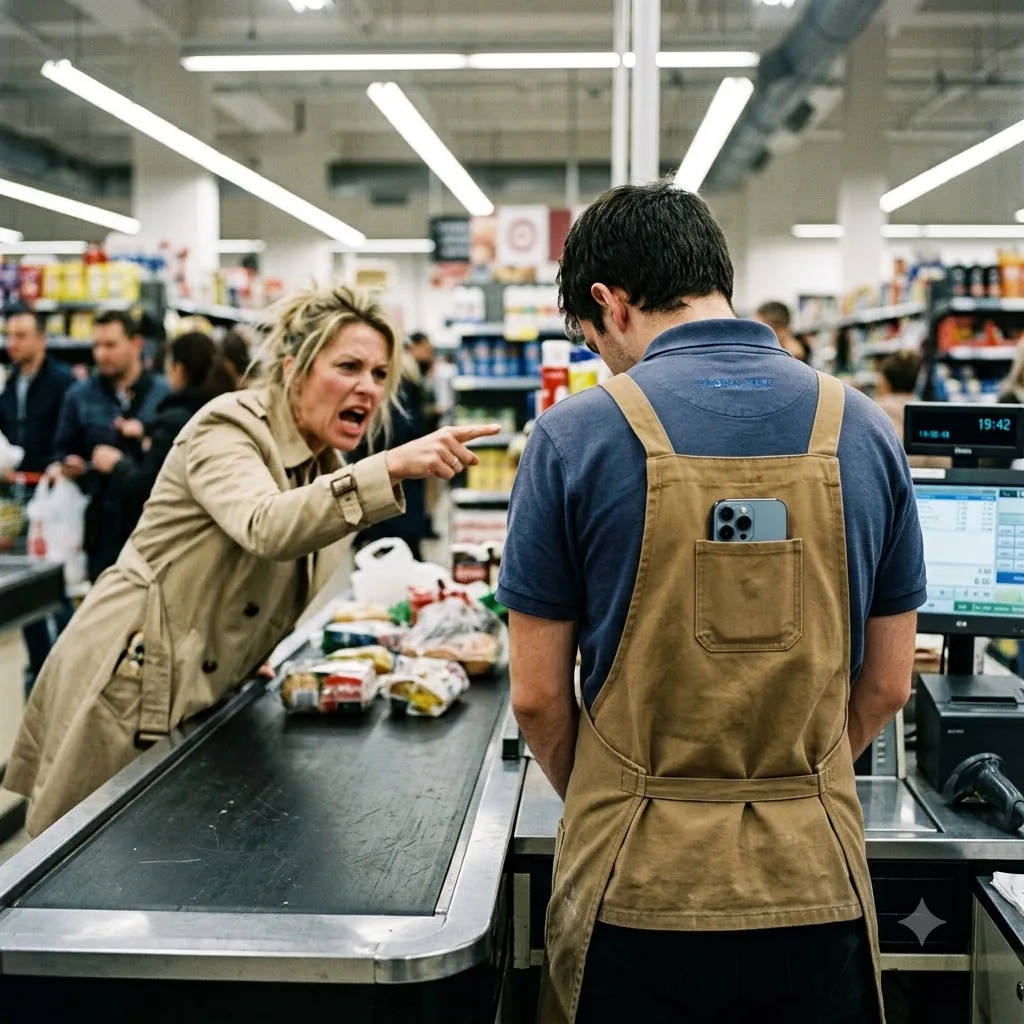
The overhead fluorescent lights emit a constant, insect-like hum that vibrates right behind Mateo’s eyes, a drone he usually tunes out but now feels like a physical weight pressing against his skull. A fine mist of spit hits the scratched plexiglass barrier, leaving tiny opaque dots on the acrylic surface. Mateo keeps his hands out of sight, sliding his right thumb deep into the front pocket of his heavy canvas apron. He traces the smooth edge of his phone, finds the indented power button for orientation, and blindly taps the center of the glass screen exactly where he knows the red circle lives. A faint, single vibration buzzes against his thigh. The microphone is live.
On the other side of the register, the customer inhales sharply, preparing for another volley. Her appearance violently clashes with the raw, guttural noises escaping her throat. She wears an immaculate camel-hair trench coat, tailored and heavy, layered over a pale silk blouse. A designer leather tote hangs from the crook of her elbow, the gold hardware gleaming under the harsh store lights. Yet her posture is entirely feral. Her knuckles are stark white where she grips the metal edge of the conveyor belt, leaning her weight forward as if preparing to vault entirely over the counter.
Mateo keeps his expression completely flat. He looks down at the crumpled pieces of glossy paper she just shoved across the scanner glass. Fifty dollars worth of manufacturer soup coupons. He flattens one out with his index finger. The expiration date is clearly printed in bold red ink. September of last year. It is currently late February.
He slides the small stack back toward her. He states the store policy in a calm, practiced monotone, explaining that the register system will automatically reject the outdated barcodes.
The woman slams her palm flat onto the stainless steel counter. The sound cracks through the quiet checkout lanes like a gunshot. She points a manicured finger directly at Mateo’s nose, bypassing the protective barrier entirely. She demands he manually override the system. She insists she is a premium shopper and will not be subjected to petty bureaucracy.
Mateo’s eyes drift momentarily to the massive pile of merchandise she has loaded onto the belt. It is an unusual haul. Dozens of identical, heavy cylindrical cans and enormous, unbranded cardboard boxes of dry goods sit haphazardly stacked against each other. The sheer volume threatens to spill over the rubber track and onto the floor. He does not study the specific labels. He merely notes the extreme weight of the transaction, mentally calculating the total as his hand instinctively brushes his back pocket.
The thick, folded parchment paper rests heavily against his jeans. He found it taped securely to his apartment door at six this morning. He traces the sharp crease through the denim. He cannot afford to lose this job. He cannot afford a single write-up or customer complaint.
He looks back at the woman and tells her he cannot authorize the override.
Her face flushes a deep, mottled purple. She leans in closer, her expensive perfume utterly failing to mask the sour smell of stale coffee on her breath. She tells him to fetch the store director. She demands to speak to someone with actual authority.
Mateo taps the gold plastic nametag pinned to his chest. It clearly reads his name, followed by the title of Shift Manager. He informs her that he is the highest-ranking employee currently in the building. He offers to suspend the transaction so she can leave without purchasing the items.
This breaks whatever fragile restraint she had left. She sweeps her arm across the bagging area, knocking a tiered plastic display of breath mints and chapstick onto the linoleum floor. The display shatters. Little plastic cylinders roll loudly in every direction.
Sarah, the teenage cashier working the next lane, freezes with a family-sized box of cereal suspended in her hands. The scanner emits a single, sharp beep that rings out in the sudden quiet. The few other customers in the store stop their carts dead in the aisles, staring in absolute silence. No one intervenes. No one speaks.
The woman ignores the onlookers entirely. She steps back from the counter and unzips her leather tote. She pulls out a massive smartphone encased in rose gold. She unlocks the screen and thrusts it toward Mateo.
She announces she is going to ruin his life. She states she has thousands of followers. She promises to tell the entire internet that he verbally harassed her, physically intimidated her, and attempted to assault her over a simple misunderstanding. She claims corporate will have him fired before sunset.
Mateo feels the blood drain from his face, leaving his skin cold and clammy under the harsh lights. He glances up at the ceiling. The black plastic dome of the security camera points directly down at the register. He is the only person in the entire store who knows the camera system suffered a massive power surge three weeks ago during a winter storm. It is essentially a hollow piece of plastic. The red recording light is nothing but a painted dot. It captures absolutely nothing.
He looks back at her. Her phone screen displays her own face, the recording timer ticking upward. She is framing him in the background.
Mateo’s thumb presses harder against his apron pocket. His phone is still recording crystal-clear audio. He remains perfectly still, keeping his hands flat on the counter in plain sight. He calmly states that he has not moved, has not threatened her, and is simply refusing to process expired coupons.
She sneers. She tells him no one will believe a minimum-wage worker over a distraught woman. She takes a deep, theatrical breath to summon fake tears. She looks directly into her own camera lens, hooks her manicured fingers into the delicate collar of her expensive silk blouse, and violently rips the fabric straight down the middle.
The overhead fluorescent lights emit a constant, insect-like hum that vibrates right behind Mateo’s eyes, a drone he usually tunes out but now feels like a physical weight pressing against his skull. A fine mist of spit hits the scratched plexiglass barrier, leaving tiny opaque dots on the acrylic surface. Mateo keeps his hands out of sight, sliding his right thumb deep into the front pocket of his heavy canvas apron. He traces the smooth edge of his phone, finds the indented power button for orientation, and blindly taps the center of the glass screen exactly where he knows the red circle lives. A faint, single vibration buzzes against his thigh. The microphone is live.
On the other side of the register, the customer inhales sharply, preparing for another volley. Her appearance violently clashes with the raw, guttural noises escaping her throat. She wears an immaculate camel-hair trench coat, tailored and heavy, layered over a pale silk blouse. A designer leather tote hangs from the crook of her elbow, the gold hardware gleaming under the harsh store lights. Yet her posture is entirely feral. Her knuckles are stark white where she grips the metal edge of the conveyor belt, leaning her weight forward as if preparing to vault entirely over the counter.
Mateo keeps his expression completely flat. He looks down at the crumpled pieces of glossy paper she just shoved across the scanner glass. Fifty dollars worth of manufacturer soup coupons. He flattens one out with his index finger. The expiration date is clearly printed in bold red ink. September of last year. It is currently late February.
He slides the small stack back toward her. He states the store policy in a calm, practiced monotone, explaining that the register system will automatically reject the outdated barcodes.
The woman slams her palm flat onto the stainless steel counter. The sound cracks through the quiet checkout lanes like a gunshot. She points a manicured finger directly at Mateo’s nose, bypassing the protective barrier entirely. She demands he manually override the system. She insists she is a premium shopper and will not be subjected to petty bureaucracy.
Mateo’s eyes drift momentarily to the massive pile of merchandise she has loaded onto the belt. It is an unusual haul. Dozens of identical, heavy cylindrical cans and enormous, unbranded cardboard boxes of dry goods sit haphazardly stacked against each other. The sheer volume threatens to spill over the rubber track and onto the floor. He does not study the specific labels. He merely notes the extreme weight of the transaction, mentally calculating the total as his hand instinctively brushes his back pocket.
The thick, folded parchment paper rests heavily against his jeans. He found it taped securely to his apartment door at six this morning. He traces the sharp crease through the denim. He cannot afford to lose this job. He cannot afford a single write-up or customer complaint.
He looks back at the woman and tells her he cannot authorize the override.
Her face flushes a deep, mottled purple. She leans in closer, her expensive perfume utterly failing to mask the sour smell of stale coffee on her breath. She tells him to fetch the store director. She demands to speak to someone with actual authority.
Mateo taps the gold plastic nametag pinned to his chest. It clearly reads his name, followed by the title of Shift Manager. He informs her that he is the highest-ranking employee currently in the building. He offers to suspend the transaction so she can leave without purchasing the items.
This breaks whatever fragile restraint she had left. She sweeps her arm across the bagging area, knocking a tiered plastic display of breath mints and chapstick onto the linoleum floor. The display shatters. Little plastic cylinders roll loudly in every direction.
Sarah, the teenage cashier working the next lane, freezes with a family-sized box of cereal suspended in her hands. The scanner emits a single, sharp beep that rings out in the sudden quiet. The few other customers in the store stop their carts dead in the aisles, staring in absolute silence. No one intervenes. No one speaks.
The woman ignores the onlookers entirely. She steps back from the counter and unzips her leather tote. She pulls out a massive smartphone encased in rose gold. She unlocks the screen and thrusts it toward Mateo.
She announces she is going to ruin his life. She states she has thousands of followers. She promises to tell the entire internet that he verbally harassed her, physically intimidated her, and attempted to assault her over a simple misunderstanding. She claims corporate will have him fired before sunset.
Mateo feels the blood drain from his face, leaving his skin cold and clammy under the harsh lights. He glances up at the ceiling. The black plastic dome of the security camera points directly down at the register. He is the only person in the entire store who knows the camera system suffered a massive power surge three weeks ago during a winter storm. It is essentially a hollow piece of plastic. The red recording light is nothing but a painted dot. It captures absolutely nothing.
He looks back at her. Her phone screen displays her own face, the recording timer ticking upward. She is framing him in the background.
Mateo’s thumb presses harder against his apron pocket. His phone is still recording crystal-clear audio. He remains perfectly still, keeping his hands flat on the counter in plain sight. He calmly states that he has not moved, has not threatened her, and is simply refusing to process expired coupons.
She sneers. She tells him no one will believe a minimum-wage worker over a distraught woman. She takes a deep, theatrical breath to summon fake tears. She looks directly into her own camera lens, hooks her manicured fingers into the delicate collar of her expensive silk blouse, and violently rips the fabric straight down the middle.