Story code: ST-000997
Part 1: Gridlock and Gravity
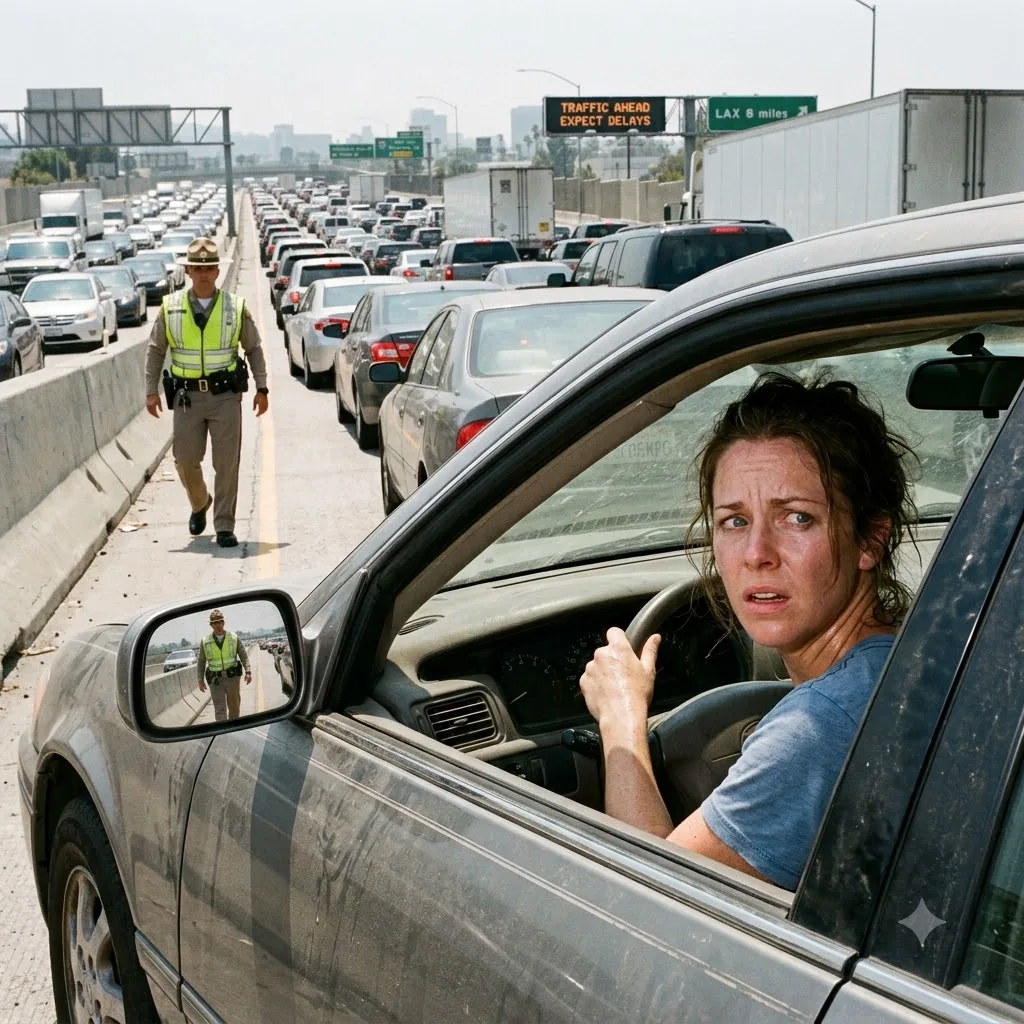
The steering wheel burned against Maria’s palms, baking under the relentless glare of the afternoon sun that trapped the standstill traffic on Interstate 35. A sharp, radiating cramp seized her lower abdomen, pulling her breath tight against her ribs. She pressed her forehead to the hot glass of the driver-side window, closing her eyes as the wave of heat from the engine block mixed with the deep, throbbing ache radiating through her core.
The line of cars stretched into the hazy distance, shimmering in the exhaust fumes and asphalt heat. Nothing had moved for forty minutes. To her left, a lifted pickup truck idled loudly, its driver leaning out the window to shout profanities at the road ahead. Maria shifted in her worn cloth seat. The movement sent a fresh spike of agony lancing through her hips, heavy and raw, forcing her to grip the parking brake lever until her knuckles turned white. She focused on the rhythm of her own shallow breaths. Breathe in. Hold it against the tearing sensation. Breathe out.
Up ahead, past a sea of brake lights, a line of people in bright orange vests sat directly across the northbound lanes. Banners stretched between them, catching the dry wind. A climate blockade. They had glued their hands to the sun-scorched pavement, forming a human wall of resistance against the flow of commuters, freight trucks, and desperate travelers. Maria squinted through the glare. A young man in the center of the chain chanted through a megaphone, his voice a distorted drone over the idling engines. He looked utterly resolute, anchoring the line while motorists honked and screamed from their vehicles.
Maria needed to move. The cramped posture in the small sedan compounded the relentless pressure building low in her body. She unclipped her seatbelt, hoping the slack would relieve the constriction around her waist, but the dull, heavy throb remained. It felt as though a lead weight was expanding inside her, dragging her down into the upholstery. She reached for her water bottle, finding the plastic warped and the water inside lukewarm. She took a sip anyway, swallowing past the dry sand in her throat. The activist with the megaphone turned his gaze toward her section of the gridlock, his expression full of righteous defiance, entirely detached from the trapped, boiling reality of the drivers stacked in front of him.
\Her phone buzzed violently in the cup holder. The screen lit up with a message from Gary, the floor manager at the distribution warehouse. It was her third missed call, followed by a string of aggressive texts. She was supposed to be on the forklift twenty minutes ago. Maria stared at the cracked screen, watching the time tick forward. Every minute trapped on this blazing highway was another strike on her attendance record, a record already frayed by the sheer exhaustion of the past month. She typed a quick, shaky response about the blocked interstate, her fingers fumbling over the glass as another wave of searing discomfort washed over her. She pressed send and dropped the phone. The physical sensation was overwhelming now, a deep and rhythmic squeezing that made her vision swim with dark spots.
Shouts erupted near the front of the blockade. Several drivers had abandoned their cars, storming up to the line of orange vests. The activist with the megaphone lowered it, shouting back without breaking his glued connection to the asphalt. Maria leaned back and let her head rest against the headrest. She needed cold air, a flat surface, silence. She cranked the AC dial to maximum, but the vents only pushed out the stagnant, dusty air of the overloaded engine. The ache in her abdomen flared into a sudden, blinding cramp that doubled her over the center console. She bit down on her bottom lip to keep from making a sound, tasting copper.
Sirens wailed from the shoulder. Flashing red and blue lights cut through the heat haze as highway patrol cruisers bullied their way up the emergency lane, kicking up gravel and dust. The cavalry had arrived, but they brought no relief, only a tightening knot of dread in Maria’s chest. Uniformed troopers swarmed the asphalt, moving methodically among the stalled cars to secure the perimeter before dealing with the protesters. Her phone vibrated again, an angry, sustained buzz. Maria forced her eyes open and glanced down. Gary’s final text glared back at her, stating her employment was officially terminated for job abandonment. As the words blurred into focus, a sharp rap on her window shattered the silence of the cabin. Maria jumped, gasping through the physical torment, and turned to see a Texas state trooper looming over her door, his mirrored sunglasses reflecting her pale, terrified face as his hand rested heavily on his duty belt.
The steering wheel burned against Maria’s palms, baking under the relentless glare of the afternoon sun that trapped the standstill traffic on Interstate 35. A sharp, radiating cramp seized her lower abdomen, pulling her breath tight against her ribs. She pressed her forehead to the hot glass of the driver-side window, closing her eyes as the wave of heat from the engine block mixed with the deep, throbbing ache radiating through her core.
The line of cars stretched into the hazy distance, shimmering in the exhaust fumes and asphalt heat. Nothing had moved for forty minutes. To her left, a lifted pickup truck idled loudly, its driver leaning out the window to shout profanities at the road ahead. Maria shifted in her worn cloth seat. The movement sent a fresh spike of agony lancing through her hips, heavy and raw, forcing her to grip the parking brake lever until her knuckles turned white. She focused on the rhythm of her own shallow breaths. Breathe in. Hold it against the tearing sensation. Breathe out.
Up ahead, past a sea of brake lights, a line of people in bright orange vests sat directly across the northbound lanes. Banners stretched between them, catching the dry wind. A climate blockade. They had glued their hands to the sun-scorched pavement, forming a human wall of resistance against the flow of commuters, freight trucks, and desperate travelers. Maria squinted through the glare. A young man in the center of the chain chanted through a megaphone, his voice a distorted drone over the idling engines. He looked utterly resolute, anchoring the line while motorists honked and screamed from their vehicles.
Maria needed to move. The cramped posture in the small sedan compounded the relentless pressure building low in her body. She unclipped her seatbelt, hoping the slack would relieve the constriction around her waist, but the dull, heavy throb remained. It felt as though a lead weight was expanding inside her, dragging her down into the upholstery. She reached for her water bottle, finding the plastic warped and the water inside lukewarm. She took a sip anyway, swallowing past the dry sand in her throat. The activist with the megaphone turned his gaze toward her section of the gridlock, his expression full of righteous defiance, entirely detached from the trapped, boiling reality of the drivers stacked in front of him.
\Her phone buzzed violently in the cup holder. The screen lit up with a message from Gary, the floor manager at the distribution warehouse. It was her third missed call, followed by a string of aggressive texts. She was supposed to be on the forklift twenty minutes ago. Maria stared at the cracked screen, watching the time tick forward. Every minute trapped on this blazing highway was another strike on her attendance record, a record already frayed by the sheer exhaustion of the past month. She typed a quick, shaky response about the blocked interstate, her fingers fumbling over the glass as another wave of searing discomfort washed over her. She pressed send and dropped the phone. The physical sensation was overwhelming now, a deep and rhythmic squeezing that made her vision swim with dark spots.
Shouts erupted near the front of the blockade. Several drivers had abandoned their cars, storming up to the line of orange vests. The activist with the megaphone lowered it, shouting back without breaking his glued connection to the asphalt. Maria leaned back and let her head rest against the headrest. She needed cold air, a flat surface, silence. She cranked the AC dial to maximum, but the vents only pushed out the stagnant, dusty air of the overloaded engine. The ache in her abdomen flared into a sudden, blinding cramp that doubled her over the center console. She bit down on her bottom lip to keep from making a sound, tasting copper.
Sirens wailed from the shoulder. Flashing red and blue lights cut through the heat haze as highway patrol cruisers bullied their way up the emergency lane, kicking up gravel and dust. The cavalry had arrived, but they brought no relief, only a tightening knot of dread in Maria’s chest. Uniformed troopers swarmed the asphalt, moving methodically among the stalled cars to secure the perimeter before dealing with the protesters. Her phone vibrated again, an angry, sustained buzz. Maria forced her eyes open and glanced down. Gary’s final text glared back at her, stating her employment was officially terminated for job abandonment. As the words blurred into focus, a sharp rap on her window shattered the silence of the cabin. Maria jumped, gasping through the physical torment, and turned to see a Texas state trooper looming over her door, his mirrored sunglasses reflecting her pale, terrified face as his hand rested heavily on his duty belt.