Story code: ST-000195
Part 1: He Wanted the Card on Camera Right Now
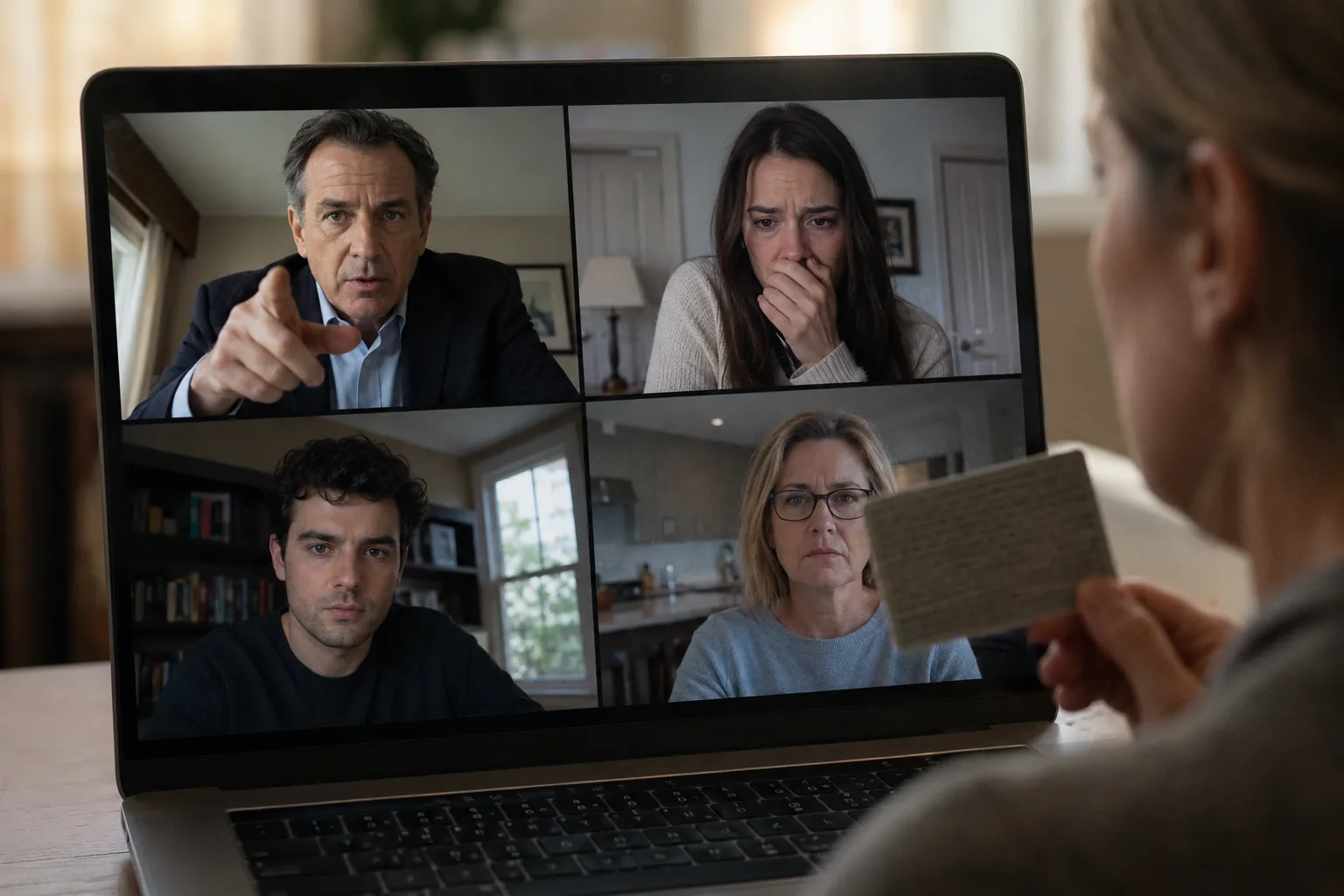
Grant Holloway started the estate video call by telling Dana Mercer she had minutes to save a crypto inheritance and needed to hold the private key card up to the camera immediately. I was in my work chair with the participant list open, admitting late family members and watching Dana in her living room freeze with the card halfway out of a drawer while Grant kept saying delay would wipe out the estate. He said the family had to break every normal step right there on the call, and before ten minutes passed he was already trying to shut down the exact outside help he claimed the emergency required.
I handle the logistics on these calls. Mute prompts, admits, screen-share transfers, basic sequencing. That morning I had the estate notes open on one side of my screen and the gallery view on the other. Dana was on camera from a beige living room with a lamp behind her and a stack of mail on the coffee table. Eli Mercer had joined from a phone, his picture bouncing a little every time he shifted his grip. Grant had the polished setup: neutral wall, good mic, bright face light, blazer with no tie.
He did not start with condolences or a timeline. He came in fast.
“Dana, I need you to listen carefully,” he said. “The wallet tied to your father’s estate is facing a timed exposure window. If we don’t verify control and move now, we can lose the asset position entirely. Do you still have the key card?”
Dana looked off camera, then back at the screen. “The card is here, but I’m not showing that on Zoom.”
“You may not have a choice,” Grant said. “This is not like waiting on a bank. Crypto does not pause because the family needs a minute.”
His voice stayed smooth, but the speed of it changed the whole room. Eli started talking at once. Dana reached toward a side table, stopped, then folded one hand over the other. I could hear my own keyboard as I typed the current time into the meeting log.
I said, “For the record, no credentials or private recovery material should be displayed on screen. If we’re discussing verification, we can note the request without showing the card.”
Grant turned to me with the kind of smile people use when they want your objection to sound decorative. “Marisol, with respect, ordinary caution is what makes families miss these windows. We are beyond routine handling.”
Dana pulled a small laminated card partway into view, then lowered it again. Even through the camera, I could see her checking both the front door behind her and the laptop screen in front of her, like there were too many directions at once.
Eli said, “Who gave you this deadline? Name the platform, the custodian, whoever.”
Grant answered him without answering. “I’m telling you what the exposure is. We can argue language later. Right now I need Dana to confirm the card and follow my instruction exactly.”
He asked for screen control next. Then he asked Dana to angle her webcam lower. Then he said if she had any authentication notes stored near the card, she should gather them now so they could move as soon as he walked her through the steps.
I said, “Before any screen control changes, I need to know whether there is a designated verification contact for this asset class.”
Grant said, “There is, but they are backed up. That’s why we cannot wait for formal routing.”
He kept using that phrase, formal routing, like procedure itself was the threat. Dana asked if the estate attorney should be on. Grant said there was no time. Eli asked again who had issued the warning. Grant talked over him and said the family needed to focus.
The participant squares stayed still in that uncomfortable way video calls get when everyone is listening for the one sentence that matters. Then Dana said, very plainly, “If there is a verification contact, put them on. If they say I have to do this, I’ll hear it from them.”
Grant’s jaw tightened for a second. He looked down, then back into camera.
“That will slow us down,” he said. “And if they come in cold without context, they may lock the account path entirely.”
It was the first hard turn. A minute earlier he had acted like outside confirmation was part of the reason the family had to move so fast. Now he was saying the same help could not be brought in because it would make things worse.
Eli caught it too. “Hold on. You just said this was tied to a timed exposure and there was a contact for it. So why are you blocking the contact?”
Grant spoke over him. “Because some of you do not understand how quickly these windows close. Dana, show me the card so we can proceed.”
Dana did not move. Her hand stayed on the edge of the table beside the card. I could see the participant list, the mute icons, the little red recording notice at the top of the screen, and Grant trying to force the call forward before anyone pinned him to one straight answer.
Then my direct line flashed with an incoming number from the verification office Grant had just called too slow, and when I said I could patch them in, he told me not to add anyone yet.
Grant Holloway started the estate video call by telling Dana Mercer she had minutes to save a crypto inheritance and needed to hold the private key card up to the camera immediately. I was in my work chair with the participant list open, admitting late family members and watching Dana in her living room freeze with the card halfway out of a drawer while Grant kept saying delay would wipe out the estate. He said the family had to break every normal step right there on the call, and before ten minutes passed he was already trying to shut down the exact outside help he claimed the emergency required.
I handle the logistics on these calls. Mute prompts, admits, screen-share transfers, basic sequencing. That morning I had the estate notes open on one side of my screen and the gallery view on the other. Dana was on camera from a beige living room with a lamp behind her and a stack of mail on the coffee table. Eli Mercer had joined from a phone, his picture bouncing a little every time he shifted his grip. Grant had the polished setup: neutral wall, good mic, bright face light, blazer with no tie.
He did not start with condolences or a timeline. He came in fast.
“Dana, I need you to listen carefully,” he said. “The wallet tied to your father’s estate is facing a timed exposure window. If we don’t verify control and move now, we can lose the asset position entirely. Do you still have the key card?”
Dana looked off camera, then back at the screen. “The card is here, but I’m not showing that on Zoom.”
“You may not have a choice,” Grant said. “This is not like waiting on a bank. Crypto does not pause because the family needs a minute.”
His voice stayed smooth, but the speed of it changed the whole room. Eli started talking at once. Dana reached toward a side table, stopped, then folded one hand over the other. I could hear my own keyboard as I typed the current time into the meeting log.
I said, “For the record, no credentials or private recovery material should be displayed on screen. If we’re discussing verification, we can note the request without showing the card.”
Grant turned to me with the kind of smile people use when they want your objection to sound decorative. “Marisol, with respect, ordinary caution is what makes families miss these windows. We are beyond routine handling.”
Dana pulled a small laminated card partway into view, then lowered it again. Even through the camera, I could see her checking both the front door behind her and the laptop screen in front of her, like there were too many directions at once.
Eli said, “Who gave you this deadline? Name the platform, the custodian, whoever.”
Grant answered him without answering. “I’m telling you what the exposure is. We can argue language later. Right now I need Dana to confirm the card and follow my instruction exactly.”
He asked for screen control next. Then he asked Dana to angle her webcam lower. Then he said if she had any authentication notes stored near the card, she should gather them now so they could move as soon as he walked her through the steps.
I said, “Before any screen control changes, I need to know whether there is a designated verification contact for this asset class.”
Grant said, “There is, but they are backed up. That’s why we cannot wait for formal routing.”
He kept using that phrase, formal routing, like procedure itself was the threat. Dana asked if the estate attorney should be on. Grant said there was no time. Eli asked again who had issued the warning. Grant talked over him and said the family needed to focus.
The participant squares stayed still in that uncomfortable way video calls get when everyone is listening for the one sentence that matters. Then Dana said, very plainly, “If there is a verification contact, put them on. If they say I have to do this, I’ll hear it from them.”
Grant’s jaw tightened for a second. He looked down, then back into camera.
“That will slow us down,” he said. “And if they come in cold without context, they may lock the account path entirely.”
It was the first hard turn. A minute earlier he had acted like outside confirmation was part of the reason the family had to move so fast. Now he was saying the same help could not be brought in because it would make things worse.
Eli caught it too. “Hold on. You just said this was tied to a timed exposure and there was a contact for it. So why are you blocking the contact?”
Grant spoke over him. “Because some of you do not understand how quickly these windows close. Dana, show me the card so we can proceed.”
Dana did not move. Her hand stayed on the edge of the table beside the card. I could see the participant list, the mute icons, the little red recording notice at the top of the screen, and Grant trying to force the call forward before anyone pinned him to one straight answer.
Then my direct line flashed with an incoming number from the verification office Grant had just called too slow, and when I said I could patch them in, he told me not to add anyone yet.