Story code: ST-000138
Part 1: He Said the Folder Proved I Was Clueless
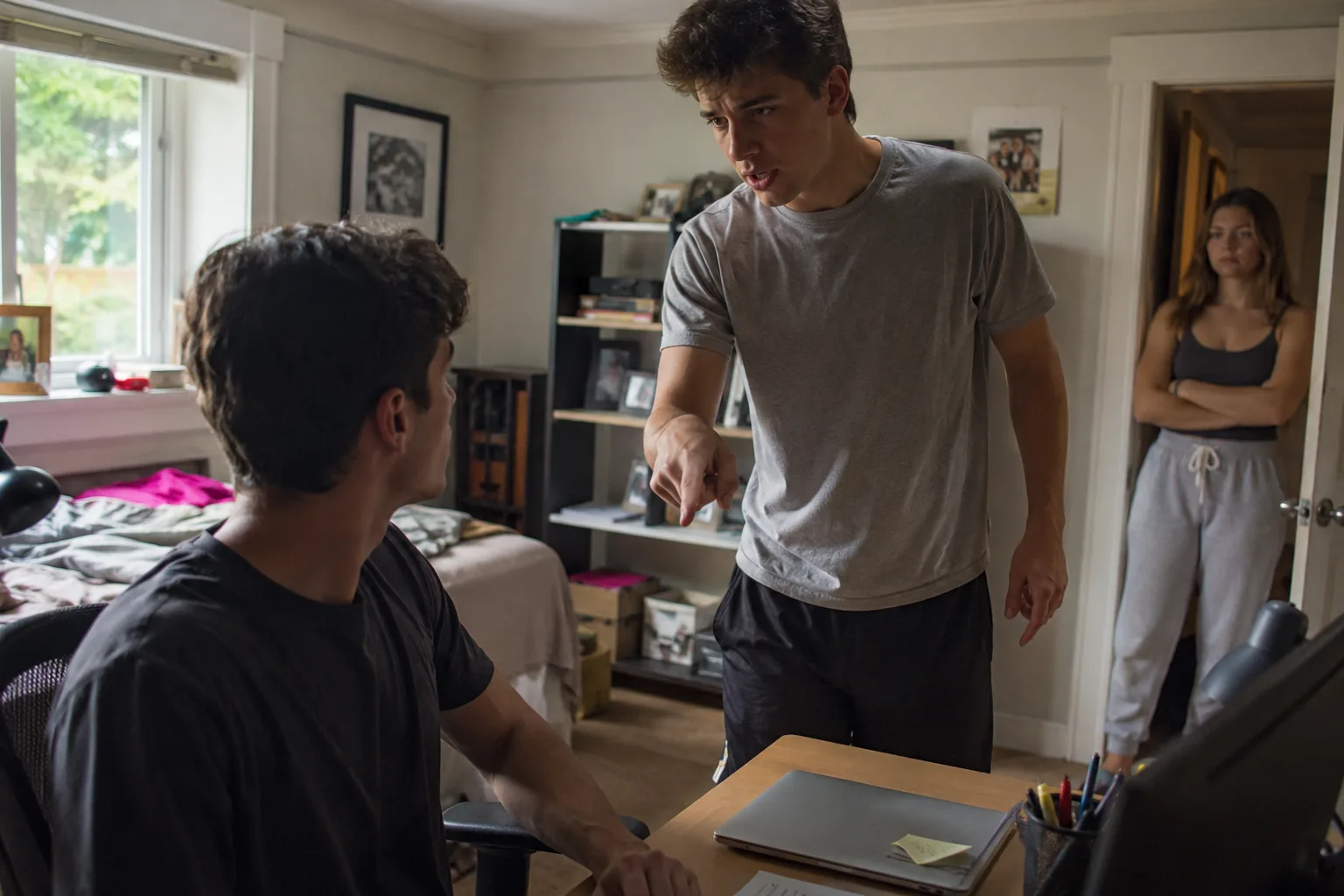
Ray shut me down in my sister’s bedroom studio with one hand pointed at the meme draft folder and a voice like he was teaching a class. He said I was “confusing draft volume with compression literacy,” like that settled it, and the kid on the beanbag went quiet so fast you could hear the desk fan tick. The bad part was he used that line to make me sound too ignorant to touch work I had been organizing all afternoon.
The room was small enough that every word stayed in it. Ring light in the corner. Pink acoustic foam squares peeling at one edge. Half-folded laundry on the bed beside a tripod. The meme page laptop sat open on the white desk, and the draft folder was still up because I had been sorting image stacks by post order, checking captions, and pulling out repeats.
Ray was in the gaming chair turned halfway toward me, phone in one hand, talking with that smooth, clipped rhythm he used when he wanted everyone else to stop asking plain questions. He ran one finger down the screen without touching it.
“You’re looking at raw saves,” he said. “That’s not the same as understanding load behavior. You can’t read a draft folder like it’s production logic.”
I kept my hand on the trackpad. “I didn’t say production logic. I said half these are the same meme saved four times with tiny caption changes.”
He gave a short laugh through his nose and looked past me toward the doorway like he needed a witness for how basic I was being. Ray’s cousin Devin was there, shoulder against the frame, holding a charger cable and watching the laptop more than either of us.
“That’s because you don’t know what a cascade buffer is,” Ray said.
He said it fast, like the term had been sitting on a shelf waiting for me.
I looked at the folder again. Rows of nearly identical thumbnails. Same raccoon face. Same screenshot tweet. Same basketball reaction image with different text bars. Nothing on the screen changed because he said two bigger words.
“A what?” I asked.
He leaned back in the chair, crossing one ankle over his knee. “Cascade buffer. Basic page management. If you flatten draft waves too early, the algorithm reads instability and suppresses later swings. That’s why admins keep variant stacks.”
Devin’s eyes moved from Ray to me, then to the folder. He didn’t say anything. He just stayed in the doorway with the cable hanging from one hand.
I clicked one image open, then another. Same crop. Same watermark. Same caption except one had a period and one didn’t.
“So this period is part of the buffer?” I said.
Ray’s answer came before I finished talking. “It’s not about the period. It’s about cadence mapping. You need the sequence to breathe.”
That was the first time he used that tone on me in front of someone younger than both of us. Not loud. Worse than loud. Neat. Patient. Like I was forcing him to simplify.
The kid on the beanbag, Noah, had been cutting stickers for mailers with little scissors. He stopped with one sticker half-peeled and looked at Ray the way kids look at somebody who sounds official on purpose.
Ray pointed at the stack of thumbnails again. “This is why I said don’t touch the folder unless you understand stagger retention. Draft count is not skill. Anybody can pile assets into a bin and pretend they see patterns.”
That landed exactly the way he wanted. Noah lowered his eyes to the sticker sheet. Devin shifted his weight but didn’t come in. I heard the mini fridge click on under the shelf and the room got even tighter.
I opened the details pane on the side and checked the same line twice. Time saved. File size. Duplicate names with numbers added at the end. Ray kept talking over my shoulder.
“You have to stop doing this local-file reading thing,” he said. “It makes people overconfident. Draft architecture isn’t visible unless you know how cross-buffering works.”
I turned and looked at him. “Cross-buffering with what?”
He lifted his chin a little, as if the question itself proved his point. “With the page rhythm. With suppression windows. With bleed-through management.”
Every answer got longer.
I clicked back to the folder and sorted by modified date. The screen snapped into a cleaner order. Several of the files he had called variants were saved within the same two minutes. Two had the same typo in the corner text. One still had a crop handle visible in the image preview.
“If this is all planned,” I said, keeping my voice even, “why are these saved like test copies?”
Ray rolled the chair closer, quick enough that one wheel caught on the rug. “Because not every test copy is a test copy,” he said. “Some drafts are held in a silent cascade buffer so the page doesn’t signal its hand.”
Noah finally looked up. “What’s a silent cascade buffer?”
Ray didn’t pause. He spread his hand toward the laptop like he was revealing something expensive. “It’s the insulated layer between draft accumulation and visible deployment. If you don’t know that, you really shouldn’t be correcting admin workflow.”
The room went still after that. The desk fan clicked. Noah stared at the screen. Devin stayed in the doorway. I looked at the folder, then at Ray’s face, then back at the folder where the file names and timestamps were sitting in plain view.
Because he had said the term like it was real, but the more he explained it, the less it matched anything on the screen.
Ray shut me down in my sister’s bedroom studio with one hand pointed at the meme draft folder and a voice like he was teaching a class. He said I was “confusing draft volume with compression literacy,” like that settled it, and the kid on the beanbag went quiet so fast you could hear the desk fan tick. The bad part was he used that line to make me sound too ignorant to touch work I had been organizing all afternoon.
The room was small enough that every word stayed in it. Ring light in the corner. Pink acoustic foam squares peeling at one edge. Half-folded laundry on the bed beside a tripod. The meme page laptop sat open on the white desk, and the draft folder was still up because I had been sorting image stacks by post order, checking captions, and pulling out repeats.
Ray was in the gaming chair turned halfway toward me, phone in one hand, talking with that smooth, clipped rhythm he used when he wanted everyone else to stop asking plain questions. He ran one finger down the screen without touching it.
“You’re looking at raw saves,” he said. “That’s not the same as understanding load behavior. You can’t read a draft folder like it’s production logic.”
I kept my hand on the trackpad. “I didn’t say production logic. I said half these are the same meme saved four times with tiny caption changes.”
He gave a short laugh through his nose and looked past me toward the doorway like he needed a witness for how basic I was being. Ray’s cousin Devin was there, shoulder against the frame, holding a charger cable and watching the laptop more than either of us.
“That’s because you don’t know what a cascade buffer is,” Ray said.
He said it fast, like the term had been sitting on a shelf waiting for me.
I looked at the folder again. Rows of nearly identical thumbnails. Same raccoon face. Same screenshot tweet. Same basketball reaction image with different text bars. Nothing on the screen changed because he said two bigger words.
“A what?” I asked.
He leaned back in the chair, crossing one ankle over his knee. “Cascade buffer. Basic page management. If you flatten draft waves too early, the algorithm reads instability and suppresses later swings. That’s why admins keep variant stacks.”
Devin’s eyes moved from Ray to me, then to the folder. He didn’t say anything. He just stayed in the doorway with the cable hanging from one hand.
I clicked one image open, then another. Same crop. Same watermark. Same caption except one had a period and one didn’t.
“So this period is part of the buffer?” I said.
Ray’s answer came before I finished talking. “It’s not about the period. It’s about cadence mapping. You need the sequence to breathe.”
That was the first time he used that tone on me in front of someone younger than both of us. Not loud. Worse than loud. Neat. Patient. Like I was forcing him to simplify.
The kid on the beanbag, Noah, had been cutting stickers for mailers with little scissors. He stopped with one sticker half-peeled and looked at Ray the way kids look at somebody who sounds official on purpose.
Ray pointed at the stack of thumbnails again. “This is why I said don’t touch the folder unless you understand stagger retention. Draft count is not skill. Anybody can pile assets into a bin and pretend they see patterns.”
That landed exactly the way he wanted. Noah lowered his eyes to the sticker sheet. Devin shifted his weight but didn’t come in. I heard the mini fridge click on under the shelf and the room got even tighter.
I opened the details pane on the side and checked the same line twice. Time saved. File size. Duplicate names with numbers added at the end. Ray kept talking over my shoulder.
“You have to stop doing this local-file reading thing,” he said. “It makes people overconfident. Draft architecture isn’t visible unless you know how cross-buffering works.”
I turned and looked at him. “Cross-buffering with what?”
He lifted his chin a little, as if the question itself proved his point. “With the page rhythm. With suppression windows. With bleed-through management.”
Every answer got longer.
I clicked back to the folder and sorted by modified date. The screen snapped into a cleaner order. Several of the files he had called variants were saved within the same two minutes. Two had the same typo in the corner text. One still had a crop handle visible in the image preview.
“If this is all planned,” I said, keeping my voice even, “why are these saved like test copies?”
Ray rolled the chair closer, quick enough that one wheel caught on the rug. “Because not every test copy is a test copy,” he said. “Some drafts are held in a silent cascade buffer so the page doesn’t signal its hand.”
Noah finally looked up. “What’s a silent cascade buffer?”
Ray didn’t pause. He spread his hand toward the laptop like he was revealing something expensive. “It’s the insulated layer between draft accumulation and visible deployment. If you don’t know that, you really shouldn’t be correcting admin workflow.”
The room went still after that. The desk fan clicked. Noah stared at the screen. Devin stayed in the doorway. I looked at the folder, then at Ray’s face, then back at the folder where the file names and timestamps were sitting in plain view.
Because he had said the term like it was real, but the more he explained it, the less it matched anything on the screen.