Story code: ST-001123
Part 1: The Picket and the Phone Call
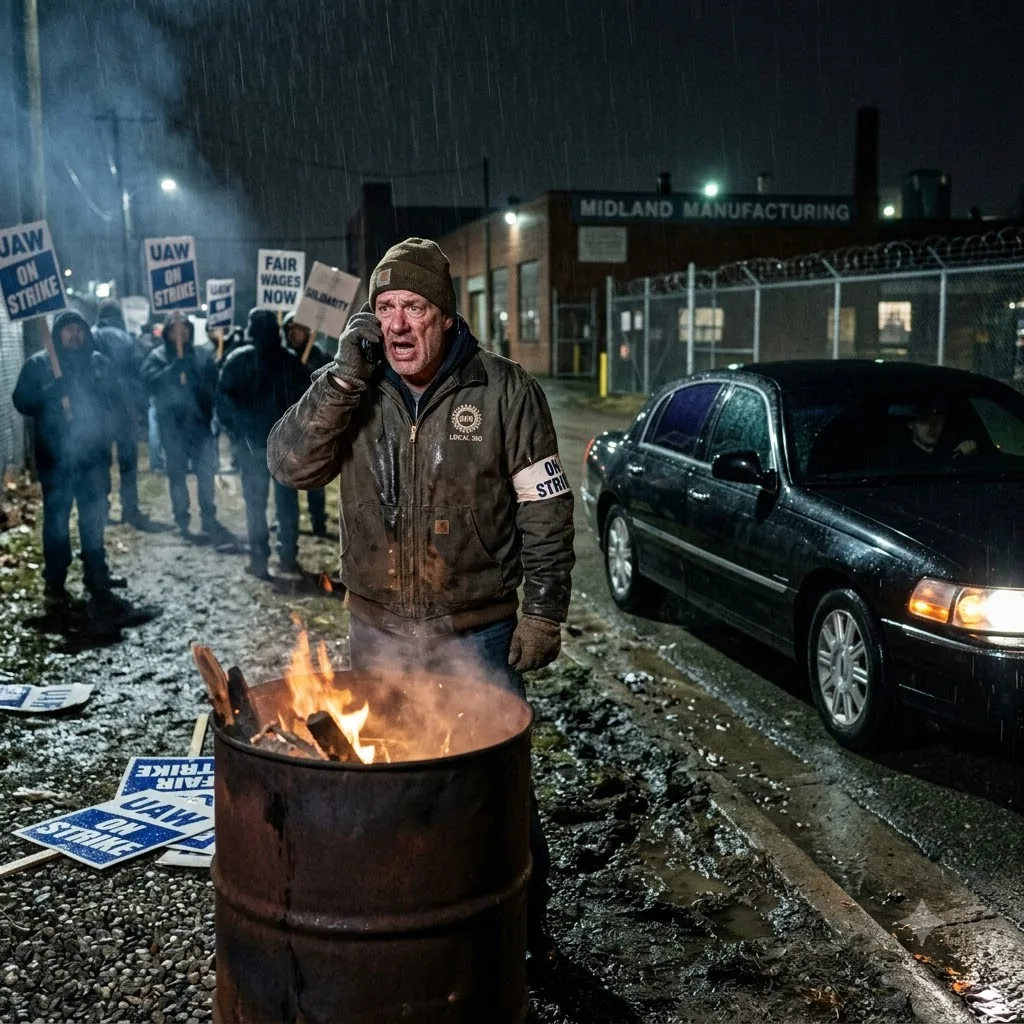
The megaphone feedback screamed over the crunch of work boots on frozen asphalt, but Frank’s eyes stayed locked on the line of black-and-white cruisers idling at the edge of the shipping yard. The wildcat strike was barely twelve hours old, and the wind coming off the river had already driven the temperature down to single digits. Fifty men huddled around three rusted burn barrels, their breath pluming in the harsh halogen lights, waiting for the riot shields to deploy. Frank shifted his grip on his battered steel thermos, feeling the deep ache in his knuckles from a lifetime on the assembly floor. It was an ache that the corporate liquidators had just decided was no longer worth a pension.
A heavy, persistent vibration buzzed against his ribcage.
Frank yanked off his canvas glove with his teeth. He kept his gaze fixed on the flashing blue lights down the avenue, expecting a text from Jimmy at the south gate confirming the local police were finally moving to break the line. He fumbled with the cracked screen, his thumb numb and stiff, and swiped to accept the call. The noise around him was absolutely deafening. The chanting of the second shift bounced off the brick walls of the factory, competing with the roar of a diesel truck trying to force its way through the front barricade.
He pressed the phone hard to his ear and covered his free ear with his palm. He barked a rough greeting into the receiver, commanding whoever was on the line to speak up over the noise.
The voice on the other end did not belong to Jimmy, nor was it the frantic shout of a union brother. It was quiet. It was perfectly sterile. The audio quality was heavily compressed, stripped of all wind and background noise, echoing with the flat acoustics of a corporate call center.
The woman identified herself as a representative from the oncology billing department at Memorial Hospital.
Frank stopped walking. The anxious pacing he had been doing to keep the frostbite out of his boots ceased entirely. He turned away from the burning barrels and the shouting men, staring blankly at the chain-link fence separating the yard from the highway. He told the woman he was listening, his voice suddenly hollow.
She read directly from a script. There was no hesitation in her delivery, no human inflection to soften the blow. She stated that the hospital medical board and the secondary insurance provider had completed their expedited review. The final appeal for his wife’s targeted chemotherapy regimen had been processed. The claim was denied.
Frank felt the brutal cold punch straight through his heavy insulated jacket, settling directly into the center of his chest. He gripped the chain-link fence, the frozen metal biting deep into his bare hand. He told the representative there was a terrible mistake. He stated firmly that Dr. Evans had filed the specific override paperwork on Thursday morning. He reminded her they had a guaranteed grace period until the end of the month.
The representative did not pause to acknowledge his panic. She read the next line on her monitor, her tone as mechanical as the automated presses sitting dead and silent inside the factory behind him. She informed him that the secondary review board had finalized the rejection code. Coverage for the targeted oncology suite was terminated effective immediately. All scheduled treatments for Monday morning were officially canceled.
Frank stared out at the police cruisers in the distance. The riot cops were a physical threat, men with heavy batons and plastic zip ties who could crack heads and throw him in a holding cell. That was a violence he understood completely. He knew how to brace for a swinging baton. He had spent the last three weeks preparing these exhausted men to stand shoulder-to-shoulder against the tactical units. But the quiet voice in his ear was administering a lethal blow from a climate-controlled office park a thousand miles away, and he could not throw a punch to stop it.
He told her to put her floor supervisor on the line immediately. He demanded to speak to the regional medical director. He promised he would come down to the administrative office the second his picket shift ended.
The representative spoke over his desperate demands with the practiced, numbing ease of someone who delivered death sentences for fifteen dollars an hour. She stated that the denial was final and legally binding. She advised him to contact the financial services department during normal business hours to discuss palliative care payment plans, noting that hospice services were still partially subsidized.
A violent shove shattered Frank’s paralysis. Jimmy slammed hard into his shoulder, pointing a thick, gloved finger toward the main street. The rhythmic chanting around the barrels had instantly morphed into a chaotic, terrified roar. The police cruisers at the edge of the yard were no longer idling. Their high-beam headlights flared, cutting blinding arcs through the freezing fog as the heavy doors swung open in unison. A solid line of officers in dark tactical gear stepped out onto the asphalt.
Frank stood frozen in place with the phone still pressed tightly to his ear. The representative’s voice continued to drone on, listing out-of-pocket daily rates for end-of-life hospice beds, reciting astronomical numbers that outstripped his frozen pension tenfold. Jimmy grabbed the heavy canvas collar of Frank’s winter coat, screaming his name over the sirens, hauling him backward just as the first tear gas canister fired with a hollow thud.
The megaphone feedback screamed over the crunch of work boots on frozen asphalt, but Frank’s eyes stayed locked on the line of black-and-white cruisers idling at the edge of the shipping yard. The wildcat strike was barely twelve hours old, and the wind coming off the river had already driven the temperature down to single digits. Fifty men huddled around three rusted burn barrels, their breath pluming in the harsh halogen lights, waiting for the riot shields to deploy. Frank shifted his grip on his battered steel thermos, feeling the deep ache in his knuckles from a lifetime on the assembly floor. It was an ache that the corporate liquidators had just decided was no longer worth a pension.
A heavy, persistent vibration buzzed against his ribcage.
Frank yanked off his canvas glove with his teeth. He kept his gaze fixed on the flashing blue lights down the avenue, expecting a text from Jimmy at the south gate confirming the local police were finally moving to break the line. He fumbled with the cracked screen, his thumb numb and stiff, and swiped to accept the call. The noise around him was absolutely deafening. The chanting of the second shift bounced off the brick walls of the factory, competing with the roar of a diesel truck trying to force its way through the front barricade.
He pressed the phone hard to his ear and covered his free ear with his palm. He barked a rough greeting into the receiver, commanding whoever was on the line to speak up over the noise.
The voice on the other end did not belong to Jimmy, nor was it the frantic shout of a union brother. It was quiet. It was perfectly sterile. The audio quality was heavily compressed, stripped of all wind and background noise, echoing with the flat acoustics of a corporate call center.
The woman identified herself as a representative from the oncology billing department at Memorial Hospital.
Frank stopped walking. The anxious pacing he had been doing to keep the frostbite out of his boots ceased entirely. He turned away from the burning barrels and the shouting men, staring blankly at the chain-link fence separating the yard from the highway. He told the woman he was listening, his voice suddenly hollow.
She read directly from a script. There was no hesitation in her delivery, no human inflection to soften the blow. She stated that the hospital medical board and the secondary insurance provider had completed their expedited review. The final appeal for his wife’s targeted chemotherapy regimen had been processed. The claim was denied.
Frank felt the brutal cold punch straight through his heavy insulated jacket, settling directly into the center of his chest. He gripped the chain-link fence, the frozen metal biting deep into his bare hand. He told the representative there was a terrible mistake. He stated firmly that Dr. Evans had filed the specific override paperwork on Thursday morning. He reminded her they had a guaranteed grace period until the end of the month.
The representative did not pause to acknowledge his panic. She read the next line on her monitor, her tone as mechanical as the automated presses sitting dead and silent inside the factory behind him. She informed him that the secondary review board had finalized the rejection code. Coverage for the targeted oncology suite was terminated effective immediately. All scheduled treatments for Monday morning were officially canceled.
Frank stared out at the police cruisers in the distance. The riot cops were a physical threat, men with heavy batons and plastic zip ties who could crack heads and throw him in a holding cell. That was a violence he understood completely. He knew how to brace for a swinging baton. He had spent the last three weeks preparing these exhausted men to stand shoulder-to-shoulder against the tactical units. But the quiet voice in his ear was administering a lethal blow from a climate-controlled office park a thousand miles away, and he could not throw a punch to stop it.
He told her to put her floor supervisor on the line immediately. He demanded to speak to the regional medical director. He promised he would come down to the administrative office the second his picket shift ended.
The representative spoke over his desperate demands with the practiced, numbing ease of someone who delivered death sentences for fifteen dollars an hour. She stated that the denial was final and legally binding. She advised him to contact the financial services department during normal business hours to discuss palliative care payment plans, noting that hospice services were still partially subsidized.
A violent shove shattered Frank’s paralysis. Jimmy slammed hard into his shoulder, pointing a thick, gloved finger toward the main street. The rhythmic chanting around the barrels had instantly morphed into a chaotic, terrified roar. The police cruisers at the edge of the yard were no longer idling. Their high-beam headlights flared, cutting blinding arcs through the freezing fog as the heavy doors swung open in unison. A solid line of officers in dark tactical gear stepped out onto the asphalt.
Frank stood frozen in place with the phone still pressed tightly to his ear. The representative’s voice continued to drone on, listing out-of-pocket daily rates for end-of-life hospice beds, reciting astronomical numbers that outstripped his frozen pension tenfold. Jimmy grabbed the heavy canvas collar of Frank’s winter coat, screaming his name over the sirens, hauling him backward just as the first tear gas canister fired with a hollow thud.