Story code: ST-000858
Part 1: The Word He Dropped Like a Rule
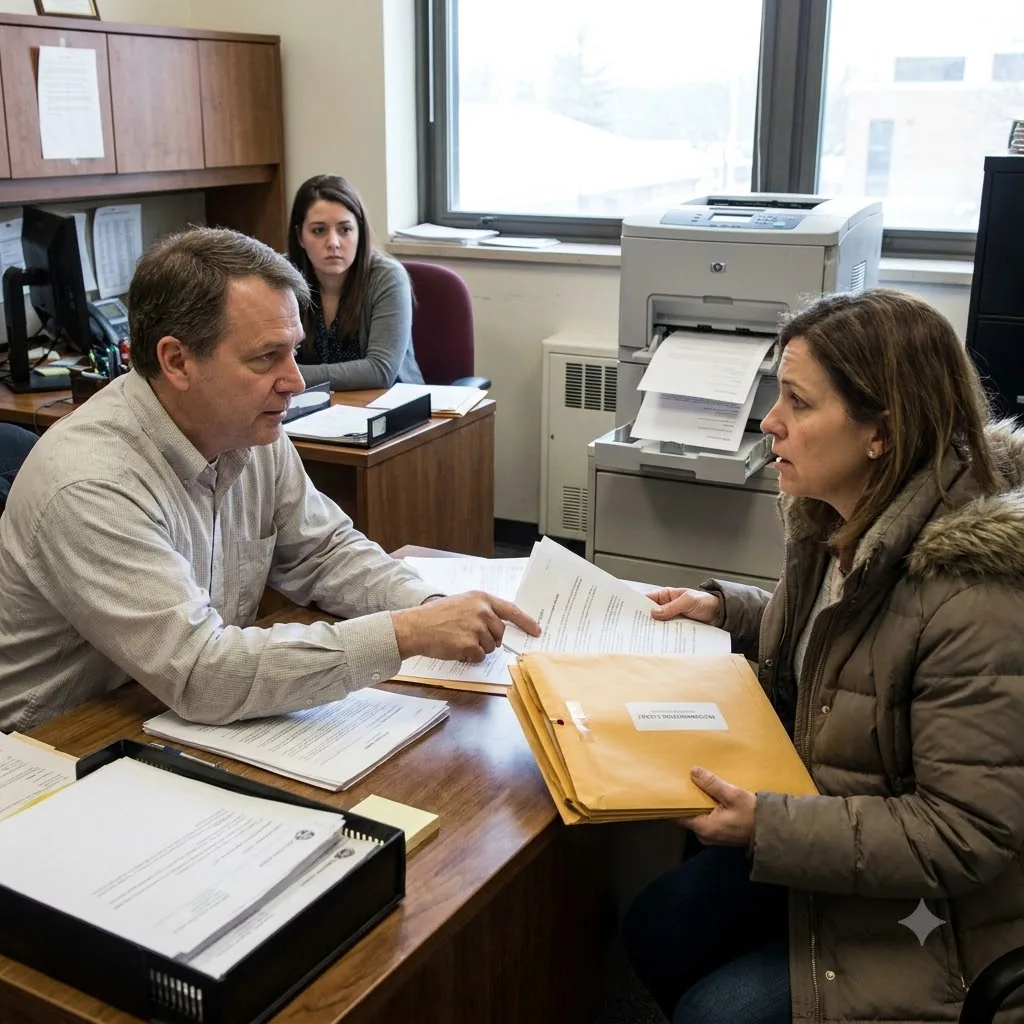
The printer was spitting out award letters behind me when Glen Harper looked at a mother holding her daughter’s recommendation packet and said, in that calm specialist voice, that the file had a “narrative calibration defect.” He said it like she should have known better, and when Dana Brooks asked him what that even meant, he gave her a small smile and told her this was exactly why families got in trouble when they tried to handle recommendation packets without understanding admissions standards. I was at the intake desk squaring packet clips to the edge of the counter, close enough to hear every word and far enough that nobody was speaking to me yet. The front area was still moving the way it always did. A desk phone rang twice and stopped. Somebody at the copier tapped a stack straight against the machine. A student near the window was filling out an aid correction form with the cap of a pen in his mouth. In the middle of all that ordinary office noise, Glen had already changed the room. Dana had one hand flat over the packet. Leah stood close at her side, backpack still on one shoulder, eyes following the folder every time Glen touched it. It was a thick packet, clear cover on top, three recommendation letters clipped behind the school profile and résumé pages. Glen slid it toward himself with two fingers, then tapped the first letter without opening it all the way. “A recommendation packet can’t carry an unresolved narrative calibration issue,” he said. “If that isn’t corrected before review sequencing, the packet can trigger a credibility drag across the whole file.” Dana blinked once, then asked the most normal question in the room. “What is missing?” Glen didn’t answer that. He lifted one shoulder and gave her a patient look, the kind people use when they want everyone else to hear how patient they’re being. “It’s not always about something being missing,” he said. “Sometimes it’s about whether the packet demonstrates proper narrative alignment across independent recommenders.” Leah looked at her mother. Dana kept her hand on the packet and said, slower this time, “Can you show me where that requirement is on what we were told to submit?” Glen let out a short breath through his nose and glanced toward me and then back to Dana, making her question sound like a delay instead of a question. “Mrs. Brooks, with respect, not every standard is printed in family-facing language. That’s why people come to us. If you want a plain version, the letters are not calibrated to each other.” There was a pause after that. Not a dramatic one. Just the kind that shows up when somebody has been told they’re the only one in the room who doesn’t understand the rules. Dana’s fingers tightened on the edge of the cover sheet. “They are recommendations,” she said. “They’re from three different people. Why would they sound the same?” “I didn’t say same,” Glen said. “I said calibrated.” He opened the packet wider then, spreading the pages just enough to keep control of where everyone looked. He touched the counselor letter, then the teacher letter, then the activity advisor’s letter as if he were demonstrating a science concept. “The issue is that these endorsements don’t maintain a coherent advocacy axis. One speaks to diligence, one to leadership, one to growth under pressure. Without a stabilizing narrative bridge, that creates a calibration defect. It can read as unmanaged packaging.” The words landed harder because he kept his voice even. Nobody had raised theirs. Nobody had done anything you could point to afterward and call a scene. Dana just stood there being instructed in a term I had never heard in our office, while the student by the window kept writing and the printer behind me restarted with a clunk. Dana asked again, “Is there an actual form, or a policy, or a checklist where that is written down?” Glen smiled without showing teeth. “This is specialist-level review language.” That was the moment the shame part became visible. He had not said she was ignorant. He had done something cleaner than that. He made her plain question sound like proof that she was out of her depth. Leah shifted her backpack off her shoulder and held it by the top loop. “If it’s wrong,” she said quietly, “can we fix it today?” Glen turned to her right away. “Not likely. Once a packet presents this kind of defect, the safer move is usually to hold submission, obtain a new recommendation structure, and avoid downstream review complications.” Dana’s head came up at that. “Hold submission until when?” “Depends how quickly your school can rebuild the packet.” She stared at him for a second, then at the pages under his hand. “Rebuild? These letters took months.” He gave a small nod like the delay was unfortunate but obvious. “That is why sequence discipline matters.” I kept my hands on the intake forms in front of me because families watch staff hands as much as staff faces. If I moved too fast, I would be part of his performance. If I said too much without something solid, I would sound like I was challenging office language I couldn’t source on the spot. So I listened. Glen had named a defect, then a drag, then a bridge, then an axis. Each term sounded firmer than the one before. But he still had not pointed to a single line in the packet, not one sentence in a letter, not one printed instruction from our office. He just kept the folder under his hand and talked like the page itself had already agreed with him. Dana finally said, very plainly, “I need you to show me where this comes from before you tell my daughter to start over.” Glen pulled the packet an inch closer to his side of the table and said, “I just did explain it.” But he still hadn’t shown.
The printer was spitting out award letters behind me when Glen Harper looked at a mother holding her daughter’s recommendation packet and said, in that calm specialist voice, that the file had a “narrative calibration defect.” He said it like she should have known better, and when Dana Brooks asked him what that even meant, he gave her a small smile and told her this was exactly why families got in trouble when they tried to handle recommendation packets without understanding admissions standards. I was at the intake desk squaring packet clips to the edge of the counter, close enough to hear every word and far enough that nobody was speaking to me yet. The front area was still moving the way it always did. A desk phone rang twice and stopped. Somebody at the copier tapped a stack straight against the machine. A student near the window was filling out an aid correction form with the cap of a pen in his mouth. In the middle of all that ordinary office noise, Glen had already changed the room. Dana had one hand flat over the packet. Leah stood close at her side, backpack still on one shoulder, eyes following the folder every time Glen touched it. It was a thick packet, clear cover on top, three recommendation letters clipped behind the school profile and résumé pages. Glen slid it toward himself with two fingers, then tapped the first letter without opening it all the way. “A recommendation packet can’t carry an unresolved narrative calibration issue,” he said. “If that isn’t corrected before review sequencing, the packet can trigger a credibility drag across the whole file.” Dana blinked once, then asked the most normal question in the room. “What is missing?” Glen didn’t answer that. He lifted one shoulder and gave her a patient look, the kind people use when they want everyone else to hear how patient they’re being. “It’s not always about something being missing,” he said. “Sometimes it’s about whether the packet demonstrates proper narrative alignment across independent recommenders.” Leah looked at her mother. Dana kept her hand on the packet and said, slower this time, “Can you show me where that requirement is on what we were told to submit?” Glen let out a short breath through his nose and glanced toward me and then back to Dana, making her question sound like a delay instead of a question. “Mrs. Brooks, with respect, not every standard is printed in family-facing language. That’s why people come to us. If you want a plain version, the letters are not calibrated to each other.” There was a pause after that. Not a dramatic one. Just the kind that shows up when somebody has been told they’re the only one in the room who doesn’t understand the rules. Dana’s fingers tightened on the edge of the cover sheet. “They are recommendations,” she said. “They’re from three different people. Why would they sound the same?” “I didn’t say same,” Glen said. “I said calibrated.” He opened the packet wider then, spreading the pages just enough to keep control of where everyone looked. He touched the counselor letter, then the teacher letter, then the activity advisor’s letter as if he were demonstrating a science concept. “The issue is that these endorsements don’t maintain a coherent advocacy axis. One speaks to diligence, one to leadership, one to growth under pressure. Without a stabilizing narrative bridge, that creates a calibration defect. It can read as unmanaged packaging.” The words landed harder because he kept his voice even. Nobody had raised theirs. Nobody had done anything you could point to afterward and call a scene. Dana just stood there being instructed in a term I had never heard in our office, while the student by the window kept writing and the printer behind me restarted with a clunk. Dana asked again, “Is there an actual form, or a policy, or a checklist where that is written down?” Glen smiled without showing teeth. “This is specialist-level review language.” That was the moment the shame part became visible. He had not said she was ignorant. He had done something cleaner than that. He made her plain question sound like proof that she was out of her depth. Leah shifted her backpack off her shoulder and held it by the top loop. “If it’s wrong,” she said quietly, “can we fix it today?” Glen turned to her right away. “Not likely. Once a packet presents this kind of defect, the safer move is usually to hold submission, obtain a new recommendation structure, and avoid downstream review complications.” Dana’s head came up at that. “Hold submission until when?” “Depends how quickly your school can rebuild the packet.” She stared at him for a second, then at the pages under his hand. “Rebuild? These letters took months.” He gave a small nod like the delay was unfortunate but obvious. “That is why sequence discipline matters.” I kept my hands on the intake forms in front of me because families watch staff hands as much as staff faces. If I moved too fast, I would be part of his performance. If I said too much without something solid, I would sound like I was challenging office language I couldn’t source on the spot. So I listened. Glen had named a defect, then a drag, then a bridge, then an axis. Each term sounded firmer than the one before. But he still had not pointed to a single line in the packet, not one sentence in a letter, not one printed instruction from our office. He just kept the folder under his hand and talked like the page itself had already agreed with him. Dana finally said, very plainly, “I need you to show me where this comes from before you tell my daughter to start over.” Glen pulled the packet an inch closer to his side of the table and said, “I just did explain it.” But he still hadn’t shown.