Story code: ST-001278
Part 1: The Seal
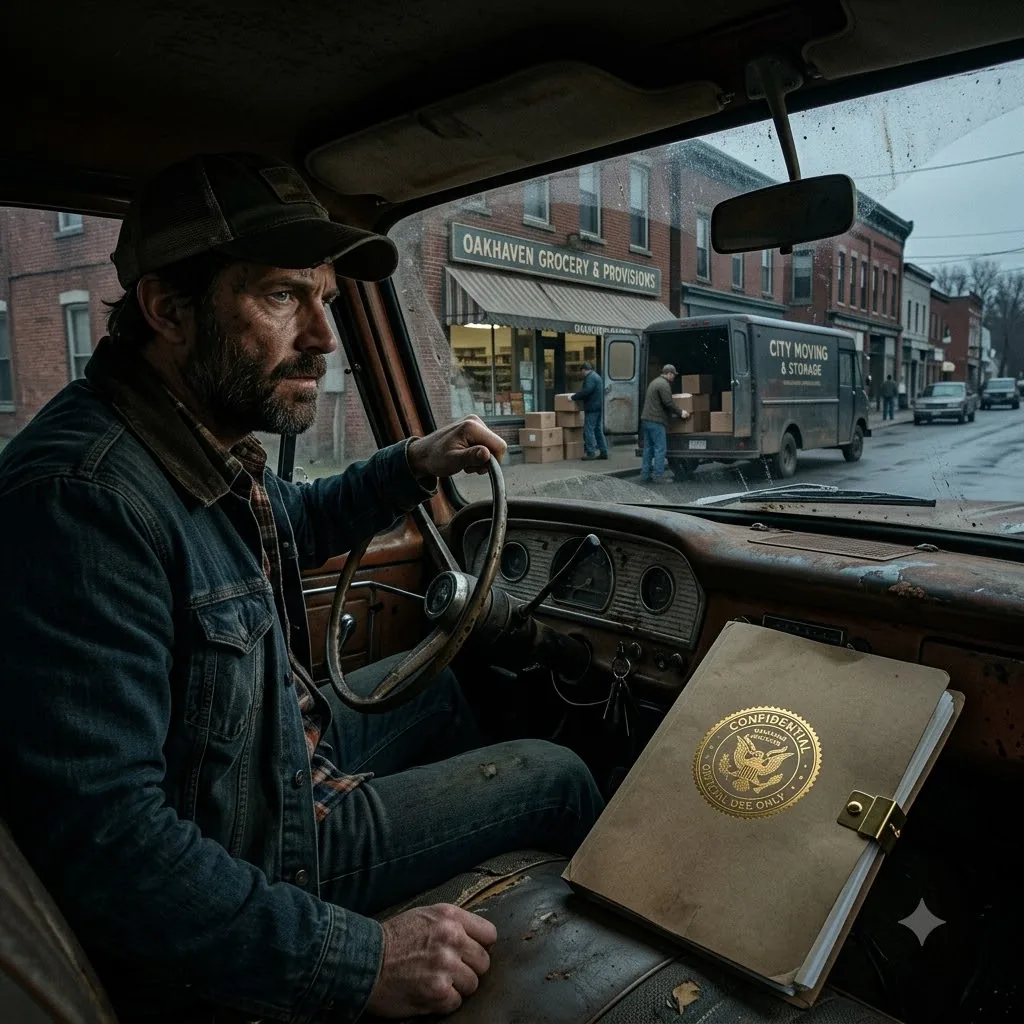
I sat in the cab of my truck with the engine idling outside the municipal building, staring at the gold foil seal on the heavy manila envelope resting in my passenger seat. That governor’s injunction was my life’s work, the culmination of ten years fighting to shut down the private prison complex that had stolen my entire twenties. I tapped my fingers on the steering wheel and looked out the windshield at a Main Street that felt entirely wrong. It was ten in the morning on a Tuesday, yet an unsettling, suffocating silence hung over the asphalt. Down the block, the local grocer wasn’t setting out his sidewalk fruit stands. Instead, he and his teenage son were quietly hauling flattened cardboard boxes into the storefront and taping them shut. The shelves visible through the plate glass were already half bare. I watched the butcher next door dragging heavy black trash bags to the curb with his head bowed, the neon open sign in his window flicking off in the middle of the morning rush. The hardware store across the street had fresh plywood leaned up against the facade, just waiting for nails. They were all packing up.
The town was folding in on itself, and I hadn’t even delivered the killing blow yet. I killed the engine and grabbed the envelope. The paper felt heavy in my grip, loaded with the weight of stolen years, endless appeals, the cold concrete of an eight-by-ten cell, and the hollow apologies of corrupt wardens. The prison out on Route 9 wasn’t just a local economic driver, it was a meat grinder. It took young men who made a single mistake and turned them into numbers, into free labor, into ghosts. I was one of those young men. I spent my entire twenties staring at the barbed wire from the inside. Now I was the man carrying the state mandate to padlock those iron gates forever. I slammed the truck door and walked up the concrete steps of the town hall, ready to watch the local bureaucracy panic.
The receptionist wasn’t at her desk. Her computer monitor was dark, and a half-empty mug of coffee sat next to a stack of blank municipal exit forms. The silence inside was thicker than out on the street. No phones ringing, no chatter from the zoning clerks, no hum from the air conditioning units. Just the echo of my boots on the linoleum. I walked straight down the corridor, the bitter taste of vindication turning slightly sour in my mouth.
Mayor Harlan’s office door was cracked open. I didn’t bother to knock. I pushed the heavy wooden door wide and stepped onto the worn carpet. Harlan sat behind his massive oak desk, staring blankly at a wall calendar. He looked ten years older than he had at the town council meeting last month. His skin had a gray, waxy sheen, and his striped tie hung loose around his neck. I tossed the envelope right in the center of his blotter. It landed with a thick, satisfying thud. The gold foil seal caught the light from the window, gleaming like a coin on a dead man’s eyes.
I told him it was over. I told him the governor had signed the order at midnight, and the state troopers were already en route to clear out the prison’s administration building. I stood there with my chest puffed out. I waited for the bluster. I waited for him to shout, to threaten me with municipal lawsuits, to reach for his desk phone and dial the local police chief to have me dragged out in handcuffs for trespassing.
Harlan didn’t reach for the phone. He didn’t even look up at my face. His bloodshot eyes locked onto that gold seal, and his lower lip began to tremble. A violent, uncontrollable shake took over his hands as he placed them flat on the desk, the tremor rattling his silver pen holder. He stared at the governor’s signature like it was a death warrant.
He whispered that I had absolutely no idea what I had just done to us.
I started to tell him that justice didn’t care about the town’s precious tax revenue, but my words died in my throat. Harlan leaned back in his leather executive chair. He slowly reached down and opened his bottom right desk drawer. The metal hinges whined in the quiet room. He told me the prison wasn’t just paying the bills around here. He said we were all going to drown now, every last one of us, because the only thing keeping the town alive was the specific arrangement they had made with the warden to handle the deficits. His trembling hand slipped deep into the dark drawer. The metal sliding tracks groaned as he pulled out a heavy object wrapped in a dark velvet cloth.
I sat in the cab of my truck with the engine idling outside the municipal building, staring at the gold foil seal on the heavy manila envelope resting in my passenger seat. That governor’s injunction was my life’s work, the culmination of ten years fighting to shut down the private prison complex that had stolen my entire twenties. I tapped my fingers on the steering wheel and looked out the windshield at a Main Street that felt entirely wrong. It was ten in the morning on a Tuesday, yet an unsettling, suffocating silence hung over the asphalt. Down the block, the local grocer wasn’t setting out his sidewalk fruit stands. Instead, he and his teenage son were quietly hauling flattened cardboard boxes into the storefront and taping them shut. The shelves visible through the plate glass were already half bare. I watched the butcher next door dragging heavy black trash bags to the curb with his head bowed, the neon open sign in his window flicking off in the middle of the morning rush. The hardware store across the street had fresh plywood leaned up against the facade, just waiting for nails. They were all packing up.
The town was folding in on itself, and I hadn’t even delivered the killing blow yet. I killed the engine and grabbed the envelope. The paper felt heavy in my grip, loaded with the weight of stolen years, endless appeals, the cold concrete of an eight-by-ten cell, and the hollow apologies of corrupt wardens. The prison out on Route 9 wasn’t just a local economic driver, it was a meat grinder. It took young men who made a single mistake and turned them into numbers, into free labor, into ghosts. I was one of those young men. I spent my entire twenties staring at the barbed wire from the inside. Now I was the man carrying the state mandate to padlock those iron gates forever. I slammed the truck door and walked up the concrete steps of the town hall, ready to watch the local bureaucracy panic.
The receptionist wasn’t at her desk. Her computer monitor was dark, and a half-empty mug of coffee sat next to a stack of blank municipal exit forms. The silence inside was thicker than out on the street. No phones ringing, no chatter from the zoning clerks, no hum from the air conditioning units. Just the echo of my boots on the linoleum. I walked straight down the corridor, the bitter taste of vindication turning slightly sour in my mouth.
Mayor Harlan’s office door was cracked open. I didn’t bother to knock. I pushed the heavy wooden door wide and stepped onto the worn carpet. Harlan sat behind his massive oak desk, staring blankly at a wall calendar. He looked ten years older than he had at the town council meeting last month. His skin had a gray, waxy sheen, and his striped tie hung loose around his neck. I tossed the envelope right in the center of his blotter. It landed with a thick, satisfying thud. The gold foil seal caught the light from the window, gleaming like a coin on a dead man’s eyes.
I told him it was over. I told him the governor had signed the order at midnight, and the state troopers were already en route to clear out the prison’s administration building. I stood there with my chest puffed out. I waited for the bluster. I waited for him to shout, to threaten me with municipal lawsuits, to reach for his desk phone and dial the local police chief to have me dragged out in handcuffs for trespassing.
Harlan didn’t reach for the phone. He didn’t even look up at my face. His bloodshot eyes locked onto that gold seal, and his lower lip began to tremble. A violent, uncontrollable shake took over his hands as he placed them flat on the desk, the tremor rattling his silver pen holder. He stared at the governor’s signature like it was a death warrant.
He whispered that I had absolutely no idea what I had just done to us.
I started to tell him that justice didn’t care about the town’s precious tax revenue, but my words died in my throat. Harlan leaned back in his leather executive chair. He slowly reached down and opened his bottom right desk drawer. The metal hinges whined in the quiet room. He told me the prison wasn’t just paying the bills around here. He said we were all going to drown now, every last one of us, because the only thing keeping the town alive was the specific arrangement they had made with the warden to handle the deficits. His trembling hand slipped deep into the dark drawer. The metal sliding tracks groaned as he pulled out a heavy object wrapped in a dark velvet cloth.