Story code: ST-000978
Part 1: The Word He Used Like a Weapon
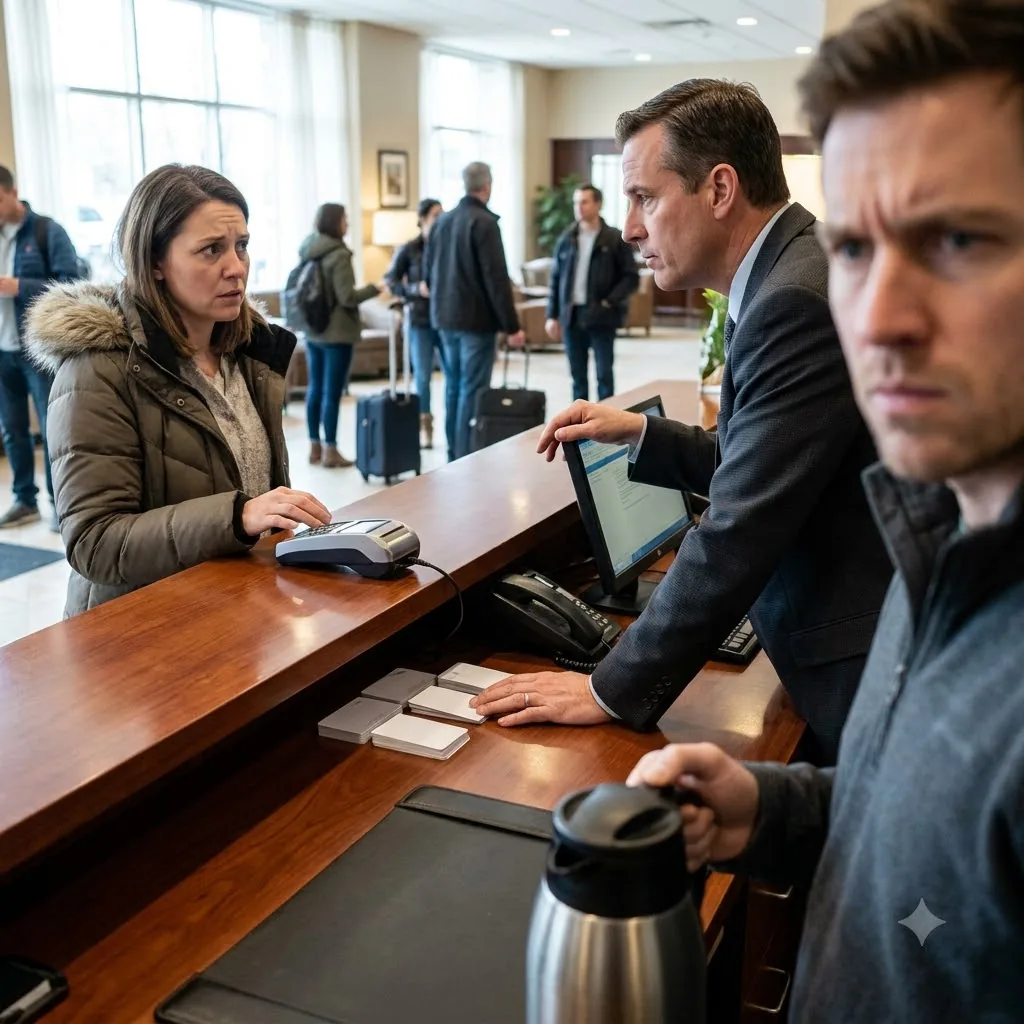
I was restocking the little station by the coffee urns when our front desk manager told a woman he could not reissue her room key because she had already triggered a “card custody variance.” He said it in that low, polished voice of his, holding her keycard between two fingers like he was teaching a class, and the worst part was how fast the whole lobby went quiet enough to make her look like she was the problem. She had one overnight bag by her calf, her reservation card flat on the desk, and a face that kept tightening every time he corrected one more word. Friday check-in traffic was still moving around us. A family in matching baseball shirts was dragging roller bags toward the elevators. The printer behind the desk kept spitting out folios. Ice melted down the sides of the lemon water dispenser near me. None of that slowed Graham Bell down. Marisol Vega didn’t wave the keycard or raise her voice. She kept it simple. “It stopped opening my room,” she said. “I came down so someone could fix it.” Graham turned the card once between his fingers and looked past her shoulder, out toward the lobby, while he answered. “That’s not the issue, Ms. Vega. The issue is that after a failed access event, guests are not supposed to remove the credential from the point of loss before desk verification. Once you do that, it becomes a card custody variance.” He said “credential” instead of “key” and “point of loss” like she had brought him evidence from a crime scene. A couple waiting to check in stopped pretending not to listen. Marisol opened her mouth, stopped, then tried again. “I used it at my door. It flashed red. I came here. That’s all.” “Right,” Graham said, still calm. “But you handled it wrong after the denial event.” That phrase made DeShawn look up from folding fresh maps near the concierge stand. He didn’t say anything. He just held one map halfway open and kept his eyes on Graham for half a second longer than usual. Marisol pressed two fingers on the counter, right beside the keycard. “What does that even mean? I handed you the card. Can you just make it work?” Graham gave a small, patient smile. It was the expression he used when he wanted the room to see he was being reasonable. “I can explain it,” he said. “Whether I can simply remake the key depends on whether your reservation is still in valid occupancy alignment after the custody break.” Nobody around the desk moved for a beat after that. It was a crowded lobby, but he had managed to create a little ring of silence with words that sounded official enough to stop people from asking if any of this was real. Marisol’s hand left the counter and went back to the strap of her bag. “Occupancy alignment?” “Yes.” Graham set the card down, but kept one finger resting on it. “Your key isn’t just a door opener. It’s tied to active room status. If a guest interrupts chain-of-possession after a denial event, we have to verify that the room is still in occupancy alignment before a re-encode can happen.” The way he said it, slow and neat, made it sound like a federal regulation instead of a plastic card that had stopped working. I stayed where I was with a stack of paper cups in my hand, because that is what working in a lobby teaches you. You can be in the room without becoming part of the scene. Still, I watched the timing. Graham had one hand near the keyboard the entire time, but he was not doing the one thing that would have solved this fastest, which was encode a new card or test the one she brought down. Marisol noticed it too. Her eyes dropped to the encoder, then back to him. “So you haven’t checked anything yet,” she said. Graham’s chin tipped just a little. “I’m checking your explanation against procedure.” That landed exactly the way he wanted. It made her sound like she was submitting a story, not reporting a broken key. A man with a roller bag stepped into the next line and then stopped when he realized there wasn’t really a line anymore, just a scene. DeShawn moved two steps closer to the desk under cover of putting brochures back into a holder. Graham did not look at him. Marisol tried once more, still controlled, still direct. “I tapped the card at my room. It didn’t work. I came downstairs. I have my ID. I have the reservation. Why are you talking like I did something wrong?” Graham lifted the keycard again. “Because once a credential leaves an unresolved access threshold, guest handling matters. Most people don’t know that.” It was a smooth sentence, almost gentle, and it carried the insult perfectly. Most people. As if she had failed some common-sense test everyone else in the room should already understand. Her jaw set. She took a breath through her nose and let it out slowly. “Then explain the threshold part.” He didn’t hesitate. That was what made several heads turn fully toward the desk. “An unresolved access threshold,” he said, facing the lobby more than her now, “is the period after a room denies entry but before the desk revalidates occupancy alignment. During that threshold, the key is not supposed to circulate away from the door zone.” He said “door zone” like it was printed in a manual. Marisol stared at him for one beat, then another. Her fingers loosened from her bag strap and flattened against the counter. DeShawn’s eyes flicked to me and then back to Graham. Because Graham had finally built the trap too high to step over casually. He had not just corrected her. He had created a whole rule big enough to test. And Marisol looked down at the card, then at the encoder sitting right there, and.
I was restocking the little station by the coffee urns when our front desk manager told a woman he could not reissue her room key because she had already triggered a “card custody variance.” He said it in that low, polished voice of his, holding her keycard between two fingers like he was teaching a class, and the worst part was how fast the whole lobby went quiet enough to make her look like she was the problem. She had one overnight bag by her calf, her reservation card flat on the desk, and a face that kept tightening every time he corrected one more word. Friday check-in traffic was still moving around us. A family in matching baseball shirts was dragging roller bags toward the elevators. The printer behind the desk kept spitting out folios. Ice melted down the sides of the lemon water dispenser near me. None of that slowed Graham Bell down. Marisol Vega didn’t wave the keycard or raise her voice. She kept it simple. “It stopped opening my room,” she said. “I came down so someone could fix it.” Graham turned the card once between his fingers and looked past her shoulder, out toward the lobby, while he answered. “That’s not the issue, Ms. Vega. The issue is that after a failed access event, guests are not supposed to remove the credential from the point of loss before desk verification. Once you do that, it becomes a card custody variance.” He said “credential” instead of “key” and “point of loss” like she had brought him evidence from a crime scene. A couple waiting to check in stopped pretending not to listen. Marisol opened her mouth, stopped, then tried again. “I used it at my door. It flashed red. I came here. That’s all.” “Right,” Graham said, still calm. “But you handled it wrong after the denial event.” That phrase made DeShawn look up from folding fresh maps near the concierge stand. He didn’t say anything. He just held one map halfway open and kept his eyes on Graham for half a second longer than usual. Marisol pressed two fingers on the counter, right beside the keycard. “What does that even mean? I handed you the card. Can you just make it work?” Graham gave a small, patient smile. It was the expression he used when he wanted the room to see he was being reasonable. “I can explain it,” he said. “Whether I can simply remake the key depends on whether your reservation is still in valid occupancy alignment after the custody break.” Nobody around the desk moved for a beat after that. It was a crowded lobby, but he had managed to create a little ring of silence with words that sounded official enough to stop people from asking if any of this was real. Marisol’s hand left the counter and went back to the strap of her bag. “Occupancy alignment?” “Yes.” Graham set the card down, but kept one finger resting on it. “Your key isn’t just a door opener. It’s tied to active room status. If a guest interrupts chain-of-possession after a denial event, we have to verify that the room is still in occupancy alignment before a re-encode can happen.” The way he said it, slow and neat, made it sound like a federal regulation instead of a plastic card that had stopped working. I stayed where I was with a stack of paper cups in my hand, because that is what working in a lobby teaches you. You can be in the room without becoming part of the scene. Still, I watched the timing. Graham had one hand near the keyboard the entire time, but he was not doing the one thing that would have solved this fastest, which was encode a new card or test the one she brought down. Marisol noticed it too. Her eyes dropped to the encoder, then back to him. “So you haven’t checked anything yet,” she said. Graham’s chin tipped just a little. “I’m checking your explanation against procedure.” That landed exactly the way he wanted. It made her sound like she was submitting a story, not reporting a broken key. A man with a roller bag stepped into the next line and then stopped when he realized there wasn’t really a line anymore, just a scene. DeShawn moved two steps closer to the desk under cover of putting brochures back into a holder. Graham did not look at him. Marisol tried once more, still controlled, still direct. “I tapped the card at my room. It didn’t work. I came downstairs. I have my ID. I have the reservation. Why are you talking like I did something wrong?” Graham lifted the keycard again. “Because once a credential leaves an unresolved access threshold, guest handling matters. Most people don’t know that.” It was a smooth sentence, almost gentle, and it carried the insult perfectly. Most people. As if she had failed some common-sense test everyone else in the room should already understand. Her jaw set. She took a breath through her nose and let it out slowly. “Then explain the threshold part.” He didn’t hesitate. That was what made several heads turn fully toward the desk. “An unresolved access threshold,” he said, facing the lobby more than her now, “is the period after a room denies entry but before the desk revalidates occupancy alignment. During that threshold, the key is not supposed to circulate away from the door zone.” He said “door zone” like it was printed in a manual. Marisol stared at him for one beat, then another. Her fingers loosened from her bag strap and flattened against the counter. DeShawn’s eyes flicked to me and then back to Graham. Because Graham had finally built the trap too high to step over casually. He had not just corrected her. He had created a whole rule big enough to test. And Marisol looked down at the card, then at the encoder sitting right there, and.