Story code: ST-000596
Part 1: He Couldn’t Tape One Canvas Straight Until She Touched It
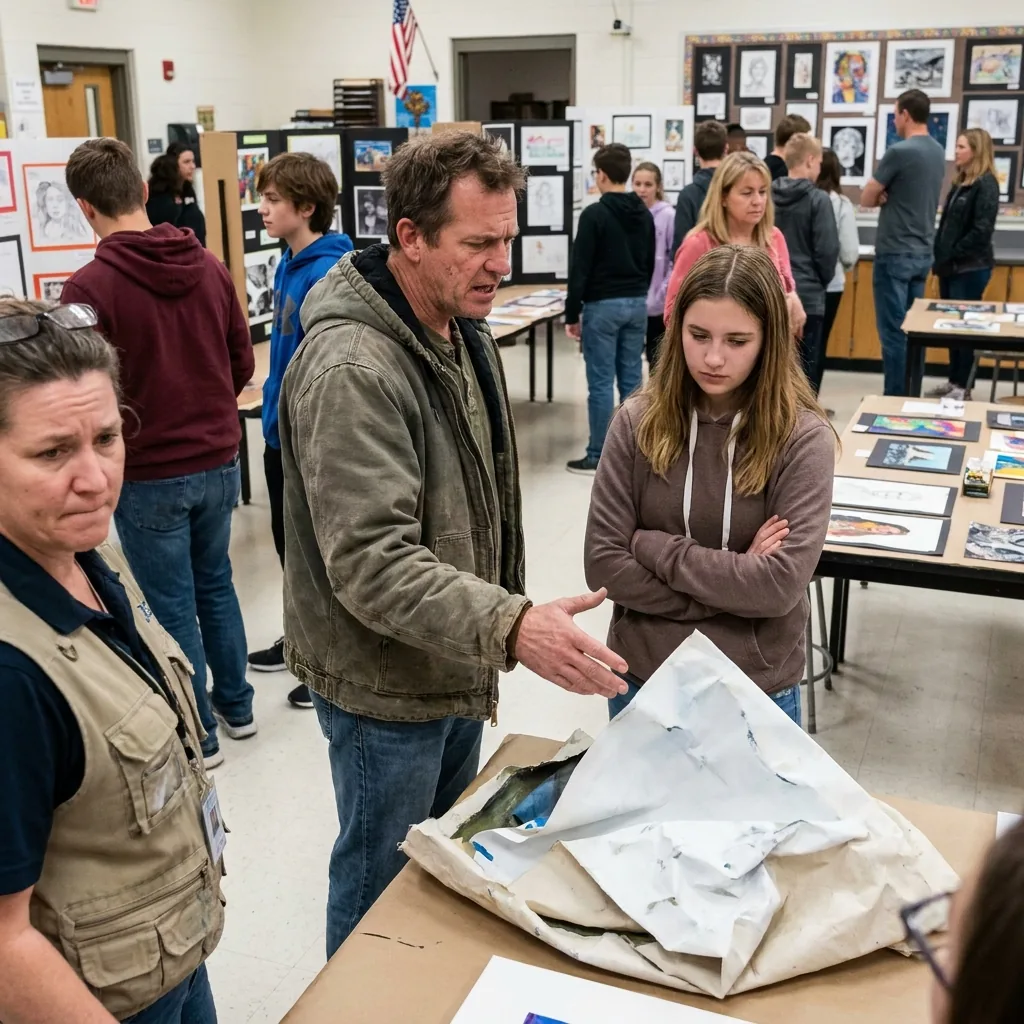
Greg Hart ruined the first canvas before the show even opened, and somehow his daughter got blamed for it in the middle of our school art room. I was at the check-in table beside the stacked easels and rolled canvases when he let a loose canvas roll slap open on the floor, drag through tape dust, and crease at one corner, then looked straight at Lila and said, “You should’ve told me this one was tricky.” The part that made me stop was that two minutes later, the same man who couldn’t manage painter’s tape made one small move with his hands that did not belong to a beginner.
I help Ms. Alvarez on setup days, so I spend a lot of time with a marker in one hand and a roll of tape in the other, trying to keep student work from getting bent, smudged, or hung crooked by well-meaning adults. The room was already full of the usual noise: table legs scraping, kids carrying labels, parents asking where to stand. Lila Hart had checked in one large rolled canvas and two smaller pieces. Her father had on a volunteer badge and the loud, easy voice some parents use when they want the room to hear that they’re helping.
“Where do you want this thing?” he asked, holding the big roll under one arm while he peeled at the kraft paper with the other.
Lila was laying her labels in order on the table. “Don’t unroll it on the floor,” she said. “Set it on the easel table first. I need the clips and the top bar lined up before it opens.”
He laughed like she had handed him studio surgery instead of basic directions. “It’s a canvas, not a bomb. Relax.”
He pulled the wrapping loose anyway. The roll opened fast, one side dropping off the table edge. He grabbed for it late, missed the edge, and the bottom corner hit the tile and folded under. When Lila moved, she moved fast, but she was one second too far away to catch it before the crease set.
I heard the sound before I saw her face change: that dry crackle stretched canvas makes when pressure catches wrong.
Greg lifted both hands like the canvas had surprised him. “See? This is why I told you to do your own art stuff. You know how fussy it is.”
Lila put her label sheets down very carefully. “I told you not to open it there.”
He had already stepped back from the mess. “Okay, well, fix it now instead of standing there. Ms. Alvarez wants this room ready.”
That was the first pattern. He made the mistake big and public, then turned the rescue into her assignment.
I came around the check-in table with fresh clips and asked, “Do you want me to clear space on the side table?”
Lila nodded once. Greg answered over her.
“She knows what it needs,” he said, with a little shrug that put the whole problem back on her shoulders. “I don’t do all the art handling.”
But he stayed close enough to stay involved. That mattered.
Lila got the crease eased out with her palm and the flat of a clean backing board. She worked without wasting motion, checking the side tension by eye, then asking me for the level before she had even reached the easel. When I handed it over, she set the top edge, adjusted one clip by less than a finger’s width, and the whole piece settled straight.
Greg watched from two feet away and kept up a running stream of questions.
“Why does that side need more space?”
“Why not just tape the bottom corners?”
“Are you sure these clips are strong enough?”
Every time she answered, he either repeated the question louder or took something out of her hands at the wrong moment. At one point he pulled the measuring tape back before she had the second mark. At another he pressed painter’s tape directly onto the canvas edge after she had already said, “Not there.” Then he looked at the torn bit of paint texture stuck to the adhesive and said, “If you’d explained it better, I wouldn’t have done that.”
I saw Ms. Alvarez pass the doorway with her clipboard and level, then get pulled to the ceramics table by another parent. Inside our corner, Greg kept creating tiny emergencies and handing them to Lila as if he were doing her a favor by standing there.
The worst part was what got lost while she rescued his work. Her own smaller pieces were still wrapped. Her labels were crooked on the table. Every other student in that row had moved on to lighting and spacing while she was still repairing damage from minute one.
When I offered, “I can hold the bottom while you mark the wall,” Greg took the tape from my apron pocket before I could hand it to her.
“No, no,” he said. “I should learn, right? Where does this even start?”
He said it like he had never touched a measuring tape in his life. Then he hooked the tape case with one finger, flicked it out in a clean straight line without bending the blade, caught the end against the wall trim, and braked it with his thumb exactly before it snapped.
It was one fast motion. Quiet. Easy. The kind of motion you make after doing the same task a lot.
Then he went right back to squinting at the numbers like they were written in another language.
Lila looked at his hand, then at the tape, then away.
That was when I stopped seeing a clumsy parent and started watching for what he only did when he forgot to keep acting lost.
Greg Hart ruined the first canvas before the show even opened, and somehow his daughter got blamed for it in the middle of our school art room. I was at the check-in table beside the stacked easels and rolled canvases when he let a loose canvas roll slap open on the floor, drag through tape dust, and crease at one corner, then looked straight at Lila and said, “You should’ve told me this one was tricky.” The part that made me stop was that two minutes later, the same man who couldn’t manage painter’s tape made one small move with his hands that did not belong to a beginner.
I help Ms. Alvarez on setup days, so I spend a lot of time with a marker in one hand and a roll of tape in the other, trying to keep student work from getting bent, smudged, or hung crooked by well-meaning adults. The room was already full of the usual noise: table legs scraping, kids carrying labels, parents asking where to stand. Lila Hart had checked in one large rolled canvas and two smaller pieces. Her father had on a volunteer badge and the loud, easy voice some parents use when they want the room to hear that they’re helping.
“Where do you want this thing?” he asked, holding the big roll under one arm while he peeled at the kraft paper with the other.
Lila was laying her labels in order on the table. “Don’t unroll it on the floor,” she said. “Set it on the easel table first. I need the clips and the top bar lined up before it opens.”
He laughed like she had handed him studio surgery instead of basic directions. “It’s a canvas, not a bomb. Relax.”
He pulled the wrapping loose anyway. The roll opened fast, one side dropping off the table edge. He grabbed for it late, missed the edge, and the bottom corner hit the tile and folded under. When Lila moved, she moved fast, but she was one second too far away to catch it before the crease set.
I heard the sound before I saw her face change: that dry crackle stretched canvas makes when pressure catches wrong.
Greg lifted both hands like the canvas had surprised him. “See? This is why I told you to do your own art stuff. You know how fussy it is.”
Lila put her label sheets down very carefully. “I told you not to open it there.”
He had already stepped back from the mess. “Okay, well, fix it now instead of standing there. Ms. Alvarez wants this room ready.”
That was the first pattern. He made the mistake big and public, then turned the rescue into her assignment.
I came around the check-in table with fresh clips and asked, “Do you want me to clear space on the side table?”
Lila nodded once. Greg answered over her.
“She knows what it needs,” he said, with a little shrug that put the whole problem back on her shoulders. “I don’t do all the art handling.”
But he stayed close enough to stay involved. That mattered.
Lila got the crease eased out with her palm and the flat of a clean backing board. She worked without wasting motion, checking the side tension by eye, then asking me for the level before she had even reached the easel. When I handed it over, she set the top edge, adjusted one clip by less than a finger’s width, and the whole piece settled straight.
Greg watched from two feet away and kept up a running stream of questions.
“Why does that side need more space?”
“Why not just tape the bottom corners?”
“Are you sure these clips are strong enough?”
Every time she answered, he either repeated the question louder or took something out of her hands at the wrong moment. At one point he pulled the measuring tape back before she had the second mark. At another he pressed painter’s tape directly onto the canvas edge after she had already said, “Not there.” Then he looked at the torn bit of paint texture stuck to the adhesive and said, “If you’d explained it better, I wouldn’t have done that.”
I saw Ms. Alvarez pass the doorway with her clipboard and level, then get pulled to the ceramics table by another parent. Inside our corner, Greg kept creating tiny emergencies and handing them to Lila as if he were doing her a favor by standing there.
The worst part was what got lost while she rescued his work. Her own smaller pieces were still wrapped. Her labels were crooked on the table. Every other student in that row had moved on to lighting and spacing while she was still repairing damage from minute one.
When I offered, “I can hold the bottom while you mark the wall,” Greg took the tape from my apron pocket before I could hand it to her.
“No, no,” he said. “I should learn, right? Where does this even start?”
He said it like he had never touched a measuring tape in his life. Then he hooked the tape case with one finger, flicked it out in a clean straight line without bending the blade, caught the end against the wall trim, and braked it with his thumb exactly before it snapped.
It was one fast motion. Quiet. Easy. The kind of motion you make after doing the same task a lot.
Then he went right back to squinting at the numbers like they were written in another language.
Lila looked at his hand, then at the tape, then away.
That was when I stopped seeing a clumsy parent and started watching for what he only did when he forgot to keep acting lost.