Story code: ST-001075
Part 1: The Five-Minute Warning
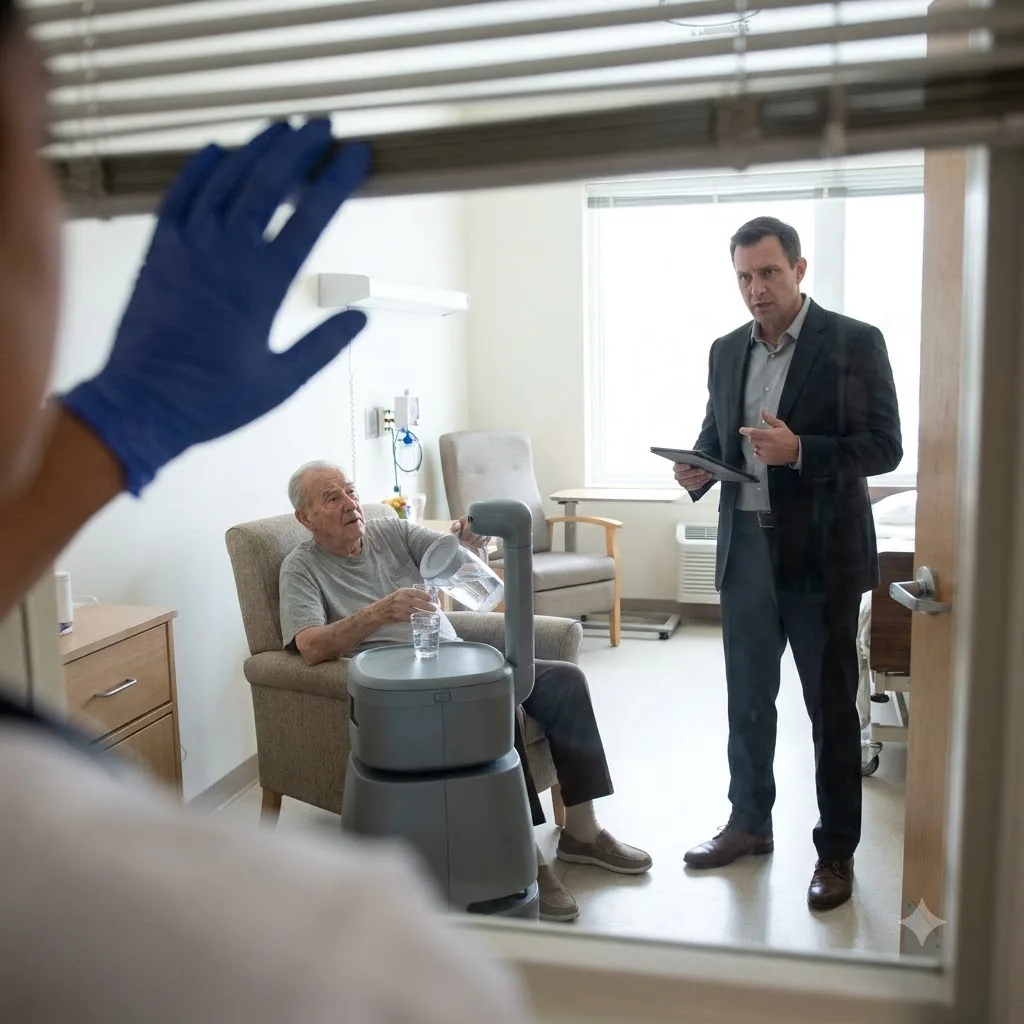
I was adjusting the window blinds in Room 304 of Greenbrier Assisted Living while Arthur’s matte grey Model RX-9 Companion Robot poured his afternoon water, when a vendor representative named Marcus barged in, demanding Arthur sign an immediate five-hundred-dollar emergency upgrade authorization or the robot would shut down permanently in five minutes. Marcus pointed his handheld terminal at Arthur’s face, blocking the elderly man from reaching his walker while insisting we bypass the facility’s mandatory engineering review. Arthur’s hands began to shake as he reached for his pen, cornered by the sudden countdown.
“The firmware is destabilizing,” Marcus said, his voice loud and rapid. He tapped the screen of his terminal, which flashed a red warning icon. “If we don’t apply the override patch right now, the joint actuators will lock up. He won’t be able to get out of bed tomorrow.”
Arthur looked up, his fingers trembling over the paper contract Marcus had laid on the bedside table. “Is it really going to stop working, Marcus? I need it to get to the dining hall.”
“It will freeze within minutes, Arthur,” Marcus said, sliding the pen closer to him. “Just sign the authorization. I can bill your account directly, but we have to do it before the timer runs out.”
I stepped away from the window and stood beside the bed, placing my hand near the physical facility logbook resting on Arthur’s dresser. The logbook was bound in black leather, its pages reserved for recording official maintenance requests and safety incidents. “Marcus, you know the rules here. All hardware changes on assistive devices must be approved by the chief facility engineer first. We can’t authorize direct financial transactions on behalf of residents without administrative oversight.”
Marcus glared at me, his grip tightening on his terminal. “This isn’t a standard upgrade, Casey. It’s an emergency recovery patch. If we wait for your bureaucracy, the warranty voids, and the recovery fee triples. Are you going to take responsibility when the unit collapses and Arthur falls?”
Arthur looked at me, his eyes wide. He pulled the pen closer to the signature line. “Casey, maybe we should just let him fix it. I don’t want to get stuck in my chair.”
“If it’s a genuine safety hazard,” I said, “facility protocols require us to log it and contact our internal IT department immediately. They can authorize an emergency override code without bypassing the engineering review.”
I walked toward the wall-mounted facility intercom to dial the IT dispatch desk. But before I could reach the button, Marcus stepped quickly across the room, placing his hand directly over the intercom panel to block me from pressing the call button. The sudden movement left Arthur staring at us, the pen still hovering over the unsigned document.
The Model RX-9 stood quietly by the bedside, its matte grey chest panel dark, its mechanical hands resting at its sides. It showed no visible signs of malfunction, but Marcus kept his body positioned between the robot and me, his breathing heavy. “We don’t have time for a call, Casey,” he insisted, his eyes darting to the hallway. “Either we sign this now, or I walk out, and whatever happens to Arthur is on your head.”
I was adjusting the window blinds in Room 304 of Greenbrier Assisted Living while Arthur’s matte grey Model RX-9 Companion Robot poured his afternoon water, when a vendor representative named Marcus barged in, demanding Arthur sign an immediate five-hundred-dollar emergency upgrade authorization or the robot would shut down permanently in five minutes. Marcus pointed his handheld terminal at Arthur’s face, blocking the elderly man from reaching his walker while insisting we bypass the facility’s mandatory engineering review. Arthur’s hands began to shake as he reached for his pen, cornered by the sudden countdown.
“The firmware is destabilizing,” Marcus said, his voice loud and rapid. He tapped the screen of his terminal, which flashed a red warning icon. “If we don’t apply the override patch right now, the joint actuators will lock up. He won’t be able to get out of bed tomorrow.”
Arthur looked up, his fingers trembling over the paper contract Marcus had laid on the bedside table. “Is it really going to stop working, Marcus? I need it to get to the dining hall.”
“It will freeze within minutes, Arthur,” Marcus said, sliding the pen closer to him. “Just sign the authorization. I can bill your account directly, but we have to do it before the timer runs out.”
I stepped away from the window and stood beside the bed, placing my hand near the physical facility logbook resting on Arthur’s dresser. The logbook was bound in black leather, its pages reserved for recording official maintenance requests and safety incidents. “Marcus, you know the rules here. All hardware changes on assistive devices must be approved by the chief facility engineer first. We can’t authorize direct financial transactions on behalf of residents without administrative oversight.”
Marcus glared at me, his grip tightening on his terminal. “This isn’t a standard upgrade, Casey. It’s an emergency recovery patch. If we wait for your bureaucracy, the warranty voids, and the recovery fee triples. Are you going to take responsibility when the unit collapses and Arthur falls?”
Arthur looked at me, his eyes wide. He pulled the pen closer to the signature line. “Casey, maybe we should just let him fix it. I don’t want to get stuck in my chair.”
“If it’s a genuine safety hazard,” I said, “facility protocols require us to log it and contact our internal IT department immediately. They can authorize an emergency override code without bypassing the engineering review.”
I walked toward the wall-mounted facility intercom to dial the IT dispatch desk. But before I could reach the button, Marcus stepped quickly across the room, placing his hand directly over the intercom panel to block me from pressing the call button. The sudden movement left Arthur staring at us, the pen still hovering over the unsigned document.
The Model RX-9 stood quietly by the bedside, its matte grey chest panel dark, its mechanical hands resting at its sides. It showed no visible signs of malfunction, but Marcus kept his body positioned between the robot and me, his breathing heavy. “We don’t have time for a call, Casey,” he insisted, his eyes darting to the hallway. “Either we sign this now, or I walk out, and whatever happens to Arthur is on your head.”