Story code: ST-001075
Part 3: The Projection Shifts
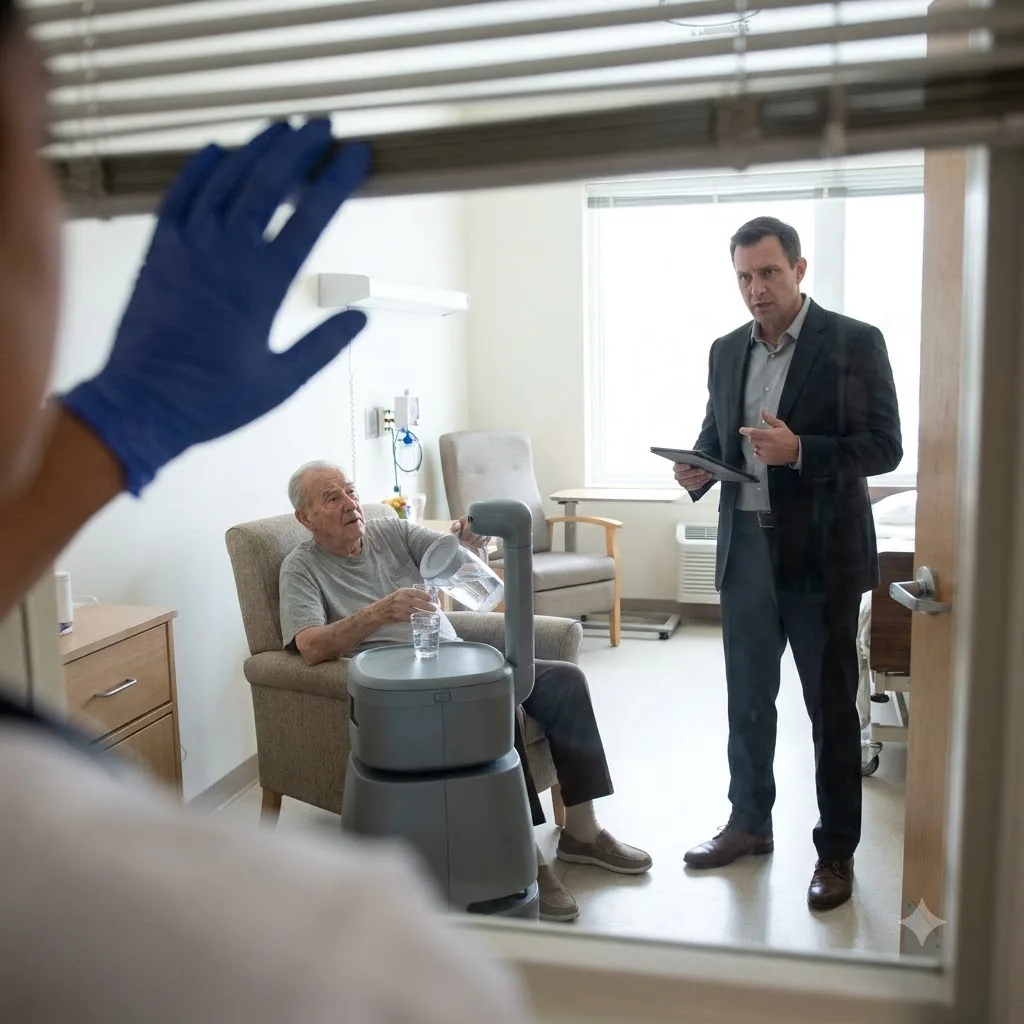
The diagnostic progress bar on the chest of the Model RX-9 reached fifty-five percent. The blue light cast long shadows across the bedside table where the unsigned authorization form lay.
Marcus shifted his feet, his terminal clutched tightly in his right hand. He tapped the screen repeatedly, but the connection icon remained yellow, indicating the RX-9 had locked its interface for the duration of the test. He looked toward the open door, then back to Arthur.
“This is an unnecessary delay,” Marcus said, his voice rising in pitch. “Arthur, you need to understand that if the diagnostics cause a system crash, my company cannot be held liable for the replacement costs. The waiver is right there on the second page.”
Arthur pulled his hands closer to his chest, his shoulders shrinking. “But you said it was going to stop working in five minutes, Marcus. You said it was an emergency.”
Marcus cleared his throat, his eyes shifting from Arthur to the diagnostic progress bar, which now read seventy percent. “The five-minute window is a preventative projection. It’s a standard threshold we use to ensure residents don’t ignore critical updates. The hardware itself… well, the physical gears might not lock up today. It could take a week. Or two.”
I kept my hands folded in front of me, watching the green status indicator blink on the RX-9’s chest. “So there is no immediate five-minute shutdown?”
“It’s about liability,” Marcus said, his voice quickening. He stepped closer to the bed, reaching for the paper contract. “If the unit fails next week, the upgrade cost is higher. I was trying to lock in the promotional rate for Arthur. I’m doing him a favor.”
“You told him he wouldn’t be able to get out of bed tomorrow,” I said. My voice remained level, matching the steady hum of the robot’s cooling fans.
“It was a projection based on common wear patterns,” Marcus said, his forehead glistening under the fluorescent lights. He pulled the paper contract back toward his clipboard. “We have to prepare for the worst-case scenario. That’s standard industry practice.”
The RX-9 emitted a sharp, double-tone chime. The progress bar reached eighty-five percent. The words “Analyzing Actuator Voltages” flashed on the small screen.
Arthur leaned forward, his eyes fixed on the blue light. “Marcus, did you lie to me?”
Marcus did not answer immediately. He tapped his terminal screen again, then tucked it under his arm. “I’m a sales representative, Arthur. I look at the data trends. If you want to rely on facility staff instead of certified vendor support, that’s your decision.”
Before I could respond, the wall-mounted facility intercom buzzed. A red light flashed above the speaker, and the voice of the shift supervisor came through the grill.
“Room 304, this is the main desk. We just received an automated network alert for an unauthorized diagnostics loop on Arthur’s RX-9. Casey, do we have a hardware failure in progress?”
Marcus froze, his hand hovering over his clipboard. The diagnostic screen hit ninety-five percent.