Story code: ST-000454
Part 1: The Progressive Facade
Claire stood at her gleaming quartz kitchen island, rotating the misdelivered padded mailer in her hands until the small blister packs inside gave a distinct, muffled rattle. She set the package down next to her open laptop, her screen already glowing with the state’s anonymous civil compliance portal, and let her index finger hover over the trackpad.
Outside the bay window, a rusted sedan with a loud, sputtering muffler rattled past her pristine boxwood hedges. Claire curled her lip, her gaze fixed on the peeling paint of the vehicle as it idled entirely too long near her driveway before moving on. This was exactly what she meant when she spoke at the neighborhood association meetings about declining standards and the erosion of local etiquette. The historic district was supposed to be an enclave, a quiet sanctuary of restored Victorian homes, perfectly edged lawns, and respectable neighbors. Ever since Jada moved into the carriage house at the back of Claire’s property, the street had seen a steady influx of the absolute wrong type of traffic.
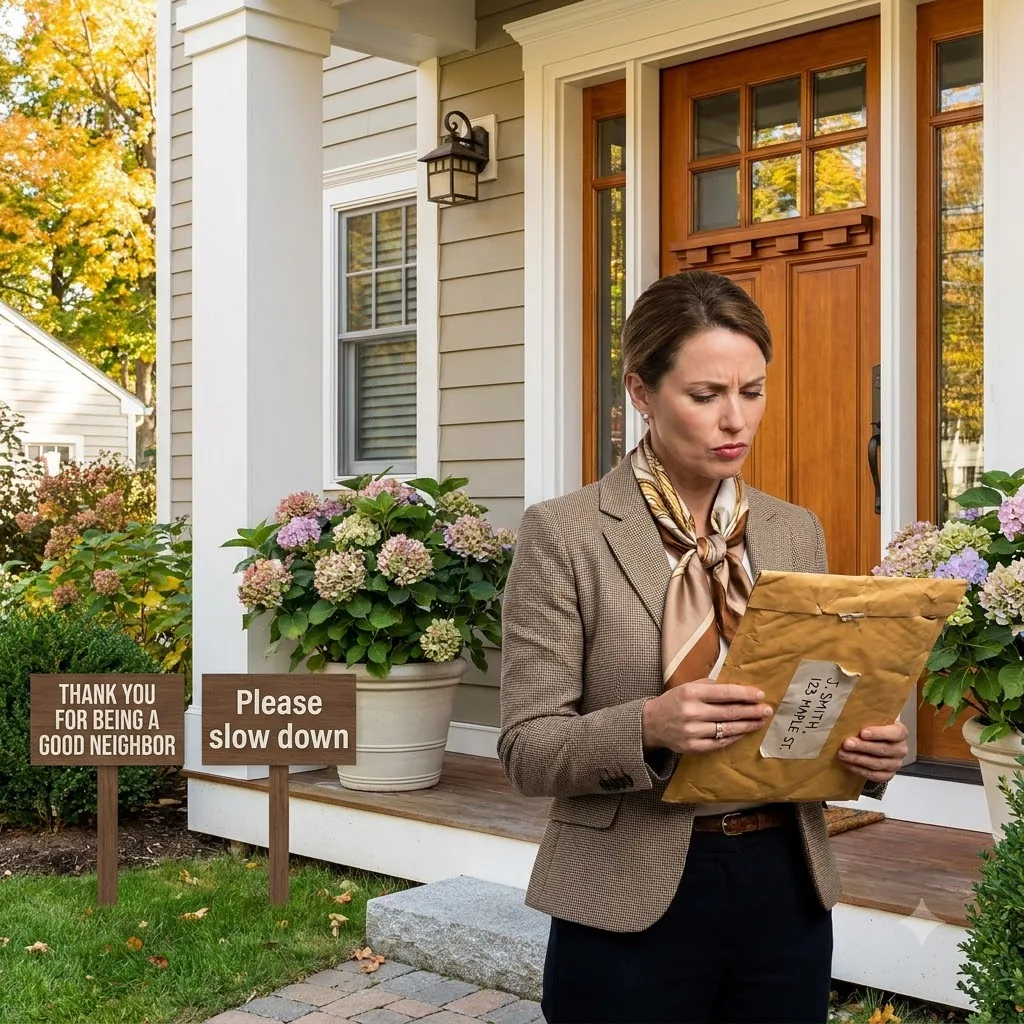
Claire had been nothing but accommodating at the very beginning. She had greeted Jada with a warm smile and a loaf of artisan sourdough, gesturing proudly to the prominent, brightly colored progressive yard signs dotting her front lawn as proof of her welcoming nature. She maintained that facade diligently every single day. She smiled tightly when Jada played heavy bass music on Tuesday nights, and she offered polite, neighborly waves when Jada’s friends parked their leaking, unwashed cars over the property line. Claire considered herself a champion of equality, so long as that equality respected historic property values and the unspoken rules of the community.
Jada did not respect the rules.
Claire focused back on the glowing screen of her laptop, adjusting her reading glasses. The legal portal was a brilliant piece of newly enacted state legislation, a ruthless loophole she had discovered while browsing local ordinance enforcements. It empowered private citizens to file civil suits against individuals bringing specific, restricted items across state lines. The exact parameters of the law were broad enough to serve Claire’s purpose perfectly. By filing this report, she could trigger an immediate, devastating legal cascade that would force Jada to break her lease and vacate the carriage house within the month. Best of all, the system was entirely anonymous. Jada would never know it was her smiling, sourdough-baking landlord who initiated the ruinous fines and the eventual eviction.
The padded mailer sat innocently on the marble counter. The shipping label clearly stated Jada’s name, but the delivery driver had lazily dropped it on Claire’s front porch instead of walking it down the long gravel path to the carriage house. The return address belonged to a generic wellness fulfillment center a few states over. Claire pressed her thumb against the packaging again, feeling the distinct, rigid shape of the contents beneath the bubble wrap. The muffled rattle of the pills confirmed everything she suspected about her tenant’s extracurricular activities.
She did not need to tear the envelope open to know it was exactly the kind of contraband the new state law targeted. Jada was incredibly careless. Having such items mailed directly to a shared residential address was practically an invitation for civic intervention.
Claire clicked the first text box on the portal and began to type with practiced speed. She entered the date, the exact time of the mail delivery, and the recipient’s full legal information. She detailed the frequency of Jada’s unusual guests and the out-of-state license plates that often lingered in the alleyway behind the garages. She framed the narrative carefully, ensuring the complaint hit all the necessary legal triggers to guarantee a rapid, aggressive response from the civil courts. She told herself this was not an act of malice. This was a necessary neighborhood cleanup. People like Jada dragged down the collective value of the street, introducing elements of chaos and moral decay that Claire simply could not tolerate in her backyard.
The state offered a rather lucrative financial reward for successful reports, a fact Claire viewed as a pleasant secondary benefit to the primary goal of immediate eviction. She could use the bounty money to renovate the carriage house and rent it to someone much more suitable. A quiet graduate student, perhaps, or a traveling nurse on a temporary contract. Someone who understood the importance of maintaining the aesthetic and social fabric of the historic district without causing any disturbances.
She filled in the final section of the digital form, attaching a clear, timestamped photograph she had taken of the mailer’s tracking number and the out-of-state return address. Her heart beat in a steady, highly satisfied rhythm. She was doing the right thing for her community. She was protecting her massive real estate investment. The cursor blinked steadily over the final submit button, waiting for her command to lock the lawsuit into the public record and set Jada’s absolute financial destruction into motion.
Claire rested her index finger on the left clicker.
The sharp, sudden chime of the front doorbell shattered the quiet of the kitchen.
Claire flinched, jerking her hand away from the laptop keyboard.
Heavy footsteps echoed loudly on the porch planks outside, followed immediately by Jada’s voice shouting through the heavy oak door.
Claire stood at her gleaming quartz kitchen island, rotating the misdelivered padded mailer in her hands until the small blister packs inside gave a distinct, muffled rattle. She set the package down next to her open laptop, her screen already glowing with the state’s anonymous civil compliance portal, and let her index finger hover over the trackpad.
Outside the bay window, a rusted sedan with a loud, sputtering muffler rattled past her pristine boxwood hedges. Claire curled her lip, her gaze fixed on the peeling paint of the vehicle as it idled entirely too long near her driveway before moving on. This was exactly what she meant when she spoke at the neighborhood association meetings about declining standards and the erosion of local etiquette. The historic district was supposed to be an enclave, a quiet sanctuary of restored Victorian homes, perfectly edged lawns, and respectable neighbors. Ever since Jada moved into the carriage house at the back of Claire’s property, the street had seen a steady influx of the absolute wrong type of traffic.
Claire had been nothing but accommodating at the very beginning. She had greeted Jada with a warm smile and a loaf of artisan sourdough, gesturing proudly to the prominent, brightly colored progressive yard signs dotting her front lawn as proof of her welcoming nature. She maintained that facade diligently every single day. She smiled tightly when Jada played heavy bass music on Tuesday nights, and she offered polite, neighborly waves when Jada’s friends parked their leaking, unwashed cars over the property line. Claire considered herself a champion of equality, so long as that equality respected historic property values and the unspoken rules of the community.
Jada did not respect the rules.
Claire focused back on the glowing screen of her laptop, adjusting her reading glasses. The legal portal was a brilliant piece of newly enacted state legislation, a ruthless loophole she had discovered while browsing local ordinance enforcements. It empowered private citizens to file civil suits against individuals bringing specific, restricted items across state lines. The exact parameters of the law were broad enough to serve Claire’s purpose perfectly. By filing this report, she could trigger an immediate, devastating legal cascade that would force Jada to break her lease and vacate the carriage house within the month. Best of all, the system was entirely anonymous. Jada would never know it was her smiling, sourdough-baking landlord who initiated the ruinous fines and the eventual eviction.
The padded mailer sat innocently on the marble counter. The shipping label clearly stated Jada’s name, but the delivery driver had lazily dropped it on Claire’s front porch instead of walking it down the long gravel path to the carriage house. The return address belonged to a generic wellness fulfillment center a few states over. Claire pressed her thumb against the packaging again, feeling the distinct, rigid shape of the contents beneath the bubble wrap. The muffled rattle of the pills confirmed everything she suspected about her tenant’s extracurricular activities.
She did not need to tear the envelope open to know it was exactly the kind of contraband the new state law targeted. Jada was incredibly careless. Having such items mailed directly to a shared residential address was practically an invitation for civic intervention.
Claire clicked the first text box on the portal and began to type with practiced speed. She entered the date, the exact time of the mail delivery, and the recipient’s full legal information. She detailed the frequency of Jada’s unusual guests and the out-of-state license plates that often lingered in the alleyway behind the garages. She framed the narrative carefully, ensuring the complaint hit all the necessary legal triggers to guarantee a rapid, aggressive response from the civil courts. She told herself this was not an act of malice. This was a necessary neighborhood cleanup. People like Jada dragged down the collective value of the street, introducing elements of chaos and moral decay that Claire simply could not tolerate in her backyard.
The state offered a rather lucrative financial reward for successful reports, a fact Claire viewed as a pleasant secondary benefit to the primary goal of immediate eviction. She could use the bounty money to renovate the carriage house and rent it to someone much more suitable. A quiet graduate student, perhaps, or a traveling nurse on a temporary contract. Someone who understood the importance of maintaining the aesthetic and social fabric of the historic district without causing any disturbances.
She filled in the final section of the digital form, attaching a clear, timestamped photograph she had taken of the mailer’s tracking number and the out-of-state return address. Her heart beat in a steady, highly satisfied rhythm. She was doing the right thing for her community. She was protecting her massive real estate investment. The cursor blinked steadily over the final submit button, waiting for her command to lock the lawsuit into the public record and set Jada’s absolute financial destruction into motion.
Claire rested her index finger on the left clicker.
The sharp, sudden chime of the front doorbell shattered the quiet of the kitchen.
Claire flinched, jerking her hand away from the laptop keyboard.
Heavy footsteps echoed loudly on the porch planks outside, followed immediately by Jada’s voice shouting through the heavy oak door.