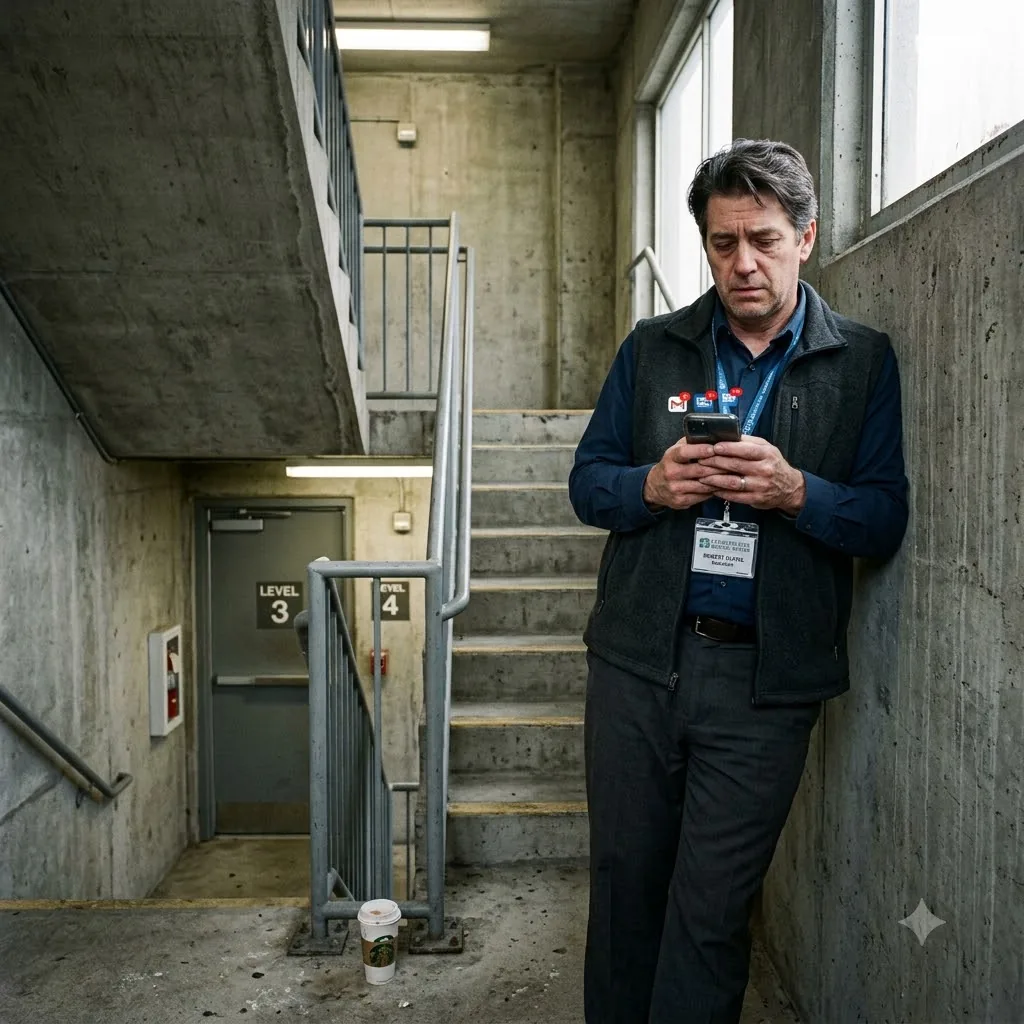
Story code: ST-001581
Part 3: What Was Actually Said
His wife’s ringtone went on and on in the middle of the table, bright and wrong in that windowless room.
Evan looked at it until the sound stopped.
Nobody reached for the phone. Nobody said her name. Colleen only waited with her pen above the legal pad, as if silence might force him into the version of events already taking shape everywhere else.
“Did you make that statement?” she asked again.
He could still hear the laugh in the clip. That was the part that made it poisonous. Not just the words, but the sound under them, the little burst of disbelief that now played like cruelty. He knew how it landed. He knew how it looked on a nineteen-second loop with his face cut into profile and the room stripped away.
“I said those words,” he said.
Daniel’s shoulders dropped a fraction, not relief exactly, more like dread settling into a known place.
“And the laugh?” Colleen said.
Evan looked at her. “You’re asking me if I laughed in a room full of managers? Yes. People laugh in rooms when they’re angry too.”
She wrote something down.
“Write the next sentence too,” he said.
Her pen stopped. “If you can provide context, that’s what we’re asking for.”
“No,” he said. “You asked me to confirm the clip. That’s different.”
Leon shifted by the door. The radio at his shoulder gave a short pop of static and went quiet again.
Evan picked up his phone before anyone could stop him this time. Not to answer it. Just to unlock it with his thumb and open the message thread Melissa had sent thirty minutes earlier. There were three texts now instead of one.
Don’t call me.
They asked who was in the room.
I found the calendar hold.
His pulse thudded once, hard enough that he felt it in his throat.
The workshop room on five. Resilience session, they had called it. Lunch-hour support for leaders. Mandatory for managers, optional in every email and not optional in practice. He had gone in late and sat in back because he still had holes in the weekend schedule. He remembered the sandwiches. He remembered checking staffing messages under the table. He remembered a woman from organizational development clicking through slides with rounded blue headings about retention, compassion fatigue, sustainable culture.
And then another voice. Not hers. A man from administration? Someone from consulting? He had not cared enough at the time to pin down the title.
What he had cared about was the conversation turning after the slides ended.
Colleen mistook his silence for collapse. “Evan, this is the time to help yourself.”
That phrasing did it. Help yourself. As if the room had ever been arranged for that.
He looked up. “Who booked the session?”
Colleen frowned. “What?”
“The workshop on five. Who booked it? Education services hosted the room, but who called the meeting?”
Daniel finally met his eyes, then looked away too fast.
Evan saw it happen.
“Daniel.”
“This isn’t relevant,” Colleen said.
“It is if you know what the room was.” He turned to Daniel. “Who booked it?”
Daniel rubbed once at his mouth. “People Operations.”
“For resilience training?”
“That was the topic.”
“No,” Evan said. He felt the memory shifting now, pieces sliding into place not because the room was helping him but because it had pressed hard enough to make the shape show through. “That was the label.”
Colleen set her pen down carefully. “Explain what you mean.”
He did not answer her first. He looked at Daniel because Daniel had been there too, three seats over, tie off, legal pad open, nodding through the whole thing like this was ordinary business.
“Say what the discussion was,” Evan said.
Daniel stayed still.
“Say it.”
“It was a management roundtable,” Daniel said at last.
“About what.”
Another pause.
The vent hummed above them. In the hallway, a cart rattled past, then faded.
“Staffing pressures,” Daniel said.
Evan gave a short, disbelieving breath. “Try again.”
Daniel’s face tightened. “Attendance instability. Leave trends. Operational risk.”
There it was.
Not resilience. Not support. Not a wellness forum where somebody had bared their soul and Evan had mocked them from the back row. A management screen dressed up in soft language.
The memory came back all at once, not perfect in every detail, but solid where it mattered. The consultant, or whoever he was, standing near the projector and talking about patterns after the pandemic. Units with higher leave use. Managers who were, in his phrase, overaccommodating. The need to identify resilience gaps in teams. Someone near the front had asked how to tell the difference between legitimate burnout and people gaming the system. That had gotten a few low noises around the room, not shock, not protest, just the kind of ugly recognition people let out when they think they are among safe company.
Then the man had said it, almost cleanly, almost like policy.
If everybody says they’re burned out, at some point it becomes a staffing management problem, not an individual crisis.
And someone else had sharpened it further from across the table.
A way not to work.
Evan could see the fluorescent glare on the tabletop. Could hear the scrape of chair legs. Could feel the heat that had climbed into his face before he spoke.
He had not invented the line.
He had thrown it back.
“The clip starts after they said it,” he said.
Colleen’s expression did not change, but Daniel’s did.
“Who said what?” she asked.
“That logic.” Evan heard his voice steady as the memory kept coming. “That people taking wellness leave, mental health leave, burnout leave whatever wording they were using were becoming a liability category. That this was about which managers could still separate staff worth protecting from staff likely to become coverage problems.” He looked at Daniel. “You remember that.”
“Evan-”
“And I said, ‘At some point if everybody says they’re burned out, it just becomes a way not to work,’ because that was the argument sitting in the room.” He leaned forward before Colleen could interrupt. “I was repeating it back. I was objecting to it. That’s why I laughed. Because it was insane.”
Leon glanced from Evan to Daniel, then to Colleen, like he had just realized he had been posted beside the wrong kind of danger.
Colleen picked her pen up again, slower this time. “Those are serious claims.”
“They’re not claims if half your management team heard them.” Evan tapped his phone screen and turned it toward Daniel. “Melissa found the calendar hold. I want the original invite. I want the attendee list. I want whoever facilitated that session named.”
“Melissa should not be discussing internal records with you,” Colleen said immediately.
“Then why did IT kill my access before anyone asked me what happened?” he shot back. “Why was security in my office before you had the full video? Why did a nineteen-second cut of me quoting your own room become grounds to lock everything down?”
No one answered.
He saw Daniel’s throat move.
“There was no patient in that room,” Evan said. “No public audience. It was managers. And whoever recorded it knew exactly where to cut, because the only way that clip works is if the room before it disappears.”
Colleen looked at Daniel now, not Evan. It was the first true break in her control since they had entered.
“Was this session recorded?” she asked.
Daniel hesitated.
That was enough.
Evan felt the whole meeting tilt.
“There it is,” he said quietly.
Daniel did not answer fast enough.
Colleen’s eyes stayed on him. “Daniel. Was this session recorded?”
He opened his mouth, closed it, and glanced once at the face-down phone by his hand, as if the right instruction might still arrive in time.
Evan watched that glance and knew, before anyone said another word, that somewhere beyond the viral clip there was a version with the room still attached to it.