Story code: ST-000277
Part 1: Unprofessional Hyper-Vigilance
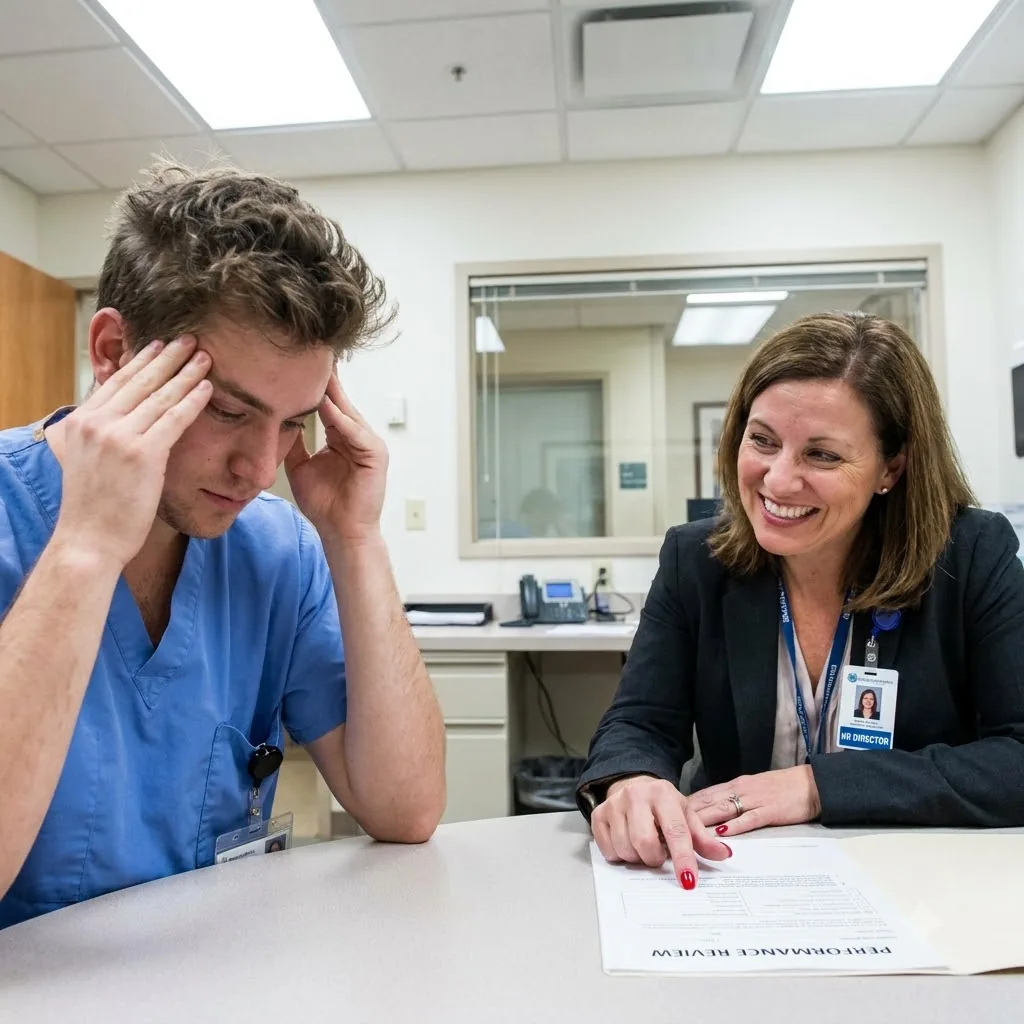
The fluorescent lights humming above the glass conference table matched the aggressively cheerful pitch of the HR Director’s voice. She slid a glossy, laminated brochure about mindfulness retreats across the desk, her pastel pink nails tapping a steady, upbeat rhythm against the sterile white surface. Mateo stared at the thick black letters at the top of the accompanying paperwork, his hands locked together in his lap to hide the fact that he was squeezing his own knuckles white. The air in the office smelled of chemical lemon cleaner and forced pleasantries.
Ms. Gable tilted her head, her smile so intensely sympathetic it looked physically painful. She told him that St. Jude Memorial was a family, and families always took care of their own. She poured him a cup of cucumber-infused water from a frosted glass pitcher, acting as though they were relaxing at a luxury spa rather than sitting in a windowless disciplinary suite on the hospital’s sub-basement level.
Mateo did not reach for the water. He kept his eyes strictly on the document she had placed next to the brochure. The header read Voluntary Leave of Absence in a bold, unforgiving font. He was exactly three weeks away from completing his grueling nursing clinicals. Signing that piece of paper meant failing the rotation, and failing the rotation meant losing his hospital sponsorship. Once the hospital withdrew their backing, a cascading automated review would hit the state board, which would instantly flag his delayed residency paperwork. His entire life in this country rested on maintaining a flawless, uninterrupted academic record. He could not afford a single glitch in the system.
Ms. Gable swiveled her expensive dual-monitor setup so the main screen faced Mateo. She tapped the spacebar with her pink fingernail, and a grainy black-and-white security video began to play.
The timestamp in the bottom right corner read 04:02 AM. The camera angle showed Level B of the employee parking garage, bathed in the sickly glow of sodium-vapor lamps. Mateo’s dented Honda Civic pulled into an isolated spot near the massive concrete pillars. The brake lights flared red, then went dark.
The video kept playing in agonizing real time as Ms. Gable clicked the fast-forward button. The timestamp ticked forward in a blur. Five minutes. Twenty minutes. Forty-five minutes. The dark silhouette of Mateo’s head remained visible through the driver’s side window, absolutely motionless. He had sat in that freezing car for a full hour before his five o’clock shift.
Ms. Gable paused the video precisely at 04:58 AM. She folded her hands softly on the desk, leaning forward to adopt a hushed, deeply therapeutic tone. She called his behavior a classic symptom of severe emotional burnout. She used the phrase “stress-induced lingering” and diagnosed him with “unprofessional hyper-vigilance” right there in the leather chair. She explained that sitting in a dark parking garage for an hour before a shift was a desperate cry for help, an undeniable sign that the relentless pressure of the ICU had finally broken his young resilience.
Mateo stared at the frozen, pixelated frame of his car on the monitor. He remembered exactly how cold the steering wheel had felt against his palms during that long, terrible hour. He remembered the sharp, metallic taste of adrenaline flooding his mouth. He remembered the specific, rhythmic thud echoing from the loading dock directly across from his parking space, and the distinct, heavy shapes he had watched moving through the shadows. He had stayed in the car because stepping out meant being seen by the people standing near the service elevator. He had kept his head perfectly still so the motion sensors in the garage would not trigger the overhead floodlights and expose him.
He swallowed the truth, locking it down deep in his chest. Telling the HR director what he had actually witnessed down in the loading dock would be infinitely worse than accepting her amateur psychiatric evaluation. If he spoke up about the heavy shapes by the service elevator, he would invite a completely different kind of scrutiny, the kind that got people quietly removed from the hospital schedule permanently.
Ms. Gable leaned closer, lowering her voice to a gentle, highly patronizing whisper. She insisted that nursing was a grueling profession, and it was perfectly acceptable to admit defeat for a single semester. She claimed the hospital administration only wanted to protect his long-term mental health. According to her, signing the voluntary leave form was not a punishment, but a generous, compassionate gift of time to heal his troubled mind.
Mateo’s jaw locked tight. He kept his voice steady and explained that his vital signs assessments were perfect, his charting was flawless, and his assigned preceptor had just given him a glowing mid-term evaluation. He stated clearly that he was fully capable of finishing out his remaining three weeks of clinicals without any special accommodations.
Ms. Gable sighed, a soft, dramatic sound of disappointment that echoed loudly in the sterile room. She picked up a heavy silver pen from her leather desk organizer. She told him that stubborn denial was just another tragic symptom of his severe exhaustion. She reminded him that uncooperative students forced the administration to pursue involuntary academic suspension, a permanent black mark that would follow him to every nursing board in the state. She emphasized that an involuntary suspension would trigger an immediate review of his background files, a thinly veiled threat that struck the exact center of his deepest, most paralyzing fear.
She clicked the silver pen and set it precisely on the dotted signature line of the voluntary leave form. She smiled her wide, aggressive smile and told him to just take a deep breath, sign his worries away, and accept the mental health break he so desperately needed.
The fluorescent lights humming above the glass conference table matched the aggressively cheerful pitch of the HR Director’s voice. She slid a glossy, laminated brochure about mindfulness retreats across the desk, her pastel pink nails tapping a steady, upbeat rhythm against the sterile white surface. Mateo stared at the thick black letters at the top of the accompanying paperwork, his hands locked together in his lap to hide the fact that he was squeezing his own knuckles white. The air in the office smelled of chemical lemon cleaner and forced pleasantries.
Ms. Gable tilted her head, her smile so intensely sympathetic it looked physically painful. She told him that St. Jude Memorial was a family, and families always took care of their own. She poured him a cup of cucumber-infused water from a frosted glass pitcher, acting as though they were relaxing at a luxury spa rather than sitting in a windowless disciplinary suite on the hospital’s sub-basement level.
Mateo did not reach for the water. He kept his eyes strictly on the document she had placed next to the brochure. The header read Voluntary Leave of Absence in a bold, unforgiving font. He was exactly three weeks away from completing his grueling nursing clinicals. Signing that piece of paper meant failing the rotation, and failing the rotation meant losing his hospital sponsorship. Once the hospital withdrew their backing, a cascading automated review would hit the state board, which would instantly flag his delayed residency paperwork. His entire life in this country rested on maintaining a flawless, uninterrupted academic record. He could not afford a single glitch in the system.
Ms. Gable swiveled her expensive dual-monitor setup so the main screen faced Mateo. She tapped the spacebar with her pink fingernail, and a grainy black-and-white security video began to play.
The timestamp in the bottom right corner read 04:02 AM. The camera angle showed Level B of the employee parking garage, bathed in the sickly glow of sodium-vapor lamps. Mateo’s dented Honda Civic pulled into an isolated spot near the massive concrete pillars. The brake lights flared red, then went dark.
The video kept playing in agonizing real time as Ms. Gable clicked the fast-forward button. The timestamp ticked forward in a blur. Five minutes. Twenty minutes. Forty-five minutes. The dark silhouette of Mateo’s head remained visible through the driver’s side window, absolutely motionless. He had sat in that freezing car for a full hour before his five o’clock shift.
Ms. Gable paused the video precisely at 04:58 AM. She folded her hands softly on the desk, leaning forward to adopt a hushed, deeply therapeutic tone. She called his behavior a classic symptom of severe emotional burnout. She used the phrase “stress-induced lingering” and diagnosed him with “unprofessional hyper-vigilance” right there in the leather chair. She explained that sitting in a dark parking garage for an hour before a shift was a desperate cry for help, an undeniable sign that the relentless pressure of the ICU had finally broken his young resilience.
Mateo stared at the frozen, pixelated frame of his car on the monitor. He remembered exactly how cold the steering wheel had felt against his palms during that long, terrible hour. He remembered the sharp, metallic taste of adrenaline flooding his mouth. He remembered the specific, rhythmic thud echoing from the loading dock directly across from his parking space, and the distinct, heavy shapes he had watched moving through the shadows. He had stayed in the car because stepping out meant being seen by the people standing near the service elevator. He had kept his head perfectly still so the motion sensors in the garage would not trigger the overhead floodlights and expose him.
He swallowed the truth, locking it down deep in his chest. Telling the HR director what he had actually witnessed down in the loading dock would be infinitely worse than accepting her amateur psychiatric evaluation. If he spoke up about the heavy shapes by the service elevator, he would invite a completely different kind of scrutiny, the kind that got people quietly removed from the hospital schedule permanently.
Ms. Gable leaned closer, lowering her voice to a gentle, highly patronizing whisper. She insisted that nursing was a grueling profession, and it was perfectly acceptable to admit defeat for a single semester. She claimed the hospital administration only wanted to protect his long-term mental health. According to her, signing the voluntary leave form was not a punishment, but a generous, compassionate gift of time to heal his troubled mind.
Mateo’s jaw locked tight. He kept his voice steady and explained that his vital signs assessments were perfect, his charting was flawless, and his assigned preceptor had just given him a glowing mid-term evaluation. He stated clearly that he was fully capable of finishing out his remaining three weeks of clinicals without any special accommodations.
Ms. Gable sighed, a soft, dramatic sound of disappointment that echoed loudly in the sterile room. She picked up a heavy silver pen from her leather desk organizer. She told him that stubborn denial was just another tragic symptom of his severe exhaustion. She reminded him that uncooperative students forced the administration to pursue involuntary academic suspension, a permanent black mark that would follow him to every nursing board in the state. She emphasized that an involuntary suspension would trigger an immediate review of his background files, a thinly veiled threat that struck the exact center of his deepest, most paralyzing fear.
She clicked the silver pen and set it precisely on the dotted signature line of the voluntary leave form. She smiled her wide, aggressive smile and told him to just take a deep breath, sign his worries away, and accept the mental health break he so desperately needed.