Story code: ST-000277
Part 2: Administrative Hold
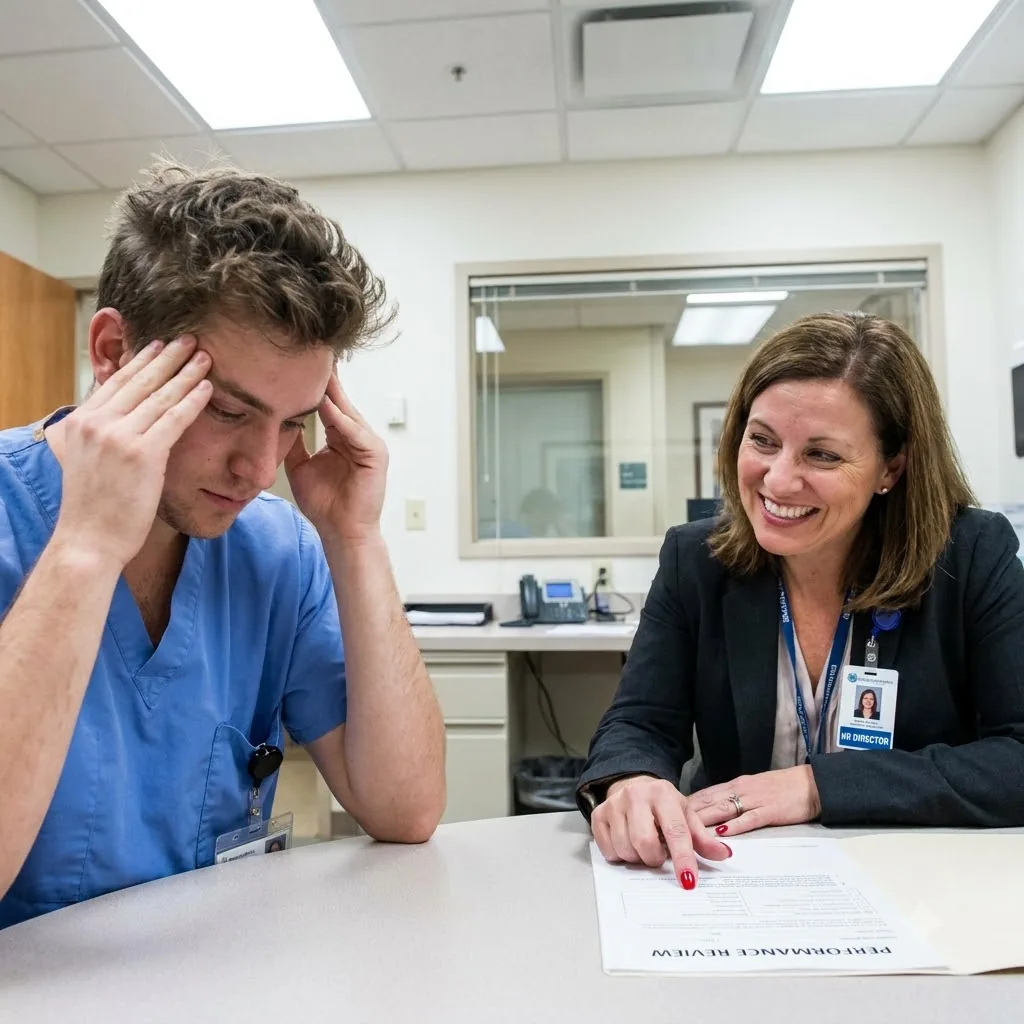
The heavy silver pen lay on the dotted line, reflecting the harsh fluorescent light of the windowless office. Mateo stared at the polished metal cylinder, his chest tight with a panic so dense it felt like physical weight. His mind raced through the suffocating reality of his immigration status. His Deferred Action for Childhood Arrivals renewal application had been sitting in a federal processing center for eight agonizing months. It was a fragile, precarious waiting game. A single academic suspension flag uploaded to the state nursing registry would trigger an automated background review. USCIS would see the involuntary suspension, instantly freeze his work authorization, and the life he had spent the last decade building would simply evaporate.
He could not afford a single mistake, but touching that pen was an admission of a mental break he hadn’t actually had. It was a trap with no visible exit.
“Mateo,” Ms. Gable said, her voice dropping to a sympathetic coo that made his skin crawl. “I know it feels like a defeat. But St. Jude Memorial needs its nurses functioning at one hundred percent. The ICU is no place for someone struggling with reality. Take the leave. Sleep. Come back next year when your mind is quiet.”
Mateo forced his hands to unlace. He placed his palms flat against his denim-clad thighs, deliberately keeping his fingers still to prove his absolute stability. He could not tell her about the heavy shapes he had seen moving near the service elevator. He could not tell her about the metallic clang of the loading dock doors, or the way the men had moved with a synchronized, practiced efficiency that didn’t match any hospital protocol. But he also knew he couldn’t survive an involuntary suspension.
He took a slow, measured breath, drawing upon the exact same calm he used when dealing with combative patients in the trauma bay.
“I appreciate the hospital’s concern for my well-being, Ms. Gable,” Mateo said, keeping his voice carefully neutral and perfectly modulated. “But I am entirely fit for duty. I decline the voluntary leave of absence.”
The rhythmic tapping of Ms. Gable’s pastel pink nails abruptly stopped. The aggressively cheerful mask slipped for a fraction of a second, revealing something cold and deeply irritated underneath.
“I don’t think you’re listening to me, Mateo,” she warned, her tone losing its spa-like softness. “If you refuse the voluntary track, I am required by hospital policy to initiate an involuntary dismissal for erratic, unprofessional behavior. That goes on your permanent academic record.”
“If you initiate an involuntary dismissal,” Mateo countered, staring directly at the bridge of her nose to avoid her piercing gaze, “the university’s clinical partnership agreement allows me to file an immediate grievance appeal. During a formal grievance hearing, my academic liaison will be required to review all evidence of my alleged erratic behavior.”
He leaned forward, just an inch, his heart hammering wildly against his ribs. “That means the university will formally subpoena the complete, unedited security tapes from Level B of the parking garage for their independent review. They won’t just look at my car, Ms. Gable. They will review the entire hour of footage from every camera on that level to establish context.”
The silence that followed was absolute. The faint hum of the air conditioning suddenly sounded like a jet engine in the sterile room. Mateo watched Ms. Gable closely. She did not blink. She did not breathe. For three long seconds, she just stared at him, her eyes flicking rapidly back and forth as she processed his threat.
If the university requested the tapes, they would see exactly what Mateo had been hiding from. And based on the sudden, rigid tension in Ms. Gable’s jaw, Mateo realized with a sickening jolt that she knew exactly what was on those tapes. She wasn’t trying to send him home because she thought he was burned out. She was trying to get him out of the hospital because of where he had parked.
Slowly, Ms. Gable pulled the voluntary leave form across the desk and slid it into a green manila folder.
“A formal grievance process is a terrible burden on a student’s mental health,” she said, her voice tight and clipped. “And I would hate to escalate this to a legal review if it isn’t absolutely necessary. However, as HR Director, I cannot in good conscience send you back to the ICU floor while you are displaying hyper-vigilant symptoms.”
She opened a drawer and pulled out a different form, this one printed on stark yellow paper.
“Instead of a leave of absence, I am placing you on an immediate Administrative Medical Hold. You are required to submit to a mandatory Fitness for Duty evaluation, including a psychological screening and a toxicology panel, cleared by our Occupational Health department.”
Mateo exhaled a tiny, hidden breath. An administrative hold was a pause, not a suspension. It wouldn’t trigger the board review. He had bought himself time.
“I will go to Occ Health right now,” Mateo said, preparing to stand.
“You will,” Ms. Gable agreed, holding out her hand, palm up. “But first, I need your ICU access badge. Hospital protocol dictates that employees on medical hold surrender their secure access until cleared.”
Mateo hesitated, then unclipped his plastic ID badge and dropped it into her waiting palm. It felt like severing an artery. Without that badge, he was locked out of the clinical floors, the breakrooms, and the secure student lockers.
Ms. Gable slid a temporary paper visitor pass across the desk. It had a bright red ‘V’ printed over his name, restricting him to public lobbies only.
“Oh, and Mateo?” she added, her wide, aggressive smile returning in full force as she stood up. “Since your vehicle was parked in an isolated area of Level B for an extended, unauthorized period, campus security classified it as an abandoned hazard. They towed it to the off-site impound lot about twenty minutes ago. For your safety, of course.”
Mateo froze, his blood running cold. His car was gone. He was stranded on campus without secure access.
“The Occupational Health clinic is expecting you,” she said, pointing toward the heavy wooden door. “Dr. Aris is waiting. You’ll need to walk over to the Sub-Basement Annex to see him. It’s just past the Level B loading dock.”