Story code: ST-000275
Part 1: He Said We Had No Time
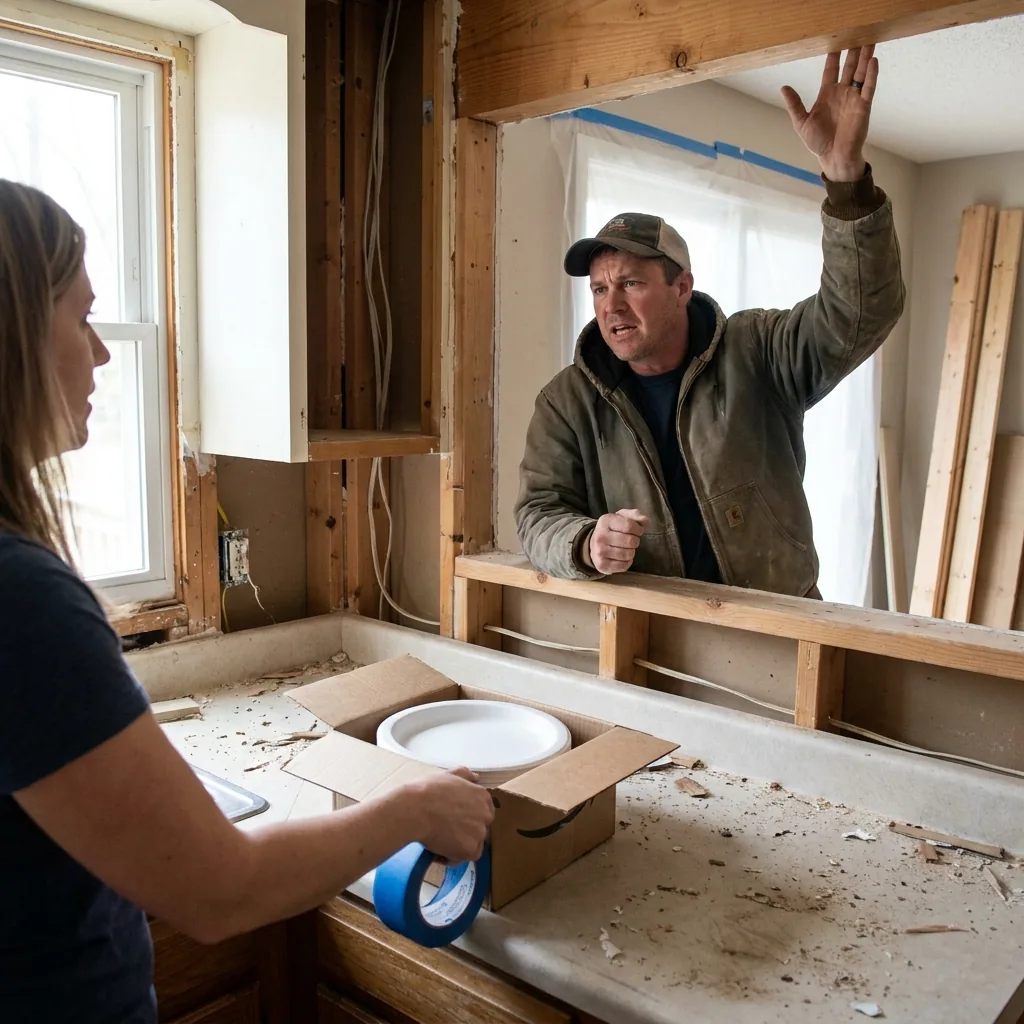
My brother came into my unfinished kitchen talking like the house was about to fail in the next ten minutes, and before I could finish setting a box of paper plates on the taped-off counter, he was telling me to let his crew cut power, move the stove line, and push ahead without waiting on anything else. Dust was still hanging over the open studs, cabinet doors were stacked against the breakfast wall, and the permit tag was clipped in plain sight near the doorway like it had been put there to stop exactly this kind of rush. Eli kept saying emergency, but the only thing moving faster than his voice was everybody around him. He had one glove half on, phone wedged to his shoulder, work boots grinding drywall dust into the subfloor. A pry bar, a coil of wire, and two open tool bags were spread across the center island frame where there should have been a countertop by now. Blue tape crossed the lower cabinets to keep people out of the work area, but Eli stepped over it like it was string. “We do not have time for the usual process,” he said, pointing at the wall behind the sink stub-out. “If we don’t open this up and reroute right now, this whole job gets pushed and you’ll be without a kitchen even longer.” I looked where he was pointing. The wall was already open. Studs, rough plumbing, exposed electrical. Nothing had changed since the night before except his volume. “What’s the emergency?” I asked. He turned to me without really stopping. “The emergency is we need this done today. I need you to stop asking and approve it.” That was the first thing that landed wrong. Not because of the word emergency by itself, but because of how he said approve it, like I was the thing slowing him down instead of the homeowner standing in a room with no sink, no backsplash, and half the cabinets wrapped in plastic. One of his guys paused with a drill in his hand and looked at Eli. Eli jabbed a finger toward the wall again. “Kill that breaker,” he said. “We’re not waiting around for somebody to rubber-stamp common sense.” I followed his hand and saw the permit tag again. It was bright against the raw wood, edges curled a little from dust and humidity, still clipped where the inspector had left it. I stepped over to it before the crewman reached the hall. “This says rough inspection is scheduled before changes to electrical and gas,” I said. Eli let out a short breath through his nose and held out his hand for the tag. “That is not what this is about. Give me that.” I didn’t unclip it. “Then what is it about?” “Tara, I’m telling you the problem is active now.” “What problem?” He changed direction so fast it was almost physical. A second ago he was talking about rerouting. Now he was talking about access. “If we can’t get behind that run today, the countertop template gets delayed, then the cabinet finish guys get bumped, then you’re another three weeks out. That’s the problem.” I looked at him. “That’s not an emergency. That’s a delay.” He spread both hands, palms up, then dropped them to his sides. “For people who need to live here, a delay is an emergency.” The crew stayed quiet. Somebody outside in the driveway shut a van door. Inside the kitchen, a strip of plastic over the pantry opening kept lifting and falling from the air moving through the house. Eli started talking faster. “Listen to me. I can fix this if you stop freezing up and let me do my job. I need immediate approval to move forward and I need you not to start calling around and creating extra issues.” That part was louder. Not yelling, exactly. Tight and public, so every person in the room could hear that I was the obstacle. I set the paper plate box on a stack of tile and kept one hand on the permit tag. “If it’s really active, then we bring in the right person and handle it the right way.” His head came up. “There is no time for that.” “For who?” He didn’t answer straight. He took two quick steps toward the sink wall, tapped a pipe with his knuckle, then pointed at a shutoff that had been in the same place since the rough-in. “I’m already telling you what’s wrong. Why would you slow this down by dragging somebody else in?” Because he had just used the word active, because the tag was right there, because he wanted the kind of speed that only works if nobody stops to compare one sentence to the next, I pulled out my phone. He saw it immediately. “Who are you calling?” “The permit office first,” I said. “And if you need emergency help that badly, I’ll ask them what comes next.” He took one step closer and lowered his voice enough that everybody had to get quieter to hear him. “Do not make this bigger than it is.” A minute earlier, he had said the house could not wait. Now he was telling me not to make it bigger. I asked the office to confirm what the tag covered and whether an emergency change could be handled same day. The woman who answered put me on hold, then came back and said the field inspector for our area was already nearby and could stop in if there was an urgent safety issue. I put the call on speaker for the last sentence. Eli’s shoulders went stiff. He held out his hand toward my phone this time, not the permit tag. “No,” he said flatly. “Don’t do that. We do not need her here.” That was when the whole room finally went still, because the exact help he had been acting like we couldn’t live without was the one thing he suddenly.
My brother came into my unfinished kitchen talking like the house was about to fail in the next ten minutes, and before I could finish setting a box of paper plates on the taped-off counter, he was telling me to let his crew cut power, move the stove line, and push ahead without waiting on anything else. Dust was still hanging over the open studs, cabinet doors were stacked against the breakfast wall, and the permit tag was clipped in plain sight near the doorway like it had been put there to stop exactly this kind of rush. Eli kept saying emergency, but the only thing moving faster than his voice was everybody around him. He had one glove half on, phone wedged to his shoulder, work boots grinding drywall dust into the subfloor. A pry bar, a coil of wire, and two open tool bags were spread across the center island frame where there should have been a countertop by now. Blue tape crossed the lower cabinets to keep people out of the work area, but Eli stepped over it like it was string. “We do not have time for the usual process,” he said, pointing at the wall behind the sink stub-out. “If we don’t open this up and reroute right now, this whole job gets pushed and you’ll be without a kitchen even longer.” I looked where he was pointing. The wall was already open. Studs, rough plumbing, exposed electrical. Nothing had changed since the night before except his volume. “What’s the emergency?” I asked. He turned to me without really stopping. “The emergency is we need this done today. I need you to stop asking and approve it.” That was the first thing that landed wrong. Not because of the word emergency by itself, but because of how he said approve it, like I was the thing slowing him down instead of the homeowner standing in a room with no sink, no backsplash, and half the cabinets wrapped in plastic. One of his guys paused with a drill in his hand and looked at Eli. Eli jabbed a finger toward the wall again. “Kill that breaker,” he said. “We’re not waiting around for somebody to rubber-stamp common sense.” I followed his hand and saw the permit tag again. It was bright against the raw wood, edges curled a little from dust and humidity, still clipped where the inspector had left it. I stepped over to it before the crewman reached the hall. “This says rough inspection is scheduled before changes to electrical and gas,” I said. Eli let out a short breath through his nose and held out his hand for the tag. “That is not what this is about. Give me that.” I didn’t unclip it. “Then what is it about?” “Tara, I’m telling you the problem is active now.” “What problem?” He changed direction so fast it was almost physical. A second ago he was talking about rerouting. Now he was talking about access. “If we can’t get behind that run today, the countertop template gets delayed, then the cabinet finish guys get bumped, then you’re another three weeks out. That’s the problem.” I looked at him. “That’s not an emergency. That’s a delay.” He spread both hands, palms up, then dropped them to his sides. “For people who need to live here, a delay is an emergency.” The crew stayed quiet. Somebody outside in the driveway shut a van door. Inside the kitchen, a strip of plastic over the pantry opening kept lifting and falling from the air moving through the house. Eli started talking faster. “Listen to me. I can fix this if you stop freezing up and let me do my job. I need immediate approval to move forward and I need you not to start calling around and creating extra issues.” That part was louder. Not yelling, exactly. Tight and public, so every person in the room could hear that I was the obstacle. I set the paper plate box on a stack of tile and kept one hand on the permit tag. “If it’s really active, then we bring in the right person and handle it the right way.” His head came up. “There is no time for that.” “For who?” He didn’t answer straight. He took two quick steps toward the sink wall, tapped a pipe with his knuckle, then pointed at a shutoff that had been in the same place since the rough-in. “I’m already telling you what’s wrong. Why would you slow this down by dragging somebody else in?” Because he had just used the word active, because the tag was right there, because he wanted the kind of speed that only works if nobody stops to compare one sentence to the next, I pulled out my phone. He saw it immediately. “Who are you calling?” “The permit office first,” I said. “And if you need emergency help that badly, I’ll ask them what comes next.” He took one step closer and lowered his voice enough that everybody had to get quieter to hear him. “Do not make this bigger than it is.” A minute earlier, he had said the house could not wait. Now he was telling me not to make it bigger. I asked the office to confirm what the tag covered and whether an emergency change could be handled same day. The woman who answered put me on hold, then came back and said the field inspector for our area was already nearby and could stop in if there was an urgent safety issue. I put the call on speaker for the last sentence. Eli’s shoulders went stiff. He held out his hand toward my phone this time, not the permit tag. “No,” he said flatly. “Don’t do that. We do not need her here.” That was when the whole room finally went still, because the exact help he had been acting like we couldn’t live without was the one thing he suddenly.