Story code: ST-000160
Part 4: The Private Cutoff
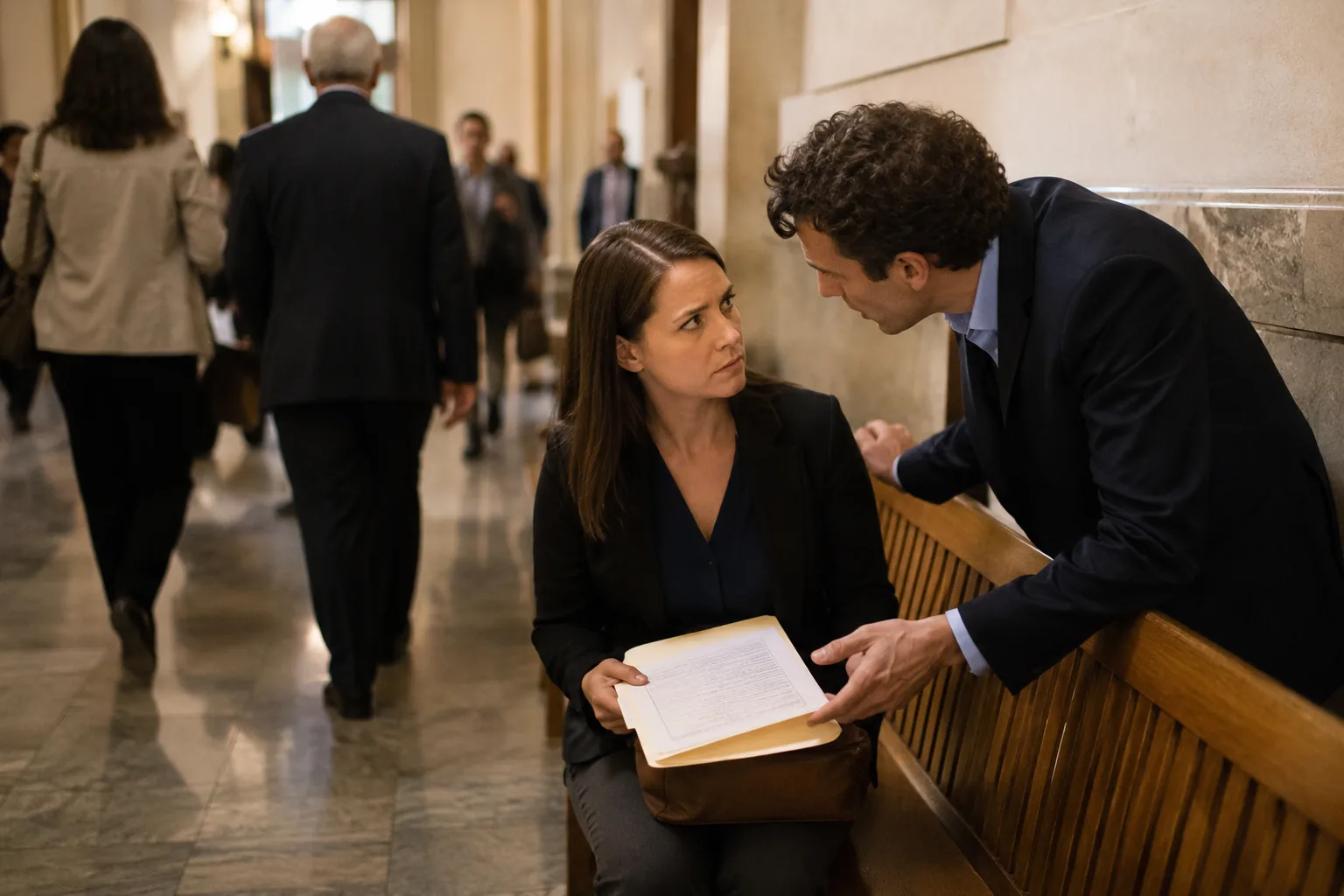
Julian held the pen steady, but his eyes were fixed on the ledger in my lap. “Sarah, sign the waiver. We are running out of time. If the court audits the trust, the legal fees will eat up whatever is left of the house sale. Nobody wins.”
“I am not signing it,” I said.
I picked up the black pen from his hand, but I did not touch the waiver. Instead, I pulled out the official executor’s distribution sheet that he had kept tucked under his folder-the document that authorized the court to release the undisputed portions of the inheritance. I crossed out the line referencing the waiver and wrote ‘Full Share Distribution – No Offset’ in clear, block letters.
Julian watched my hand move, his breathing shallow. “I won’t submit that. I am the executor. I control the filings.”
“If you do not submit this updated distribution sheet, I will walk through those doors and hand this mahogany box directly to the probate attorney,” I said, keeping my voice flat. “I won’t make a speech. I won’t tell Aunt Clara. I will simply submit the ledger and the bank statements as an objection to the final accounting. The court will halt the distribution immediately.”
Julian stared at the modified paper. The bailiff’s voice boomed down the corridor, calling our grandfather’s estate name.
“This is family, Sarah,” Julian whispered, making one last attempt to appeal to the obligation he had weaponized minutes before. “I took care of you when you were sick.”
“Grandfather took care of me,” I corrected him. “You just moved his money around and kept the credit.”
Julian looked at the double doors, then down at the mahogany box. He stood frozen, his eyes darting between the pen and the ledger. A court-ordered audit would expose the entire forty-two thousand dollars he had taken from the trust, ending his role as executor and forcing him to repay the entire sum to the estate under court supervision.
Without another word, Julian took the black pen from my hand. He signed his name on the executor’s authorization line of the modified distribution sheet. His signature was hasty, the ink smudging slightly as he pulled the pen away. He did not look at me. He took the waiver he had tried to force me to sign, folded it twice, and shoved it into his breast pocket.
I placed the ledger back inside the mahogany box, lowered the lid, and turned the brass key in the lock. I peeled the adhesive tape back over the key, securing it to the bottom of the box.
“Here is how this works from now on,” I said, looking up at him as he stood over the bench. “You will submit these papers to the clerk today. You will not call me, you will not email me, and you will not show up at my house. Any future communication regarding the estate will be handled exclusively through the court’s online filing portal. If I see your name in my inbox or on my phone, the ledger goes straight to the probate attorney’s desk.”
Julian stood silent, his shoulders slumped as the professional posture he had maintained all morning finally collapsed. He picked up his leather folder, turned away, and walked toward the courtroom doors without waiting for me.
I sat on the wooden bench for a long moment, clutching the mahogany box against my chest. The heavy weight of the wood felt solid and real. The hallway was still noisy with the chatter of strangers, but the pressure that had suffocated me since I arrived was gone. I stood up, smoothed my coat, and walked toward the exit, leaving Julian to face the clerk alone.