Story code: ST-000080
Part 1: The Postcard on the Workbench
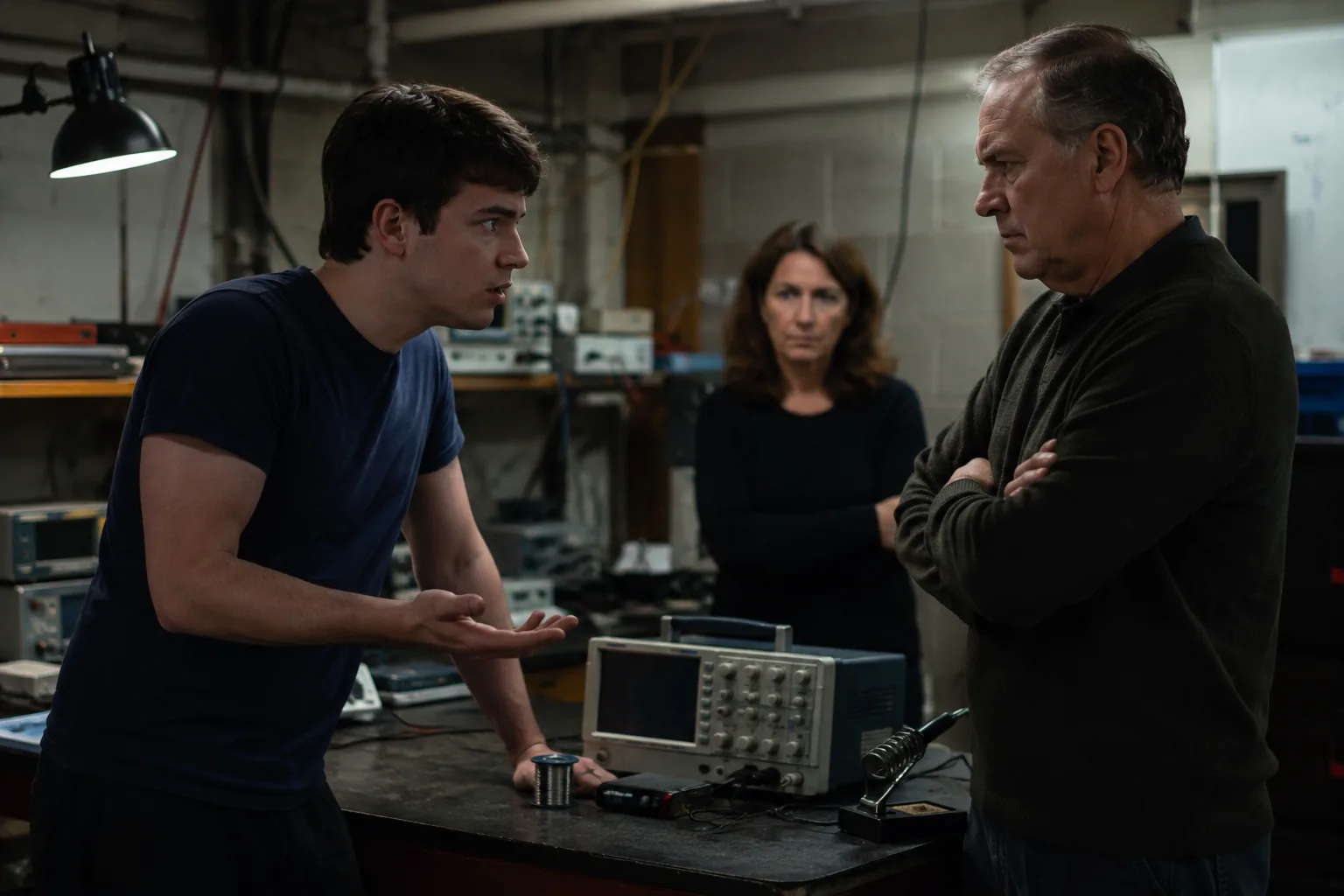
Evan stood in the physics basement with one hand on the workbench and kept saying I owed him, right there between the solder spool and the old oscilloscope, like his generosity had turned into a bill. On the bench beside his elbow sat a future postcard with the date printed on the front in blue ink, and while Doris kept the basement washing machine thumping in the corner, he kept talking over the noise like the room already agreed with him.
I had my screwdriver in one hand and a cracked sensor housing in the other, because the basement was still a basement and the work still had to get done. Evan pointed at the postcard again, then at me, then at the face-down printout beside it, and said, “I got you out of this. You remember that part, right? You don’t get to act like I didn’t save you.”
I said, “Saved me from what?”
He gave me that look people use when they want to make you feel stupid for asking for the part they left out. “From the mess you were about to make,” he said. “From the whole thing falling apart.”
Doris did not turn around from the utility sink. She had a basket of work gloves in one hand and a roll of tape in the other. “If you two are done arguing, I need that shelf cleared,” she said, and slid a stack of bins toward the far wall with her foot.
That was the problem with the room. It kept moving around the argument. A place this ordinary made the claim sound smaller than it was, and that let Evan keep repeating it in the same calm voice, like he was reading from a schedule instead of trying to pin a debt to my name.
He tapped the postcard. It was thick card stock, the kind you buy at a museum store, with a skyline on the front and a return address I had never seen before. The message on the back was short enough to make my neck go tight: thanks for letting me borrow your time. The handwriting looked like Evan’s, but the date stamp on the front was from six months ahead of today.
I took it from the workbench and turned it over under the fluorescent light. The corner was bent. There was a smear near the postage mark, like it had been handled too many times. In the lower right corner, just under the message, was a line of ink that made no sense until I read it twice: you already know which night this is.
“I don’t know that,” I said.
Evan leaned back against the shelves of labeled parts. “You do. You just don’t like hearing it out loud.”
“I didn’t agree to anything.”
“You did when you needed me,” he said. He kept his voice easy, almost friendly, and that was worse than if he had been yelling. “You were in trouble. I stepped in. Now you’re acting like that doesn’t count.”
I set the postcard down before my hand could shake it. On the bench under it, I saw a crescent of black grime and a strip of fresh blue tape, the kind we used to mark repaired equipment. The tape was stuck to a small brass bracket from the sensor rack. I knew that bracket. It had been cracked yesterday, then missing this morning, then suddenly back on the bench where Evan could point to it like it was evidence.
“What did you fix?” I asked.
He smiled once, tight and brief. “Something you were about to break.”
That should have been the end of it, but the room kept offering little pieces that didn’t line up. The postcard was on the bench before I got there. The sensor rack had my initials on the repair tag, but the tag was in my handwriting and dated next week. Evan’s work boots were dusted with white plaster from the crawlspace, the same plaster from the cracked panel behind the boiler, yet he had been upstairs with Doris ten minutes earlier because I heard her ask him to bring down the extension cord.
I looked at Doris. “Did he just come from upstairs?”
She paused with the tape roll halfway across the shelf and glanced at Evan, then at me. “He was up there, yes.”
Evan spread his hands. “See? I’ve been helping the whole time.”
I heard the words. I saw the postcard. I saw the taped bracket. But I also saw the clock on the wall and the basement door still latched from the inside, and I could not make the sequence fit. If Evan had saved me before, why was his boots covered in the same dust from the crawlspace I had not opened yet, and why did the postcard mention a night that had not happened?
Evan stood in the physics basement with one hand on the workbench and kept saying I owed him, right there between the solder spool and the old oscilloscope, like his generosity had turned into a bill. On the bench beside his elbow sat a future postcard with the date printed on the front in blue ink, and while Doris kept the basement washing machine thumping in the corner, he kept talking over the noise like the room already agreed with him.
I had my screwdriver in one hand and a cracked sensor housing in the other, because the basement was still a basement and the work still had to get done. Evan pointed at the postcard again, then at me, then at the face-down printout beside it, and said, “I got you out of this. You remember that part, right? You don’t get to act like I didn’t save you.”
I said, “Saved me from what?”
He gave me that look people use when they want to make you feel stupid for asking for the part they left out. “From the mess you were about to make,” he said. “From the whole thing falling apart.”
Doris did not turn around from the utility sink. She had a basket of work gloves in one hand and a roll of tape in the other. “If you two are done arguing, I need that shelf cleared,” she said, and slid a stack of bins toward the far wall with her foot.
That was the problem with the room. It kept moving around the argument. A place this ordinary made the claim sound smaller than it was, and that let Evan keep repeating it in the same calm voice, like he was reading from a schedule instead of trying to pin a debt to my name.
He tapped the postcard. It was thick card stock, the kind you buy at a museum store, with a skyline on the front and a return address I had never seen before. The message on the back was short enough to make my neck go tight: thanks for letting me borrow your time. The handwriting looked like Evan’s, but the date stamp on the front was from six months ahead of today.
I took it from the workbench and turned it over under the fluorescent light. The corner was bent. There was a smear near the postage mark, like it had been handled too many times. In the lower right corner, just under the message, was a line of ink that made no sense until I read it twice: you already know which night this is.
“I don’t know that,” I said.
Evan leaned back against the shelves of labeled parts. “You do. You just don’t like hearing it out loud.”
“I didn’t agree to anything.”
“You did when you needed me,” he said. He kept his voice easy, almost friendly, and that was worse than if he had been yelling. “You were in trouble. I stepped in. Now you’re acting like that doesn’t count.”
I set the postcard down before my hand could shake it. On the bench under it, I saw a crescent of black grime and a strip of fresh blue tape, the kind we used to mark repaired equipment. The tape was stuck to a small brass bracket from the sensor rack. I knew that bracket. It had been cracked yesterday, then missing this morning, then suddenly back on the bench where Evan could point to it like it was evidence.
“What did you fix?” I asked.
He smiled once, tight and brief. “Something you were about to break.”
That should have been the end of it, but the room kept offering little pieces that didn’t line up. The postcard was on the bench before I got there. The sensor rack had my initials on the repair tag, but the tag was in my handwriting and dated next week. Evan’s work boots were dusted with white plaster from the crawlspace, the same plaster from the cracked panel behind the boiler, yet he had been upstairs with Doris ten minutes earlier because I heard her ask him to bring down the extension cord.
I looked at Doris. “Did he just come from upstairs?”
She paused with the tape roll halfway across the shelf and glanced at Evan, then at me. “He was up there, yes.”
Evan spread his hands. “See? I’ve been helping the whole time.”
I heard the words. I saw the postcard. I saw the taped bracket. But I also saw the clock on the wall and the basement door still latched from the inside, and I could not make the sequence fit. If Evan had saved me before, why was his boots covered in the same dust from the crawlspace I had not opened yet, and why did the postcard mention a night that had not happened?