Story code: ST-000381
Part 1: The Postcard in Her Hand
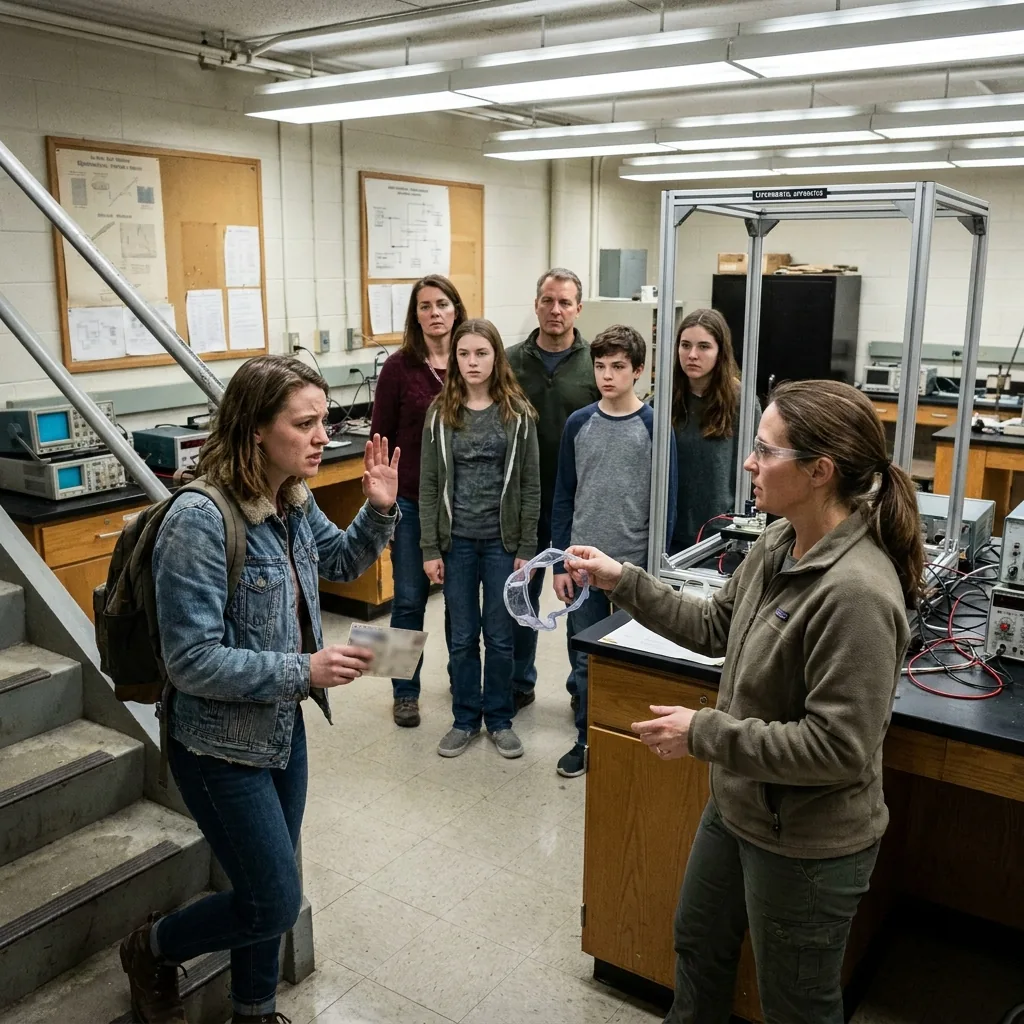
Leah Mercer came down the basement stairs waving a postcard over her head and accusing her own cousin of stealing a day from her before Nora Bell could finish handing safety goggles to a family with two middle-school kids. It happened at the folding demo table beside the time-transfer rig, with labeled bins open, extension cords taped to the floor, and half the room already looking up. By the time Nora set the goggles down, three visitors had turned toward her like the charge was settled, and Leah was saying she had proof mailed from the future.
Eli Navarro was at the schedule board with a dry-erase marker in his hand. He stopped mid-line and looked first at the postcard, then at the rig bay clock, then back at Leah because she was talking fast enough to drown out the hum of the cooling fans.
“Tell them what you did,” Leah said. Her voice carried cleanly in the concrete room. “Tell them why I lost Thursday. Tell them why this showed up with your handwriting on it.”
The family at the table stepped back. One of the kids still had a goggle strap hanging from his fingers. A couple of undergrads near the stair door slowed down but did not leave. Public spaces in that basement always worked like that. People pretended to keep moving, then stayed close enough to hear everything.
Nora did not answer right away. She took a paper towel off the demo table, wiped graphite dust from her fingers, and said, “Let me see it.”
Leah held the postcard tighter. “You already saw it when you sent it.”
That line did its damage fast. Eli could hear it in the little sounds around the room: a short breath from one visitor, a low “wow” from somebody near the corridor threshold, the scrape of a chair as a student pulled it back to get a better angle. Family accusation, future object, basement rig in the background. It sounded ugly and credible in one package.
Professor Dana Rusk came out of the rig bay from behind the shield partition and said, “Nobody touches the machine. Nobody crowds the table. If there is an object, it comes to me first.”
Leah pivoted toward her without lowering the postcard. “Fine. Look at it. It came through the Thursday window. Ask Nora why my Thursday disappeared and why she wrote this before it happened.”
She crossed the room and set the postcard into the professor’s open hand like she was presenting evidence in church. The card itself looked ordinary at first glance: a sunset boardwalk picture, bright enough to seem cheap, with a bent lower corner and a smeared block of ink where a postmark should have been clean. Nora leaned in only as far as she needed to.
Professor Rusk read the written side silently, then passed it to Nora, then to Eli. That small chain of custody happened in full view of everyone. Eli noticed that because half the crowd leaned forward each time the card changed hands.
On the message side, in thick black pen, was one sentence written hard enough to ridge the paper: YOU TOOK MY DAY AND I WANT IT BACK. Under that, a name was signed in a looped hand: Nora.
The crowd reacted to the signature more than the sentence. Eli could hear that too.
“That is her writing,” Leah said immediately.
Nora did not look up. “No,” she said. “That is my name. That is not the same thing.”
She turned the postcard sideways under the fluorescent lights. The bent corner caught on her thumb. “This edge is fresh,” she said. “It tore after the ink dried.”
Leah gave a short laugh with no smile in it. “You think that helps you?”
“Maybe,” Nora said.
Eli stepped closer because the card was in his hand next, and object details were easier than voices. The picture side had a campus bookstore logo in one corner under the boardwalk image, tiny and easy to miss. The back had a local stamp and a machine smear from the postal plant across town. But the thing that stopped him was even plainer than that.
The basement was dry enough to curl paper near the rig vents. Every flyer taped by the stair door started lifting at the corners after two days. This postcard had one corner bent, yes, but the rest of it lay flat and soft, like it had ridden in a back pocket through humid weather.
Leah was still talking. “She had access. She always has access. She knew the send windows. She knew I was supposed to have that day.”
One of the visitors asked, “What does that even mean, stole a day?”
“It means she sent something that changed what happened,” Leah snapped. “It means I lost a full day that should have been mine.”
Professor Rusk held out her hand again. “Enough speeches. Nora, did you send this through my rig?”
Nora looked from the postcard to the white schedule board by Eli’s shoulder. Her answer came in the same controlled tone she had used to start every demo all semester.
“Not from this room on the date stamped here,” she said.
The room got louder anyway. The denial landed under Leah’s first claim instead of over it. Eli could watch people choosing the version with more drama. One student near the bins whispered, “She’d say that,” and another nodded before the professor even spoke.
Then Nora touched one line of the postmark smear with the back of her fingernail and said, “Professor, the card says it came through a Thursday window. Why is the postal cancellation for Monday morning? And why is there no Thursday window on our board at all?”
Eli turned and looked at the schedule behind him.
There were no Thursday windows listed for that week, or any week that month.
Leah Mercer came down the basement stairs waving a postcard over her head and accusing her own cousin of stealing a day from her before Nora Bell could finish handing safety goggles to a family with two middle-school kids. It happened at the folding demo table beside the time-transfer rig, with labeled bins open, extension cords taped to the floor, and half the room already looking up. By the time Nora set the goggles down, three visitors had turned toward her like the charge was settled, and Leah was saying she had proof mailed from the future.
Eli Navarro was at the schedule board with a dry-erase marker in his hand. He stopped mid-line and looked first at the postcard, then at the rig bay clock, then back at Leah because she was talking fast enough to drown out the hum of the cooling fans.
“Tell them what you did,” Leah said. Her voice carried cleanly in the concrete room. “Tell them why I lost Thursday. Tell them why this showed up with your handwriting on it.”
The family at the table stepped back. One of the kids still had a goggle strap hanging from his fingers. A couple of undergrads near the stair door slowed down but did not leave. Public spaces in that basement always worked like that. People pretended to keep moving, then stayed close enough to hear everything.
Nora did not answer right away. She took a paper towel off the demo table, wiped graphite dust from her fingers, and said, “Let me see it.”
Leah held the postcard tighter. “You already saw it when you sent it.”
That line did its damage fast. Eli could hear it in the little sounds around the room: a short breath from one visitor, a low “wow” from somebody near the corridor threshold, the scrape of a chair as a student pulled it back to get a better angle. Family accusation, future object, basement rig in the background. It sounded ugly and credible in one package.
Professor Dana Rusk came out of the rig bay from behind the shield partition and said, “Nobody touches the machine. Nobody crowds the table. If there is an object, it comes to me first.”
Leah pivoted toward her without lowering the postcard. “Fine. Look at it. It came through the Thursday window. Ask Nora why my Thursday disappeared and why she wrote this before it happened.”
She crossed the room and set the postcard into the professor’s open hand like she was presenting evidence in church. The card itself looked ordinary at first glance: a sunset boardwalk picture, bright enough to seem cheap, with a bent lower corner and a smeared block of ink where a postmark should have been clean. Nora leaned in only as far as she needed to.
Professor Rusk read the written side silently, then passed it to Nora, then to Eli. That small chain of custody happened in full view of everyone. Eli noticed that because half the crowd leaned forward each time the card changed hands.
On the message side, in thick black pen, was one sentence written hard enough to ridge the paper: YOU TOOK MY DAY AND I WANT IT BACK. Under that, a name was signed in a looped hand: Nora.
The crowd reacted to the signature more than the sentence. Eli could hear that too.
“That is her writing,” Leah said immediately.
Nora did not look up. “No,” she said. “That is my name. That is not the same thing.”
She turned the postcard sideways under the fluorescent lights. The bent corner caught on her thumb. “This edge is fresh,” she said. “It tore after the ink dried.”
Leah gave a short laugh with no smile in it. “You think that helps you?”
“Maybe,” Nora said.
Eli stepped closer because the card was in his hand next, and object details were easier than voices. The picture side had a campus bookstore logo in one corner under the boardwalk image, tiny and easy to miss. The back had a local stamp and a machine smear from the postal plant across town. But the thing that stopped him was even plainer than that.
The basement was dry enough to curl paper near the rig vents. Every flyer taped by the stair door started lifting at the corners after two days. This postcard had one corner bent, yes, but the rest of it lay flat and soft, like it had ridden in a back pocket through humid weather.
Leah was still talking. “She had access. She always has access. She knew the send windows. She knew I was supposed to have that day.”
One of the visitors asked, “What does that even mean, stole a day?”
“It means she sent something that changed what happened,” Leah snapped. “It means I lost a full day that should have been mine.”
Professor Rusk held out her hand again. “Enough speeches. Nora, did you send this through my rig?”
Nora looked from the postcard to the white schedule board by Eli’s shoulder. Her answer came in the same controlled tone she had used to start every demo all semester.
“Not from this room on the date stamped here,” she said.
The room got louder anyway. The denial landed under Leah’s first claim instead of over it. Eli could watch people choosing the version with more drama. One student near the bins whispered, “She’d say that,” and another nodded before the professor even spoke.
Then Nora touched one line of the postmark smear with the back of her fingernail and said, “Professor, the card says it came through a Thursday window. Why is the postal cancellation for Monday morning? And why is there no Thursday window on our board at all?”
Eli turned and looked at the schedule behind him.
There were no Thursday windows listed for that week, or any week that month.