Story code: ST-000421
Part 1: The Courthouse Trap
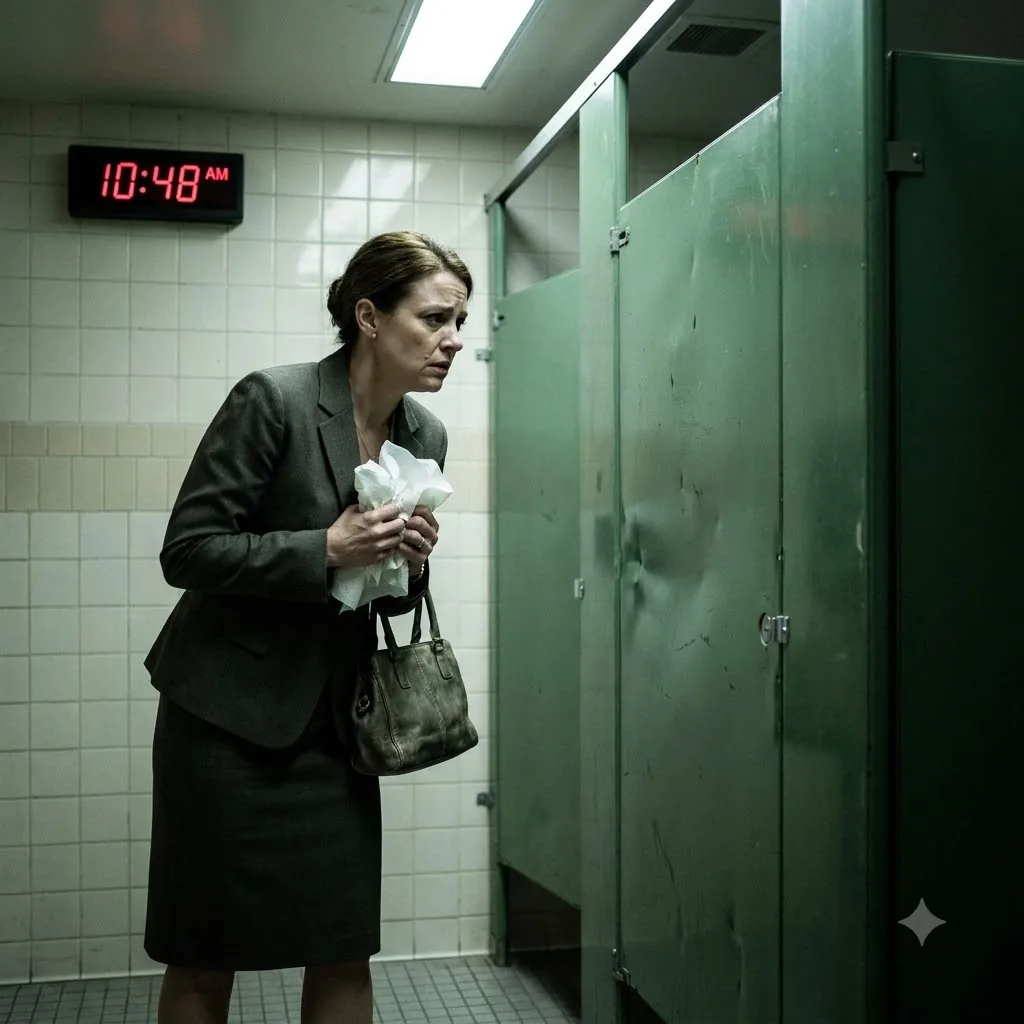
The suffocating silence of the second-floor courthouse bathroom broke only when another heavy drop of dark crimson hit the porcelain bowl. I sat frozen on the toilet, staring down at my ruined slip and the spreading red stain on the inside of my light gray skirt. It was the only court-appropriate piece of clothing I owned, a thrift-store find I had meticulously ironed the night before to prove to a judge that I was a fit mother.
Now, it was becoming evidence of my failure. I grabbed a handful of the cheap, translucent toilet paper from the dispenser and pressed it hard between my legs. The paper soaked through instantly, breaking apart in my trembling hands.
A vicious, tearing cramp seized my lower abdomen. I bit down hard on my own wrist to stop from screaming. The metallic taste of my skin grounded me for a fraction of a second, but the panic was already rising in my throat. I had a custody hearing in five minutes. If I walked into Judge Hanover’s courtroom with blood running down my calves, the bailiff would call an ambulance.
An ambulance meant an emergency room. An emergency room meant a mandatory blood draw, a pelvic exam, and a physician’s report uploaded directly into the state registry. Under the new medical compliance laws my ex-husband had personally authored and sponsored through the state legislature, that specific type of medical code would trigger an automatic violation of my parole. The authorities would bypass the hospital waiting room entirely. They would chain me to the hospital bed, revoke my release, and send me straight back to a cell. My children would become his permanent property.
The heavy wooden door of the restroom creaked open, bouncing off the doorstop. Sharp, impatient footsteps clicked across the tile floor.
“Corinne.” The voice belonged to Davis, my ex-husband’s lead attorney. He didn’t bother pretending he wasn’t violating a women’s restroom. He marched right up and stopped outside my stall door, the toes of his expensive Italian loafers visible under the metal partition.
“Judge Hanover is taking his seat,” Davis said, his tone dripping with bored condescension. “Your ex-husband is already at the plaintiff’s table. If you fail to appear in the next sixty seconds, I will file a motion to revoke your visitation rights entirely. We both know you cannot afford another strike.”
I squeezed my eyes shut, pressing a fresh, massive wad of toilet paper against myself. The bleeding was not slowing down. It was thick and terrifyingly heavy, accompanied by another brutal wave of cramping that forced me to lean forward until my forehead touched the cold, painted metal of the stall door.
“I need one minute,” I managed to say. My voice shook, betraying the sheer physical agony radiating through my pelvis.
“You have forty-five seconds,” Davis replied, tapping his gold pen against the partition. “Then I am going back in there and telling the judge you abandoned the hearing. Your little stalling tactic will not work today.”
His footsteps retreated. The heavy door groaned shut, plunging the bathroom back into that suffocating, bleach-scented quiet.
I stood up on shaking legs. The gray skirt was damp on the inside lining, but the exterior fabric miraculously still looked clean. I pulled the remaining half-roll of toilet paper from the dispenser, folding it into a thick, improvised pad, and shoved it into my underwear. It felt bulky and precarious, a fragile paper dam against a flood that was threatening to wash away my entire life.
I flushed the toilet, watching the swirling dark water vanish down the pipes. I could not go to a hospital. I could not ask a single soul for help. My ex-husband had designed this legal trap perfectly, banking on the fact that my medical crisis would eventually force my hand. He knew about my physical condition. He had counted on the extreme stress of the trial triggering exactly this bodily collapse. If I sought treatment to save my own life, the mandatory reporting codes would classify my emergency as a felony under his new statute.
I smoothed down my skirt with wet, trembling hands, praying the gray fabric would hide any dark shadows. I unlocked the stall and walked over to the sinks. My reflection in the spotted mirror looked like a ghost. My skin was chalky, my lips bloodless, my eyes wide and desperate. I ran cold water over my wrists, splashing some on the back of my neck to keep from passing out. The cramping was a relentless, grinding pressure, wrapping around my lower back and pulling me toward the tile floor.
I grabbed a rough brown paper towel and patted my face dry. I had to survive twenty minutes on the witness stand. I just had to sit in that wooden chair, answer the judge’s inquiries about my housing and employment, and walk out of the building without leaving a trail of blood on the polished courtroom floor.
I pushed open the bathroom door and stepped out into the bright, fluorescent-lit hallway. The bailiff was standing right outside the courtroom entrance, his hand resting on his radio. He turned, taking one look at my pale face, and his gaze immediately dropped toward the hem of my skirt.
“Stop right there,” the bailiff said, stepping directly into my path and raising his hand.
The suffocating silence of the second-floor courthouse bathroom broke only when another heavy drop of dark crimson hit the porcelain bowl. I sat frozen on the toilet, staring down at my ruined slip and the spreading red stain on the inside of my light gray skirt. It was the only court-appropriate piece of clothing I owned, a thrift-store find I had meticulously ironed the night before to prove to a judge that I was a fit mother.
Now, it was becoming evidence of my failure. I grabbed a handful of the cheap, translucent toilet paper from the dispenser and pressed it hard between my legs. The paper soaked through instantly, breaking apart in my trembling hands.
A vicious, tearing cramp seized my lower abdomen. I bit down hard on my own wrist to stop from screaming. The metallic taste of my skin grounded me for a fraction of a second, but the panic was already rising in my throat. I had a custody hearing in five minutes. If I walked into Judge Hanover’s courtroom with blood running down my calves, the bailiff would call an ambulance.
An ambulance meant an emergency room. An emergency room meant a mandatory blood draw, a pelvic exam, and a physician’s report uploaded directly into the state registry. Under the new medical compliance laws my ex-husband had personally authored and sponsored through the state legislature, that specific type of medical code would trigger an automatic violation of my parole. The authorities would bypass the hospital waiting room entirely. They would chain me to the hospital bed, revoke my release, and send me straight back to a cell. My children would become his permanent property.
The heavy wooden door of the restroom creaked open, bouncing off the doorstop. Sharp, impatient footsteps clicked across the tile floor.
“Corinne.” The voice belonged to Davis, my ex-husband’s lead attorney. He didn’t bother pretending he wasn’t violating a women’s restroom. He marched right up and stopped outside my stall door, the toes of his expensive Italian loafers visible under the metal partition.
“Judge Hanover is taking his seat,” Davis said, his tone dripping with bored condescension. “Your ex-husband is already at the plaintiff’s table. If you fail to appear in the next sixty seconds, I will file a motion to revoke your visitation rights entirely. We both know you cannot afford another strike.”
I squeezed my eyes shut, pressing a fresh, massive wad of toilet paper against myself. The bleeding was not slowing down. It was thick and terrifyingly heavy, accompanied by another brutal wave of cramping that forced me to lean forward until my forehead touched the cold, painted metal of the stall door.
“I need one minute,” I managed to say. My voice shook, betraying the sheer physical agony radiating through my pelvis.
“You have forty-five seconds,” Davis replied, tapping his gold pen against the partition. “Then I am going back in there and telling the judge you abandoned the hearing. Your little stalling tactic will not work today.”
His footsteps retreated. The heavy door groaned shut, plunging the bathroom back into that suffocating, bleach-scented quiet.
I stood up on shaking legs. The gray skirt was damp on the inside lining, but the exterior fabric miraculously still looked clean. I pulled the remaining half-roll of toilet paper from the dispenser, folding it into a thick, improvised pad, and shoved it into my underwear. It felt bulky and precarious, a fragile paper dam against a flood that was threatening to wash away my entire life.
I flushed the toilet, watching the swirling dark water vanish down the pipes. I could not go to a hospital. I could not ask a single soul for help. My ex-husband had designed this legal trap perfectly, banking on the fact that my medical crisis would eventually force my hand. He knew about my physical condition. He had counted on the extreme stress of the trial triggering exactly this bodily collapse. If I sought treatment to save my own life, the mandatory reporting codes would classify my emergency as a felony under his new statute.
I smoothed down my skirt with wet, trembling hands, praying the gray fabric would hide any dark shadows. I unlocked the stall and walked over to the sinks. My reflection in the spotted mirror looked like a ghost. My skin was chalky, my lips bloodless, my eyes wide and desperate. I ran cold water over my wrists, splashing some on the back of my neck to keep from passing out. The cramping was a relentless, grinding pressure, wrapping around my lower back and pulling me toward the tile floor.
I grabbed a rough brown paper towel and patted my face dry. I had to survive twenty minutes on the witness stand. I just had to sit in that wooden chair, answer the judge’s inquiries about my housing and employment, and walk out of the building without leaving a trail of blood on the polished courtroom floor.
I pushed open the bathroom door and stepped out into the bright, fluorescent-lit hallway. The bailiff was standing right outside the courtroom entrance, his hand resting on his radio. He turned, taking one look at my pale face, and his gaze immediately dropped toward the hem of my skirt.
“Stop right there,” the bailiff said, stepping directly into my path and raising his hand.