Story code: ST-001226
Part 1: The Eviction Notice
The glossy, heavy-stock flyer resting on Marta’s kitchen table declared “Pathways to Fiscal Responsibility: A Tenant Intervention” in elegant serif font, though the perforated eviction warning at the bottom gave away the true nature of the document. Marta watched her own breath plume in the freezing air of the kitchen as she smoothed the crease of the expensive paper. Julian’s property management group had apparently decided that failing to pay rent for an apartment with no heat was a moral failing that required a mandatory budgeting lecture, rather than a direct consequence of the dead boiler in the basement.
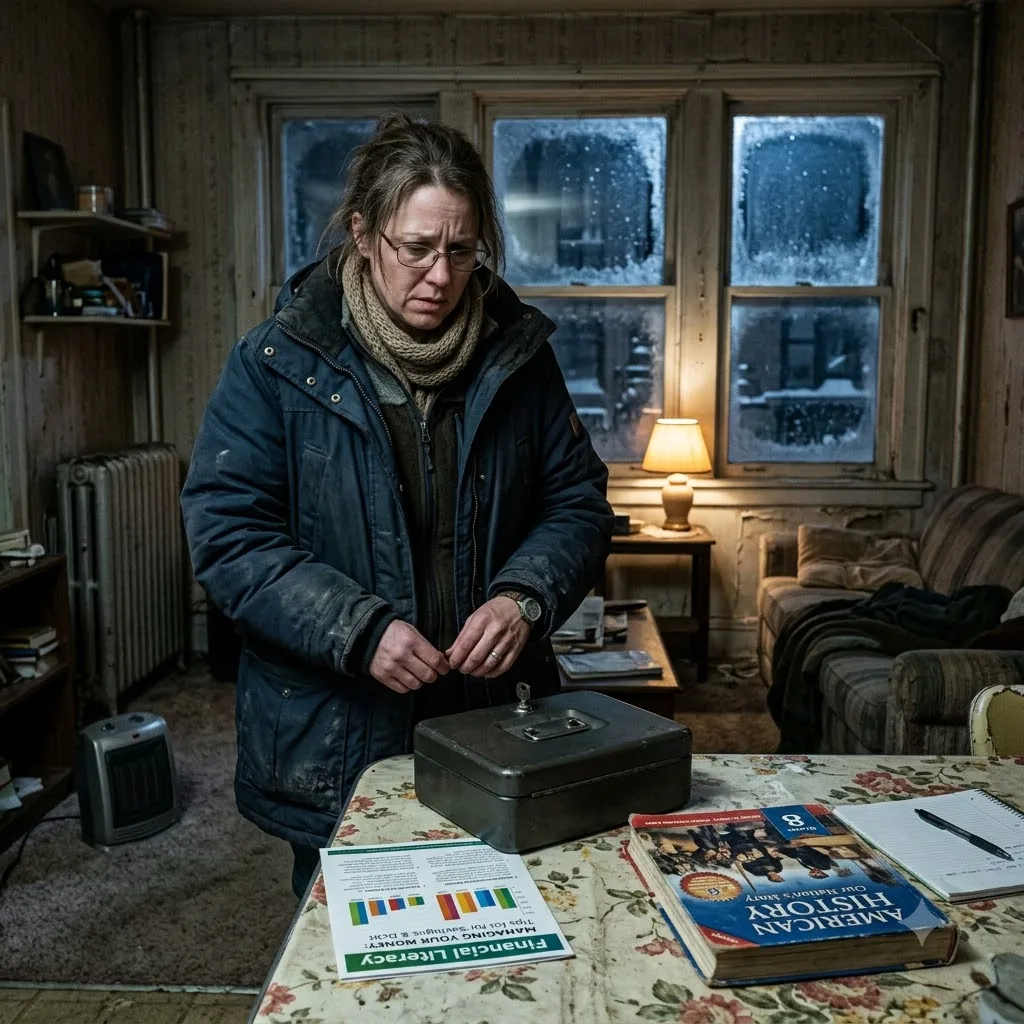
The cast-iron radiator beneath the frosted window had not made a sound since the first week of November. A glass of water left on the kitchen counter overnight had developed a thin, fragile layer of ice across the surface. Marta pulled her second wool sweater tighter around her shoulders and adjusted the items on her small laminate table. She needed everything placed exactly right. To the left of the eviction notice sat her daughter’s eighth-grade history textbook. The spine was cracked, and the cover bore a barcode sticker from the local public school district. It was the exact edition pulled from the curriculum four days ago by a political action committee heavily funded by Julian himself. He was a man who spent his mornings ensuring low-income tenants learned to budget and his afternoons ensuring their children did not learn about systemic inequality.
Marta aligned the edge of the textbook with the edge of the table. Her fingers were stiff and aching from the ambient cold. In the next room, she could hear the steady, heavy breathing of her daughter, buried beneath two quilts, a heavy faux-fur blanket, and a winter coat just to survive the night. Julian had scheduled his in-home intervention for eight in the morning, claiming it was the only time he could personally ensure his “at-risk” residents received the financial coaching they desperately needed before he finalized the paperwork to throw them out into the December snow.
To the right of the textbook, sitting squarely in the center of the table, was a heavy steel lockbox. It was a dark, industrial gray, the kind usually bolted to the floor of a retail manager’s office. Marta rested her palm flat against the cold metal of the lid. Inside the box lay a dense stack of thick, sealed envelopes. She had spent the last three weeks walking up and down the freezing stairwells of the six-story building, knocking on doors, sitting in equally frigid living rooms, and collecting those envelopes. The lockbox had become the center of gravity in the apartment. She did not open it. She just kept her hand resting on the metal, feeling the sheer weight of what she had gathered. Every time she looked at the glossy eviction notice, she pressed her hand a little firmer against the steel.
Outside, a heavy snow had begun to fall, coating the cracked sidewalks of the complex. Marta stepped to the window and wiped away the condensation with the sleeve of her sweater. Down in the courtyard, a black luxury SUV idled, its exhaust sending thick white clouds into the winter air. The vehicle was running its heater at full blast. It was an offensive display of combustion and comfort in a parking lot where half the tenants’ cars had dead batteries from the bitter freeze.
She watched the driver’s side door swing open. Julian stepped out into the snow wearing a tailored camel-hair overcoat and a cashmere scarf wrapped tightly around his neck. He carried a sleek leather portfolio, undoubtedly filled with more high-gloss pamphlets about the virtues of saving pennies and cutting out frivolous luxuries. He paused to look up at the crumbling brick facade of the building, a look of profound distaste settling on his face as a single flake of snow landed on his pristine lapel.
Marta let the curtain drop back into place. She moved away from the window, returned to the kitchen table, and sat down in the rigid wooden chair. She poured the last of her lukewarm tea into a chipped ceramic mug, taking a sip purely to moisten her throat for the conversation to come. The apartment was entirely silent except for the rattling of the wind against the poorly sealed windowpanes and the distant hum of traffic on the interstate. She checked the arrangement on her table one last time. The financial coaching eviction notice. The banned history book. The steel lockbox.
Downstairs, the heavy security door groaned open and slammed shut. Footsteps began to echo in the outer hallway, moving steadily up the central stairwell. They were heavy, deliberate, and entirely out of place on the scuffed linoleum of the building. Julian was not sending a property manager or a junior lackey for this particular visit. He wanted to look her in the eye and deliver his lecture himself. He wanted the satisfaction of explaining her own poverty to her in her own kitchen before he formally initiated the process to change the locks.
The footsteps reached the third-floor landing and turned down her corridor. They passed the doors of neighbors who were huddled under blankets, neighbors who had contributed to the heavy metal box currently sitting on Marta’s table.
The expensive leather soles halted right outside her thin wooden door. Marta squared her shoulders, took a slow breath of freezing air, and placed both hands flat on the table, her right pinky brushing the icy edge of the lockbox.
A sharp, authoritative knock rattled the doorframe.
The glossy, heavy-stock flyer resting on Marta’s kitchen table declared “Pathways to Fiscal Responsibility: A Tenant Intervention” in elegant serif font, though the perforated eviction warning at the bottom gave away the true nature of the document. Marta watched her own breath plume in the freezing air of the kitchen as she smoothed the crease of the expensive paper. Julian’s property management group had apparently decided that failing to pay rent for an apartment with no heat was a moral failing that required a mandatory budgeting lecture, rather than a direct consequence of the dead boiler in the basement.
The cast-iron radiator beneath the frosted window had not made a sound since the first week of November. A glass of water left on the kitchen counter overnight had developed a thin, fragile layer of ice across the surface. Marta pulled her second wool sweater tighter around her shoulders and adjusted the items on her small laminate table. She needed everything placed exactly right. To the left of the eviction notice sat her daughter’s eighth-grade history textbook. The spine was cracked, and the cover bore a barcode sticker from the local public school district. It was the exact edition pulled from the curriculum four days ago by a political action committee heavily funded by Julian himself. He was a man who spent his mornings ensuring low-income tenants learned to budget and his afternoons ensuring their children did not learn about systemic inequality.
Marta aligned the edge of the textbook with the edge of the table. Her fingers were stiff and aching from the ambient cold. In the next room, she could hear the steady, heavy breathing of her daughter, buried beneath two quilts, a heavy faux-fur blanket, and a winter coat just to survive the night. Julian had scheduled his in-home intervention for eight in the morning, claiming it was the only time he could personally ensure his “at-risk” residents received the financial coaching they desperately needed before he finalized the paperwork to throw them out into the December snow.
To the right of the textbook, sitting squarely in the center of the table, was a heavy steel lockbox. It was a dark, industrial gray, the kind usually bolted to the floor of a retail manager’s office. Marta rested her palm flat against the cold metal of the lid. Inside the box lay a dense stack of thick, sealed envelopes. She had spent the last three weeks walking up and down the freezing stairwells of the six-story building, knocking on doors, sitting in equally frigid living rooms, and collecting those envelopes. The lockbox had become the center of gravity in the apartment. She did not open it. She just kept her hand resting on the metal, feeling the sheer weight of what she had gathered. Every time she looked at the glossy eviction notice, she pressed her hand a little firmer against the steel.
Outside, a heavy snow had begun to fall, coating the cracked sidewalks of the complex. Marta stepped to the window and wiped away the condensation with the sleeve of her sweater. Down in the courtyard, a black luxury SUV idled, its exhaust sending thick white clouds into the winter air. The vehicle was running its heater at full blast. It was an offensive display of combustion and comfort in a parking lot where half the tenants’ cars had dead batteries from the bitter freeze.
She watched the driver’s side door swing open. Julian stepped out into the snow wearing a tailored camel-hair overcoat and a cashmere scarf wrapped tightly around his neck. He carried a sleek leather portfolio, undoubtedly filled with more high-gloss pamphlets about the virtues of saving pennies and cutting out frivolous luxuries. He paused to look up at the crumbling brick facade of the building, a look of profound distaste settling on his face as a single flake of snow landed on his pristine lapel.
Marta let the curtain drop back into place. She moved away from the window, returned to the kitchen table, and sat down in the rigid wooden chair. She poured the last of her lukewarm tea into a chipped ceramic mug, taking a sip purely to moisten her throat for the conversation to come. The apartment was entirely silent except for the rattling of the wind against the poorly sealed windowpanes and the distant hum of traffic on the interstate. She checked the arrangement on her table one last time. The financial coaching eviction notice. The banned history book. The steel lockbox.
Downstairs, the heavy security door groaned open and slammed shut. Footsteps began to echo in the outer hallway, moving steadily up the central stairwell. They were heavy, deliberate, and entirely out of place on the scuffed linoleum of the building. Julian was not sending a property manager or a junior lackey for this particular visit. He wanted to look her in the eye and deliver his lecture himself. He wanted the satisfaction of explaining her own poverty to her in her own kitchen before he formally initiated the process to change the locks.
The footsteps reached the third-floor landing and turned down her corridor. They passed the doors of neighbors who were huddled under blankets, neighbors who had contributed to the heavy metal box currently sitting on Marta’s table.
The expensive leather soles halted right outside her thin wooden door. Marta squared her shoulders, took a slow breath of freezing air, and placed both hands flat on the table, her right pinky brushing the icy edge of the lockbox.
A sharp, authoritative knock rattled the doorframe.