Story code: ST-001226
Part 4: The Escrow
Julian’s eyes darted frantically from the heavy steel lockbox to the thirty silent faces blocking his only exit. The little red recording lights on their phones unblinkingly documented the exact moment his carefully constructed leverage shattered. He opened his mouth, perhaps to issue one final, desperate threat about the city inspector or Child Protective Services, but the words died in his throat. The freezing air in the kitchen seemed to finally penetrate his camel-hair overcoat.
“This is extortion,” Julian hissed, though his voice lacked its previous booming authority. It sounded thin, reedy, and entirely panicked.
“It’s a rent strike,” Marta corrected, her hand remaining firmly on the lid of the lockbox. “And a collective request for basic maintenance. The terms are simple. You have less than three hours to get a commercial HVAC crew into that basement, or your political action committee defaults on its media buy. I suggest you get on the phone.”
Julian looked down at the stack of thirty-eight checks resting atop his Voluntary Surrender form. Forty thousand, two hundred dollars. It was right there, inches from his gloved hands, but separated by an insurmountable wall of digital witnesses. If he reached for it, if he tried to physically wrestle the steel box away from her, thirty different angles of his assault would be trending online before his press conference even began. He would be ruined financially and politically.
He knew it. Marta watched the realization sink into his posture, watching his shoulders slump and the arrogant tilt of his chin collapse.
Julian snatched his leather portfolio off the table, his movements jerky and uncoordinated. He didn’t bother to retrieve his gold fountain pen, nor did he touch the glossy eviction notice. He turned toward the door.
The crowd of tenants did not move immediately. They stood shoulder-to-shoulder in their heavy coats and patched parkas, an immovable human barricade in the narrow kitchen. For five agonizing seconds, Julian was forced to stand mere inches from Mr. Henderson, trapped in the oppressive, silent judgment of the people he had spent years exploiting.
Slowly, Mr. Henderson took a half-step back. The Ramirez family shifted sideways. A narrow path opened through the hallway.
Julian kept his eyes glued to the scuffed linoleum floor. He didn’t say another word. He squeezed through the gauntlet of his tenants, his cashmere scarf brushing against their damp winter coats, humiliated and completely stripped of his power. The heavy footsteps that had sounded so deliberate on his arrival now echoed down the central stairwell in a frantic, stumbling retreat. Moments later, the heavy security door at the ground floor groaned and slammed violently shut.
Inside Marta’s apartment, the silence held for a few seconds more. Then, Mr. Henderson let out a long, foggy breath and lowered his phone.
A collective exhale rippled through the kitchen. The tension broke, replaced by a sudden, dizzying wave of relief. Mrs. Gable leaned against the counter, pressing a hand to her chest, while the older Ramirez boy let out a sharp, triumphant laugh.
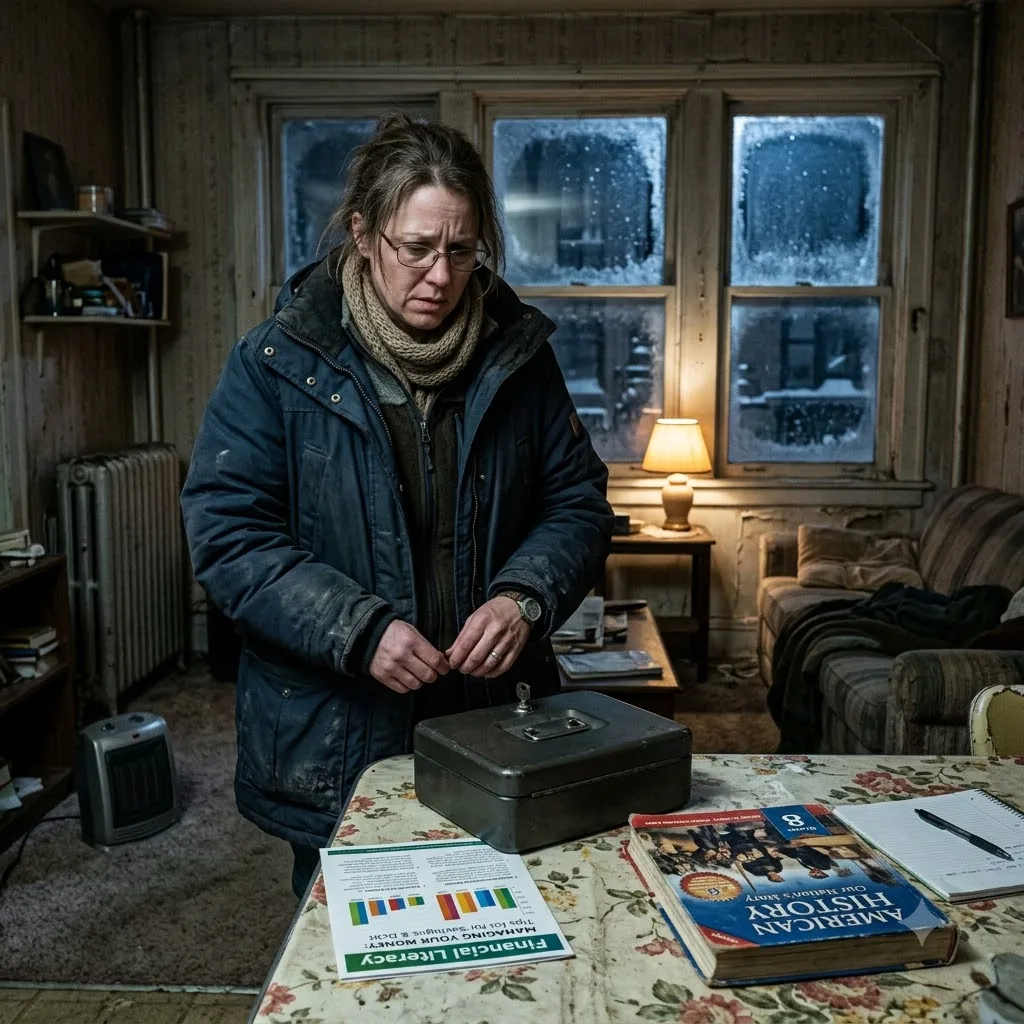
Marta turned the brass key in the lockbox, securing the heavy steel lid with a definitive clack.
“He’s not going to fix the boiler by eleven,” Mr. Henderson said, his voice gravelly but warm. “He doesn’t have the liquidity to hire an emergency crew without these checks.”
“I know,” Marta said, pulling the lockbox toward her chest. “But we do. On Monday morning, we move this into an official escrow account. We hire the commercial crew ourselves under the city’s repair-and-deduct statute. Until then, we hold the line.”
“We can make it till Monday,” one of the nursing students from the basement said. She unzipped her heavy canvas bag. “My roommate and I brought up three electric oil heaters from storage. We don’t have enough outlets down there without tripping the breaker, but if we daisy-chain some heavy-duty extension cords across the third floor, we can heat the central units.”
The logistics of survival fell into place with practiced, communal efficiency. Neighbors who had spent the last month freezing in isolation began plotting grid loads and sharing supplies. By mid-afternoon, bright orange extension cords snaked down the scuffed linoleum hallway, connecting apartments and distributing power.
Marta’s kitchen was no longer silent. The steady, comforting hum of a radiant space heater in the corner pushed back the bitter chill, melting the thin layer of ice on the water glass. The glossy eviction notice and the Voluntary Surrender form had been crumpled and tossed into the trash bin. Julian’s gold pen sat forgotten in a junk drawer.
Marta poured boiling water from a shared electric kettle into two ceramic mugs, steeping real chamomile tea. The apartment was still chilly, but it was a manageable, hopeful cold. She carried the mugs down the short hallway to the bedroom, the heavy steel lockbox safely tucked away beneath her bed.
She pushed the bedroom door open. The rattling cough that had plagued her daughter for days had settled into a quiet, rhythmic breathing. The heavy faux-fur blanket had been pushed down to her waist, rendered unnecessary by the ambient warmth drifting in from the hallway.
Her daughter was sitting up against the pillows, blowing gently on her hands before turning a page. Resting squarely on her lap was the eighth-grade history textbook, its cracked spine fully open. Marta stepped into the room, handing over the steaming mug of tea, and watched her daughter safely read the exact history of collective power that Julian Vance had tried so desperately to ban.