Story code: ST-000139
Part 1: The Rule Dana Announced
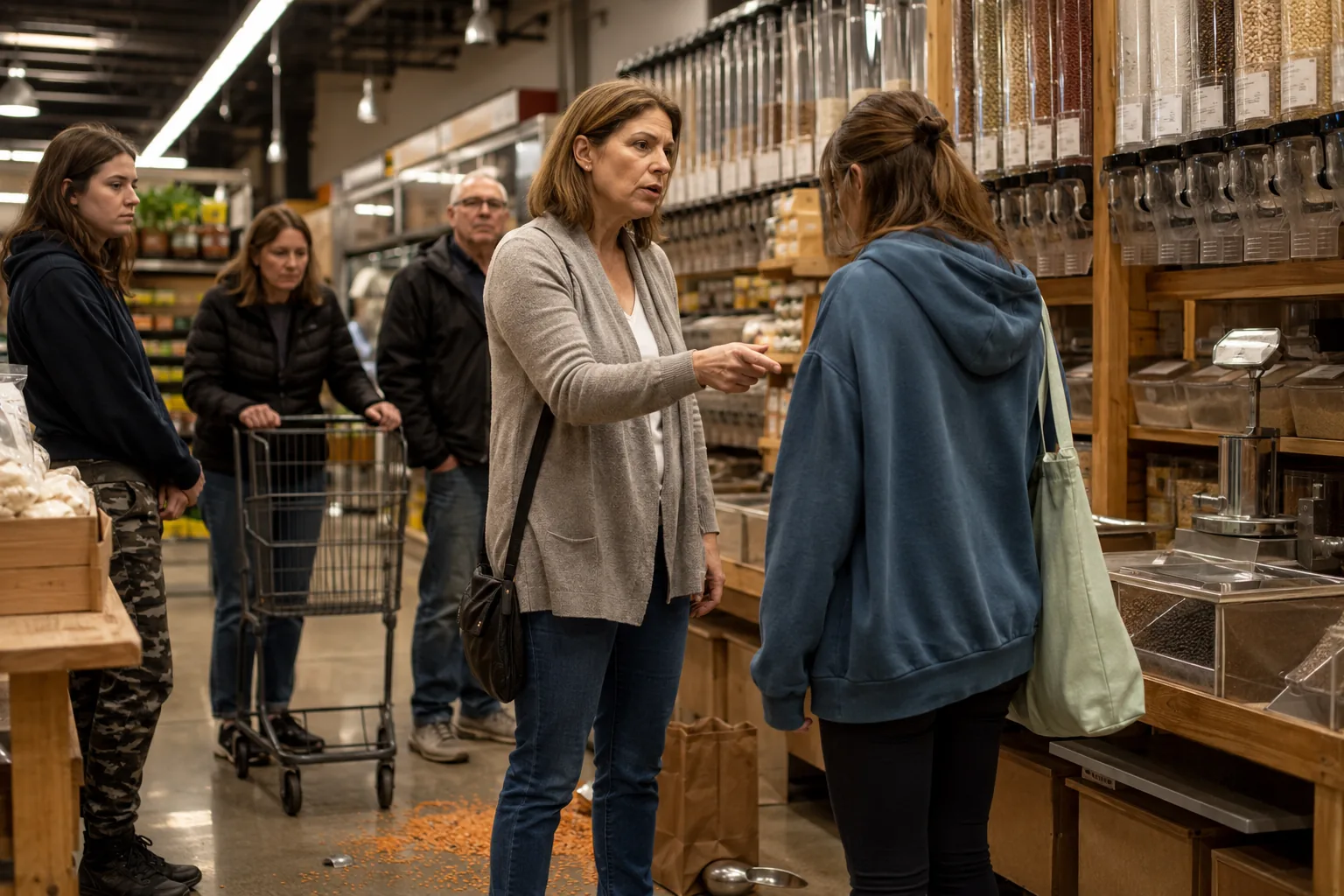
Dana Holt stopped the whole bulk aisle over a stripe of spilled lentils and told her own daughter, loud enough for the spice bins and grain scoops to hear, that people who waste food in a zero-waste store should pay for every damaged item and lose the right to carry the family’s glass jar tote. Mia Holt was already on one knee with paper towels, but Dana kept talking, one hand on the tote with its labeled jars lined up like display pieces, while nearby shoppers turned to look. Leah Mercer was three bins down filling oats, and before she knew what had actually happened, Mia’s face and name had become the lesson.
The aisle was the kind that always made small mistakes look bigger than they were. Clear bulk hoppers ran down both sides, metal scoops clicked against chains, and every jar, lid, and tare sticker seemed to announce whether someone belonged there. A cracked line of dry brown lentils dusted the floor by the French green lentils and red split lentils. There was also a glitter of glass near the baseboard, not much, just enough to make Rosa Delgado’s dustpan necessary when she arrived.
Dana pointed down at the mess without lowering her voice. “This is exactly why we have standards. If you bring glass into a bulk aisle, you keep control of it. If you spill product, you replace it. If you break a jar, you don’t just shrug and move on.”
Mia pressed a folded towel over the worst of the spill and said, “I didn’t shrug.”
It was quiet, flat, and almost swallowed by the rattle of a scoop someone set back too hard.
Owen Holt stood beside the cart with both hands wrapped around another jar, a big one with a white tare sticker on the lid. He kept looking at Dana, then at Mia, then toward the aisle exit leading to the registers. He didn’t say anything.
Leah stayed where she was, one hand on her cart and one on the scoop. From her spot she could see the reflection of Dana’s tote in the shiny lid of a quinoa bin. The tote was canvas, open at the top, with six glass jars inside. Labels faced out. Two held rolled oats and black beans. One looked empty except for a dusting at the bottom. Another had a lid screwed on crooked enough that Leah noticed it twice.
Rosa came in with a broom, dustpan, and a stack of brown paper towels tucked under one arm. Unlike Dana, she started by looking at the floor. Then she checked the base of the bins, the broken flecks by the trim, and the cart.
“We’ll get it cleaned,” Rosa said. “Please step back from the glass.”
Dana did step back, but only enough to give herself more room to speak. “I’m not asking for cleanup. I’m asking for accountability. She was carrying the tote. She clipped the bin corner. The jar went, the lentils spilled, and now store product is contaminated.”
A woman near the spices paused with a bag of dried chiles in her hand. A man with a toddler steered his cart around the endcap slower than he needed to. The aisle took on that sharp stillness people make when they want details without looking nosy.
Mia rose halfway, towel still in hand. “The jar that broke wasn’t in my hand.”
Dana turned to her so quickly the tote bumped her hip. “You were rushing. Same result.”
Rosa kept her voice even. “Ma’am, I need to know what actually hit the floor.”
Dana gave a short laugh that didn’t invite company. “What hit the floor was irresponsibility.”
Rosa waited.
Owen cleared his throat once. “Mom.”
Dana cut across him. “No. This is the rule in this family and everywhere else too. If you create waste, you own it. No excuses, no technicalities. If Mia can’t handle glass in a bulk aisle, then she shouldn’t carry the tote anymore. And if anything in there is compromised, we replace it ourselves.”
That landed harder than the spill. Leah could tell by the way Mia stopped moving altogether. She kept one shoulder angled toward the aisle exit, but she didn’t walk. A couple beside the granola bins looked straight at her now, not at Dana, as if Mia had already been sorted into the problem.
Rosa crouched to sweep the glittering bits toward the dustpan. “I still need specifics.”
Leah looked again at the tote because Dana kept touching it when she said the word responsibility. The crooked lid was still there. A thin crescent of pale flour or grain dust ringed one jar’s mouth under the metal cap. On the canvas side panel, below the handles, there was an older chalky streak and a tiny star-shaped scratch in the weave, the kind a jar edge might leave if it had hit hard before.
Dana shifted the tote behind her calf when Rosa glanced up.
Leah noticed one more thing then: the broken glass on the floor looked amber-tinted, but every jar visible in Dana’s tote was clear. Rosa had not said that out loud. Neither had anyone else. Mia was standing there with lentil dust on her fingers while Dana repeated her rule like it covered every question.
And Leah suddenly couldn’t stop looking at the tote, because the thing Dana wanted taken away from Mia was starting to look like the only object in the aisle that might tell a different story.
Dana Holt stopped the whole bulk aisle over a stripe of spilled lentils and told her own daughter, loud enough for the spice bins and grain scoops to hear, that people who waste food in a zero-waste store should pay for every damaged item and lose the right to carry the family’s glass jar tote. Mia Holt was already on one knee with paper towels, but Dana kept talking, one hand on the tote with its labeled jars lined up like display pieces, while nearby shoppers turned to look. Leah Mercer was three bins down filling oats, and before she knew what had actually happened, Mia’s face and name had become the lesson.
The aisle was the kind that always made small mistakes look bigger than they were. Clear bulk hoppers ran down both sides, metal scoops clicked against chains, and every jar, lid, and tare sticker seemed to announce whether someone belonged there. A cracked line of dry brown lentils dusted the floor by the French green lentils and red split lentils. There was also a glitter of glass near the baseboard, not much, just enough to make Rosa Delgado’s dustpan necessary when she arrived.
Dana pointed down at the mess without lowering her voice. “This is exactly why we have standards. If you bring glass into a bulk aisle, you keep control of it. If you spill product, you replace it. If you break a jar, you don’t just shrug and move on.”
Mia pressed a folded towel over the worst of the spill and said, “I didn’t shrug.”
It was quiet, flat, and almost swallowed by the rattle of a scoop someone set back too hard.
Owen Holt stood beside the cart with both hands wrapped around another jar, a big one with a white tare sticker on the lid. He kept looking at Dana, then at Mia, then toward the aisle exit leading to the registers. He didn’t say anything.
Leah stayed where she was, one hand on her cart and one on the scoop. From her spot she could see the reflection of Dana’s tote in the shiny lid of a quinoa bin. The tote was canvas, open at the top, with six glass jars inside. Labels faced out. Two held rolled oats and black beans. One looked empty except for a dusting at the bottom. Another had a lid screwed on crooked enough that Leah noticed it twice.
Rosa came in with a broom, dustpan, and a stack of brown paper towels tucked under one arm. Unlike Dana, she started by looking at the floor. Then she checked the base of the bins, the broken flecks by the trim, and the cart.
“We’ll get it cleaned,” Rosa said. “Please step back from the glass.”
Dana did step back, but only enough to give herself more room to speak. “I’m not asking for cleanup. I’m asking for accountability. She was carrying the tote. She clipped the bin corner. The jar went, the lentils spilled, and now store product is contaminated.”
A woman near the spices paused with a bag of dried chiles in her hand. A man with a toddler steered his cart around the endcap slower than he needed to. The aisle took on that sharp stillness people make when they want details without looking nosy.
Mia rose halfway, towel still in hand. “The jar that broke wasn’t in my hand.”
Dana turned to her so quickly the tote bumped her hip. “You were rushing. Same result.”
Rosa kept her voice even. “Ma’am, I need to know what actually hit the floor.”
Dana gave a short laugh that didn’t invite company. “What hit the floor was irresponsibility.”
Rosa waited.
Owen cleared his throat once. “Mom.”
Dana cut across him. “No. This is the rule in this family and everywhere else too. If you create waste, you own it. No excuses, no technicalities. If Mia can’t handle glass in a bulk aisle, then she shouldn’t carry the tote anymore. And if anything in there is compromised, we replace it ourselves.”
That landed harder than the spill. Leah could tell by the way Mia stopped moving altogether. She kept one shoulder angled toward the aisle exit, but she didn’t walk. A couple beside the granola bins looked straight at her now, not at Dana, as if Mia had already been sorted into the problem.
Rosa crouched to sweep the glittering bits toward the dustpan. “I still need specifics.”
Leah looked again at the tote because Dana kept touching it when she said the word responsibility. The crooked lid was still there. A thin crescent of pale flour or grain dust ringed one jar’s mouth under the metal cap. On the canvas side panel, below the handles, there was an older chalky streak and a tiny star-shaped scratch in the weave, the kind a jar edge might leave if it had hit hard before.
Dana shifted the tote behind her calf when Rosa glanced up.
Leah noticed one more thing then: the broken glass on the floor looked amber-tinted, but every jar visible in Dana’s tote was clear. Rosa had not said that out loud. Neither had anyone else. Mia was standing there with lentil dust on her fingers while Dana repeated her rule like it covered every question.
And Leah suddenly couldn’t stop looking at the tote, because the thing Dana wanted taken away from Mia was starting to look like the only object in the aisle that might tell a different story.