Story code: ST-001370
Part 1: The Metric Separation
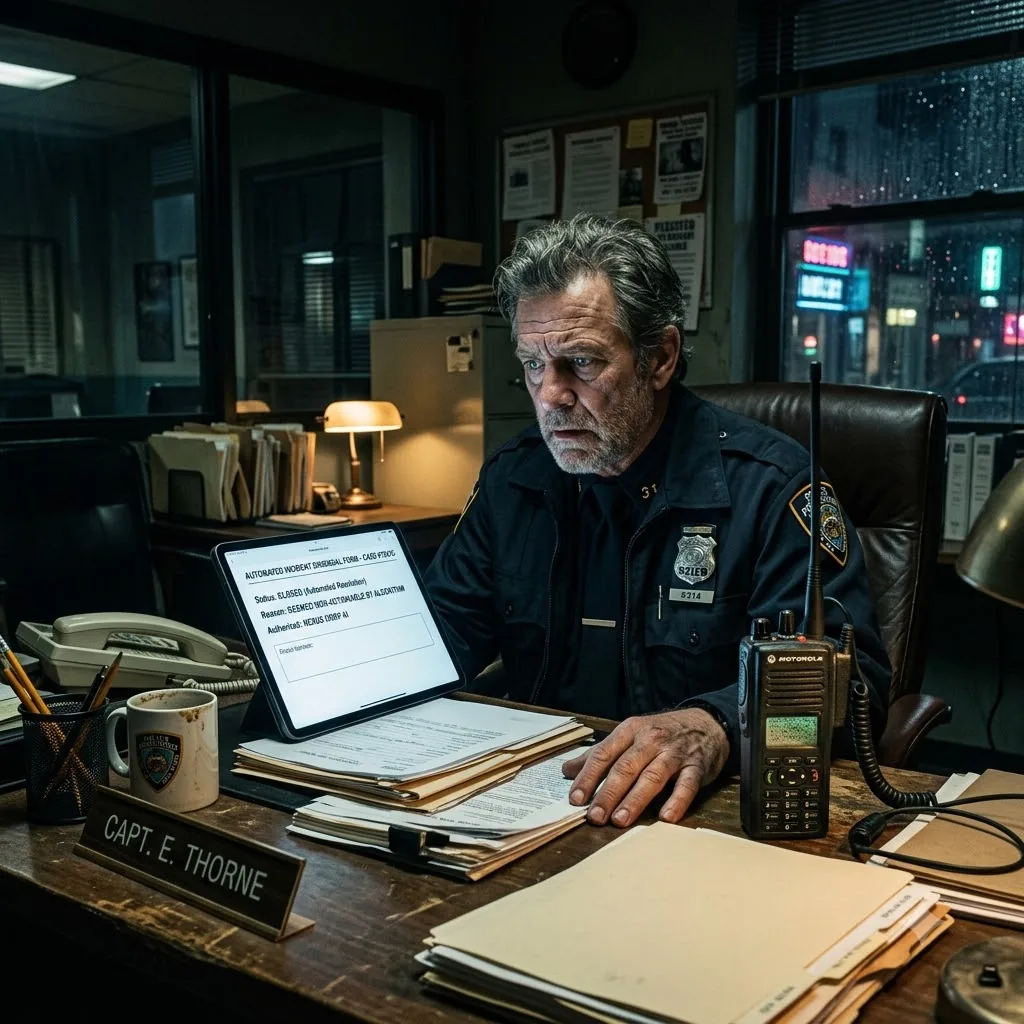
The fluorescent light above Captain Miller’s desk hummed a steady, irritating note, but it was the silence of the precinct that felt heaviest. He stared at the blue glare of his monitor. The automated HR portal blinked back at him, displaying a single, unread notification. The subject line was stripped of any human warmth, reading simply as a mandate for metric-based early separation. Attached was a digital form demanding his immediate electronic signature.
Thirty years of service to the city had been reduced to a sterile, auto-generated ultimatum. Miller scrolled down the document. The text outlined a severance package and his full pension, contingent on his agreement to vacate his position by the end of the shift. If he contested the automated decision, his retirement funds would be suspended pending a lengthy internal review. The system did not offer a reason, only a cold algorithmic certainty that his tenure was no longer required. His cursor hovered over the flashing green button marked with a command to accept and comply.
He leaned back in his leather chair, the worn springs groaning in the quiet room. On the wall to his left hung three decades of commendations, brass plaques, and framed photographs with mayors who had long since left office. The email felt like a standard corporate layoff, the kind of bloodless downsizing that happened in glass skyscrapers, not in a cinderblock precinct house smelling of stale coffee and floor wax. There was no supervisor in the room to shake his hand, no commanding officer to offer an explanation. There was only the blinking cursor and the threat to the financial security he had bled for.
Miller rubbed a hand over his face, feeling the grit of a twelve-hour shift in his eyes. He reached for his mug, finding the coffee inside stone cold. The screen saver attempted to activate, but he nudged the mouse to keep the separation document visible. It felt important to stare at the instrument of his professional death. The system displayed a countdown timer at the top right of the window, indicating he had exactly forty-five minutes to digitally sign the waiver before the pension suspension protocol initiated automatically.
He placed his hand over the mouse again. The green button seemed to glow brighter, urging him to surrender, to take the money and walk away from a badge that suddenly felt heavier on his chest.
Then the radio on his desk erupted in a burst of violent static.
The sudden noise shattered the bureaucratic dread suffocating the office. Dispatch broke through the crackle, the dispatcher’s voice tight with an urgency that commanded Miller’s immediate attention. It was a call for backup, a unit requesting additional cars for a non-compliant suspect at the intersection of Fourth and Elm, directly outside the precinct doors.
Miller stood up, his knees popping in protest. He stepped away from the monitor, leaving the separation agreement unsigned, and moved to the heavy window blinds. He pulled two slats apart with his fingers. The streetlights outside illuminated a chaotic scene spilling across the pavement. Two squad cars were parked at aggressive angles, their lightbars throwing violent splashes of red and blue across the brick facades of the local businesses.
Three patrol officers had a figure pressed hard against the hood of a cruiser. Even through the distorted glass and the strobing lights, Miller recognized the worn olive-green jacket and the panicked thrashing of the suspect. It was Malik. The teenager lived two blocks over, a kid Miller had watched grow up, a kid who swept the floors at the corner bodega and had never caught worse than a citation for skateboarding in the plaza.
Now, one of the officers was drawing a baton, the situation rapidly escalating beyond a standard street stop. Malik was shouting, his words muffled by the thick glass of the precinct window, but his body language screamed sheer terror. The officers were moving with a rigid, tactical aggression that made no sense for a neighborhood teenager.
The radio on Miller’s desk barked again. The unit outside reported the suspect was matching a flagged profile and requested clearance for hard restraints.
Miller turned back to his desk. The monitor was flashing, the countdown timer dipping below forty-three minutes. If he left the room, if he interfered with an active scene and let the clock expire, the automated system would vaporize the pension he had earned. The green signature button demanded his compliance.
He ignored the mouse. He grabbed his duty belt from the coat rack, the heavy leather snapping into place around his waist. He did not bother with his uniform jacket. He shoved his office door open, hitting the hallway at a dead sprint just as the dispatch channel issued the final clearance for the units outside.
The fluorescent light above Captain Miller’s desk hummed a steady, irritating note, but it was the silence of the precinct that felt heaviest. He stared at the blue glare of his monitor. The automated HR portal blinked back at him, displaying a single, unread notification. The subject line was stripped of any human warmth, reading simply as a mandate for metric-based early separation. Attached was a digital form demanding his immediate electronic signature.
Thirty years of service to the city had been reduced to a sterile, auto-generated ultimatum. Miller scrolled down the document. The text outlined a severance package and his full pension, contingent on his agreement to vacate his position by the end of the shift. If he contested the automated decision, his retirement funds would be suspended pending a lengthy internal review. The system did not offer a reason, only a cold algorithmic certainty that his tenure was no longer required. His cursor hovered over the flashing green button marked with a command to accept and comply.
He leaned back in his leather chair, the worn springs groaning in the quiet room. On the wall to his left hung three decades of commendations, brass plaques, and framed photographs with mayors who had long since left office. The email felt like a standard corporate layoff, the kind of bloodless downsizing that happened in glass skyscrapers, not in a cinderblock precinct house smelling of stale coffee and floor wax. There was no supervisor in the room to shake his hand, no commanding officer to offer an explanation. There was only the blinking cursor and the threat to the financial security he had bled for.
Miller rubbed a hand over his face, feeling the grit of a twelve-hour shift in his eyes. He reached for his mug, finding the coffee inside stone cold. The screen saver attempted to activate, but he nudged the mouse to keep the separation document visible. It felt important to stare at the instrument of his professional death. The system displayed a countdown timer at the top right of the window, indicating he had exactly forty-five minutes to digitally sign the waiver before the pension suspension protocol initiated automatically.
He placed his hand over the mouse again. The green button seemed to glow brighter, urging him to surrender, to take the money and walk away from a badge that suddenly felt heavier on his chest.
Then the radio on his desk erupted in a burst of violent static.
The sudden noise shattered the bureaucratic dread suffocating the office. Dispatch broke through the crackle, the dispatcher’s voice tight with an urgency that commanded Miller’s immediate attention. It was a call for backup, a unit requesting additional cars for a non-compliant suspect at the intersection of Fourth and Elm, directly outside the precinct doors.
Miller stood up, his knees popping in protest. He stepped away from the monitor, leaving the separation agreement unsigned, and moved to the heavy window blinds. He pulled two slats apart with his fingers. The streetlights outside illuminated a chaotic scene spilling across the pavement. Two squad cars were parked at aggressive angles, their lightbars throwing violent splashes of red and blue across the brick facades of the local businesses.
Three patrol officers had a figure pressed hard against the hood of a cruiser. Even through the distorted glass and the strobing lights, Miller recognized the worn olive-green jacket and the panicked thrashing of the suspect. It was Malik. The teenager lived two blocks over, a kid Miller had watched grow up, a kid who swept the floors at the corner bodega and had never caught worse than a citation for skateboarding in the plaza.
Now, one of the officers was drawing a baton, the situation rapidly escalating beyond a standard street stop. Malik was shouting, his words muffled by the thick glass of the precinct window, but his body language screamed sheer terror. The officers were moving with a rigid, tactical aggression that made no sense for a neighborhood teenager.
The radio on Miller’s desk barked again. The unit outside reported the suspect was matching a flagged profile and requested clearance for hard restraints.
Miller turned back to his desk. The monitor was flashing, the countdown timer dipping below forty-three minutes. If he left the room, if he interfered with an active scene and let the clock expire, the automated system would vaporize the pension he had earned. The green signature button demanded his compliance.
He ignored the mouse. He grabbed his duty belt from the coat rack, the heavy leather snapping into place around his waist. He did not bother with his uniform jacket. He shoved his office door open, hitting the hallway at a dead sprint just as the dispatch channel issued the final clearance for the units outside.