Story code: ST-001579
Part 1: The One Name Not Answering
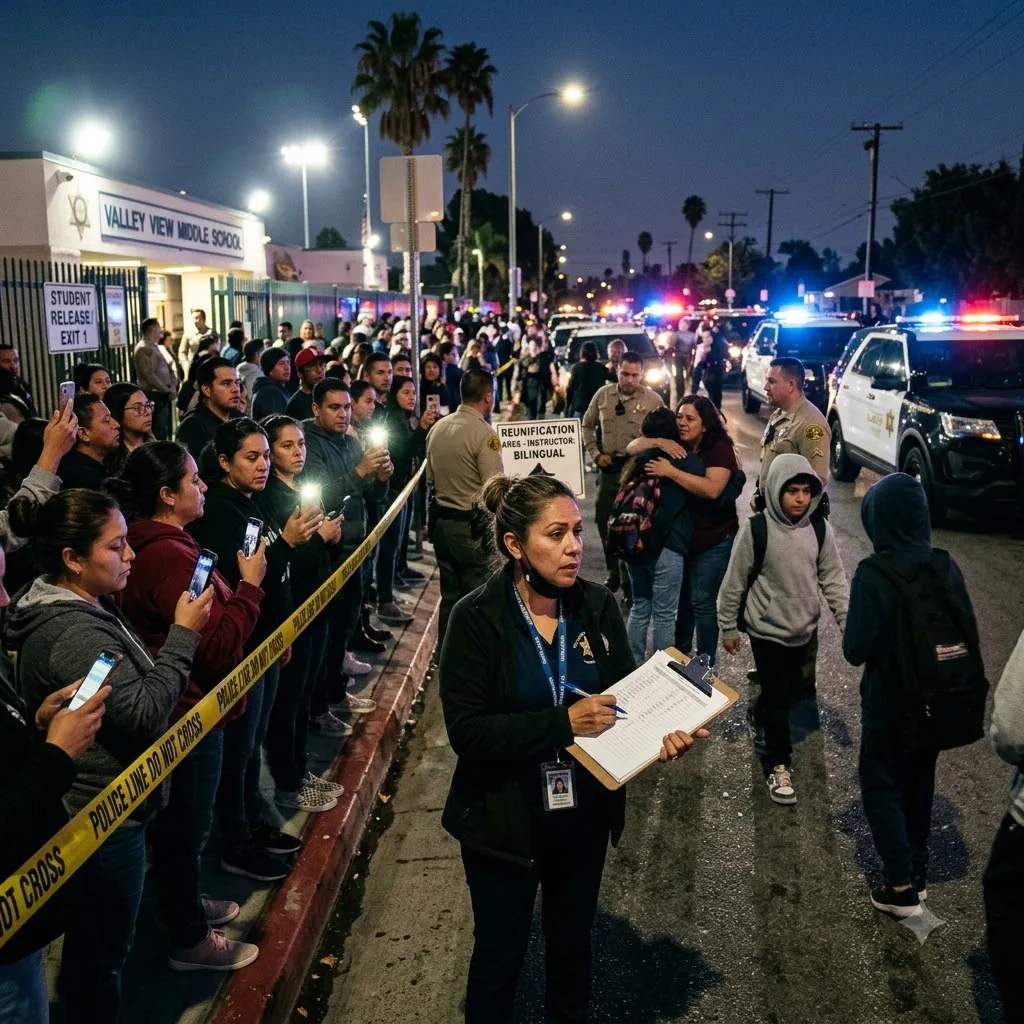
The floodlights turned the front of Martín Luther King Jr. Middle into a white, raw stage. Yellow tape sagged between portable barricades, deputies kept one gloved hand out toward the parents pressing forward, and every few seconds another phone lifted above the crowd to record somebody crying, shouting, or demanding a name.
Elena Vera stood at the folding table under the overhang with a marker in one hand and a packet of release sheets going soft in the other. The lockdown had been lifted twenty-two minutes ago, but nothing about the scene felt over. Kids came through the cafeteria doors in clumps with their backpacks hanging open, some red-eyed, some weirdly loud, some trying to grin like they had just survived a fire drill and won. Adults snatched them close, signed where told, then turned immediately toward the deputies with the kind of anger that needed a target.
“One at a time,” Elena said for what felt like the hundredth time. “Student name first. I need the student name before I can release.”
A father in a paint-spattered work shirt slapped his ID down so hard it skidded off the table. “My daughter has been in there for two hours.”
“I understand. Student name.”
“You people understand nothing.”
She wrote the name, checked the list, flagged a campus aide, and kept her voice flat enough to hold. Around her, everyone else was fraying. The assistant principal had lost her blazer somewhere and now had a blanket around one sixth grader’s shoulders while trying to explain district procedure into two different phones. A secretary was crying behind the second table and pretending she was not. One deputy kept repeating that there was no active threat, while another deputy’s body language told every parent the night had not become safe enough for anyone to relax.
Rumor moved faster than the line. Elena caught fragments as they passed. A weapon. No, a hoax. No, a man near the fence. No, somebody saw blood in the science hall. By the time each story reached the table, it had already changed shape. She did not touch any of it. Her job was names, signatures, custody restrictions, emergency contacts, and making sure no child vanished into the wrong car because everyone was rattled.
A grandmother arrived without her glasses and gave Elena the wrong birthdate twice. A mother tried to collect a boy whose father had a court order on file that had not been updated in the office software. Elena took the paper copy from the red binder, checked the seal, and held the line while the mother swore at her in a voice rough with fear. A little girl in cat socks stood beside the table hugging a lunchbox to her chest, waiting for an aunt who was stuck behind the police closure on Santa Paloma Avenue.
Elena found a spare juice box from the nurse’s stash and crouched to hand it over. When she stood again, she scanned the release board clipped to the easel.
Most of the yellow sticky notes had been crossed through. Released. Released. Released.
One stayed clean.
MATEO R.
She looked back at the cafeteria doors just as a paraeducator came out with the last two boys from seventh grade. Neither was Mateo. Elena checked the time on her phone, then the reunification sheet, then the handwritten overflow list started after the printer jammed during the lockdown. Mateo had homeroom in B hall. Authorized pickup listed an older sister after six, then a mother whose number had gone straight to voicemail earlier in the afternoon when the office had been trying to confirm contact. Nothing unusual there. Too many families had numbers that changed faster than records did.
She raised a hand at Ms. Alvarez, who was walking a student toward the buses that had been held in place. “Have you seen Mateo Ramirez tonight.”
Ms. Alvarez shook her head without slowing. “Thought he was with your group.”
“He isn’t.”
Elena checked the cafeteria again. The room had mostly emptied, leaving paper milk cartons, abandoned jackets, and two counselors talking low near the serving line. She crossed to the doorway and caught one of them. “Mateo from seven-two. Did he leave with anyone from student support.”
The counselor frowned, already searching memory. “Small kid, gray hoodie, chipped front tooth.”
“Yes.”
“He was here when they first brought B hall in. Quiet. By the wall. Then I got pulled to another table. I assumed he was released.”
Assumed. Tonight was built out of assumptions and shouted corrections.
Elena stepped aside from the doorway and dialed Mateo’s cell, knowing before she lifted the phone that she would get voicemail. The call rang once, then cut. A second later the screen lit in her hand with an incoming text from his number.
don’t let
That was all.
Not even a period. The bubble sat there under the school district wallpaper of blue mountains, unfinished and somehow worse for being unfinished. Elena called again immediately. This time the call went straight to voicemail.
She turned back to the tables. The release line had shortened to stragglers and the angriest parents, the ones who wanted an explanation more than pickup. Near the barricade, a deputy was speaking into his shoulder mic while staring toward the side alley between the school and Iglesia de la Luz. Across that alley, the church annex sat dark except for a light on at ground level near the back.
Elena looked at Mateo’s note again. don’t let.
“Rosa,” she called to the attendance clerk, handing over her packet. “Cover this for two minutes. Mateo Ramirez is unaccounted for.”
Rosa’s face changed at once. “Did you tell Bell.”
“I’m telling him now. If his sister shows, hold her here.”
Assistant Principal Bell was in the knot of adults near the main doors, trying to sound calm enough for everybody else. Elena caught his sleeve, gave him the name, the unreleased status, the text. He reached for his radio.
“Deputy Mendez should go with you,” he said.
But Mendez was already being dragged toward a screaming man at the barricade, and Elena did not wait for the rest. She moved along the edge of the building, past the row of confiscated scooters and the dumpster enclosure, shoes slipping once on a patch of spilled sports drink glittering under the security light. The alley smelled like wet cardboard and bleach. Somewhere out front a mother yelled that this district would hear from her lawyer, and somewhere behind Elena a radio crackled hard enough to blur the words.
The annex door at the back stood open by less than a foot. Bright strips of laundry room light cut across the concrete. Elena slowed only long enough to knock once against the metal frame.
“Mateo,” she said. “It’s Ms. Vera. You need to answer me right now.”
Nothing.
She pushed the door wider. Inside, industrial washers lined one wall, one lid still up. A rolling cart had tipped on its side, towels spilled half across the floor. There was a phone under the bench, screen cracked, still lit. Past it, near the far sink, a shape moved, then another, and Elena stepped in fast with his name already in her mouth.
“Mateo, get away from that and let me see your hands, I need you to-”
She stopped.
The floodlights turned the front of Martín Luther King Jr. Middle into a white, raw stage. Yellow tape sagged between portable barricades, deputies kept one gloved hand out toward the parents pressing forward, and every few seconds another phone lifted above the crowd to record somebody crying, shouting, or demanding a name.
Elena Vera stood at the folding table under the overhang with a marker in one hand and a packet of release sheets going soft in the other. The lockdown had been lifted twenty-two minutes ago, but nothing about the scene felt over. Kids came through the cafeteria doors in clumps with their backpacks hanging open, some red-eyed, some weirdly loud, some trying to grin like they had just survived a fire drill and won. Adults snatched them close, signed where told, then turned immediately toward the deputies with the kind of anger that needed a target.
“One at a time,” Elena said for what felt like the hundredth time. “Student name first. I need the student name before I can release.”
A father in a paint-spattered work shirt slapped his ID down so hard it skidded off the table. “My daughter has been in there for two hours.”
“I understand. Student name.”
“You people understand nothing.”
She wrote the name, checked the list, flagged a campus aide, and kept her voice flat enough to hold. Around her, everyone else was fraying. The assistant principal had lost her blazer somewhere and now had a blanket around one sixth grader’s shoulders while trying to explain district procedure into two different phones. A secretary was crying behind the second table and pretending she was not. One deputy kept repeating that there was no active threat, while another deputy’s body language told every parent the night had not become safe enough for anyone to relax.
Rumor moved faster than the line. Elena caught fragments as they passed. A weapon. No, a hoax. No, a man near the fence. No, somebody saw blood in the science hall. By the time each story reached the table, it had already changed shape. She did not touch any of it. Her job was names, signatures, custody restrictions, emergency contacts, and making sure no child vanished into the wrong car because everyone was rattled.
A grandmother arrived without her glasses and gave Elena the wrong birthdate twice. A mother tried to collect a boy whose father had a court order on file that had not been updated in the office software. Elena took the paper copy from the red binder, checked the seal, and held the line while the mother swore at her in a voice rough with fear. A little girl in cat socks stood beside the table hugging a lunchbox to her chest, waiting for an aunt who was stuck behind the police closure on Santa Paloma Avenue.
Elena found a spare juice box from the nurse’s stash and crouched to hand it over. When she stood again, she scanned the release board clipped to the easel.
Most of the yellow sticky notes had been crossed through. Released. Released. Released.
One stayed clean.
MATEO R.
She looked back at the cafeteria doors just as a paraeducator came out with the last two boys from seventh grade. Neither was Mateo. Elena checked the time on her phone, then the reunification sheet, then the handwritten overflow list started after the printer jammed during the lockdown. Mateo had homeroom in B hall. Authorized pickup listed an older sister after six, then a mother whose number had gone straight to voicemail earlier in the afternoon when the office had been trying to confirm contact. Nothing unusual there. Too many families had numbers that changed faster than records did.
She raised a hand at Ms. Alvarez, who was walking a student toward the buses that had been held in place. “Have you seen Mateo Ramirez tonight.”
Ms. Alvarez shook her head without slowing. “Thought he was with your group.”
“He isn’t.”
Elena checked the cafeteria again. The room had mostly emptied, leaving paper milk cartons, abandoned jackets, and two counselors talking low near the serving line. She crossed to the doorway and caught one of them. “Mateo from seven-two. Did he leave with anyone from student support.”
The counselor frowned, already searching memory. “Small kid, gray hoodie, chipped front tooth.”
“Yes.”
“He was here when they first brought B hall in. Quiet. By the wall. Then I got pulled to another table. I assumed he was released.”
Assumed. Tonight was built out of assumptions and shouted corrections.
Elena stepped aside from the doorway and dialed Mateo’s cell, knowing before she lifted the phone that she would get voicemail. The call rang once, then cut. A second later the screen lit in her hand with an incoming text from his number.
don’t let
That was all.
Not even a period. The bubble sat there under the school district wallpaper of blue mountains, unfinished and somehow worse for being unfinished. Elena called again immediately. This time the call went straight to voicemail.
She turned back to the tables. The release line had shortened to stragglers and the angriest parents, the ones who wanted an explanation more than pickup. Near the barricade, a deputy was speaking into his shoulder mic while staring toward the side alley between the school and Iglesia de la Luz. Across that alley, the church annex sat dark except for a light on at ground level near the back.
Elena looked at Mateo’s note again. don’t let.
“Rosa,” she called to the attendance clerk, handing over her packet. “Cover this for two minutes. Mateo Ramirez is unaccounted for.”
Rosa’s face changed at once. “Did you tell Bell.”
“I’m telling him now. If his sister shows, hold her here.”
Assistant Principal Bell was in the knot of adults near the main doors, trying to sound calm enough for everybody else. Elena caught his sleeve, gave him the name, the unreleased status, the text. He reached for his radio.
“Deputy Mendez should go with you,” he said.
But Mendez was already being dragged toward a screaming man at the barricade, and Elena did not wait for the rest. She moved along the edge of the building, past the row of confiscated scooters and the dumpster enclosure, shoes slipping once on a patch of spilled sports drink glittering under the security light. The alley smelled like wet cardboard and bleach. Somewhere out front a mother yelled that this district would hear from her lawyer, and somewhere behind Elena a radio crackled hard enough to blur the words.
The annex door at the back stood open by less than a foot. Bright strips of laundry room light cut across the concrete. Elena slowed only long enough to knock once against the metal frame.
“Mateo,” she said. “It’s Ms. Vera. You need to answer me right now.”
Nothing.
She pushed the door wider. Inside, industrial washers lined one wall, one lid still up. A rolling cart had tipped on its side, towels spilled half across the floor. There was a phone under the bench, screen cracked, still lit. Past it, near the far sink, a shape moved, then another, and Elena stepped in fast with his name already in her mouth.
“Mateo, get away from that and let me see your hands, I need you to-”
She stopped.