Story code: ST-000795
Part 1: Ash and Condensation
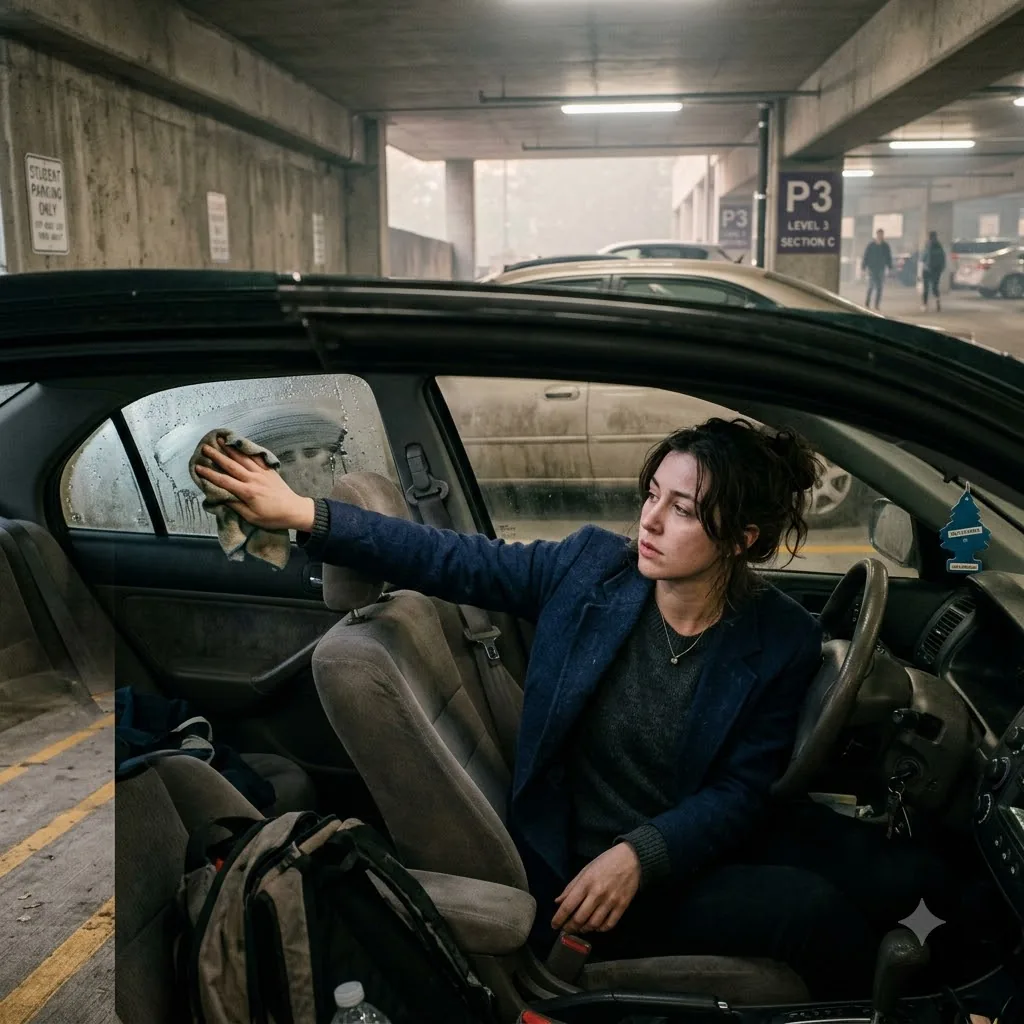
The microfiber cloth squeaked against the inside of the Honda’s windshield, wiping away the thick condensation of her breath. Sarah scrubbed the cold glass until the sprawling brick facade of the university’s administrative center came back into sharp focus. She tossed the damp rag into the passenger seat footwell, burying it under a stack of graded ecology midterms. Her thrifted navy blazer lay draped over the steering wheel, dusted with a fine layer of white soot that seemed to have permeated everything since the canyon fires. She picked at a prominent flake of ash on the lapel, flicking it onto the rubber floor mat before sliding her arms into the stiff sleeves.
The rearview mirror framed a face that looked entirely too exhausted for a Tuesday morning. She applied a heavy layer of concealer under her eyes, aggressively blending it to hide the dark shadows earned from four nights of sleeping at a rest stop on Interstate 8. She checked her teeth for lipstick and smoothed her hair into a tight, severe bun. As an adjunct professor, she had an image to maintain. The university expected its faculty to embody academic stability, not live out of the trunks of their sedans because their apartment complex had burned to the foundation. Maintaining the illusion of normalcy was her only defense against the crushing reality of her sudden homelessness.
She grabbed her leather satchel and locked the car doors twice, testing the handle to ensure her remaining worldly possessions were secure. Her sleeping bag was shoved deep into the spare tire compartment, utterly invisible to any passing campus security guards. The morning air still tasted of burnt pine and scorched earth, a bitter reminder of the inferno that had swept through the valley over the weekend. She crossed the faculty parking lot, her footsteps muffled by the layer of ash coating the asphalt. Students milled about the quad in pristine athletic wear, complaining loudly about the lingering smell of smoke. They were completely oblivious to the professor walking past them with soot still embedded in her cuticles.
The polished oak doors of the Financial Services building swung open with a heavy, expensive thud. Sarah stepped into the climate-controlled lobby, her worn loafers sinking into the thick carpet. She approached the reception desk, keeping her posture rigidly straight to project confidence. She gave her name and stated she had a nine o’clock appointment regarding the faculty disaster relief program.
The receptionist did not look up from her dual monitors, simply handing over a visitor badge and pointing toward a set of frosted glass doors. Sarah clipped the badge to her blazer, careful to position it over a small coffee stain on the pocket. She sat on the edge of a leather sofa, clutching her satchel to her chest. An email from the provost had circulated yesterday, a beacon of sudden hope offering emergency grants for staff displaced by the fires. It was the only reason she had not abandoned her teaching contract and driven three states away to move back into her childhood bedroom. The promise of immediate, no-strings-attached financial relief had kept her tethered to the campus.
A man in a sharply tailored charcoal suit emerged from the frosted doors, his smile practiced and blindingly bright. He introduced himself as Vance, the director of emergency allocations. He guided her down a long, eerily quiet corridor lined with abstract art, his leather shoes clicking sharply against the hardwood floor. He gestured for her to take a seat in a spacious corner office, one that featured floor-to-ceiling windows overlooking the very canyon that was currently reduced to gray powder and charred stumps.
Vance sat behind a sprawling mahogany desk, folding his hands over a thick manila folder. He expressed deep condolences for her loss, his voice dipping into a practiced register of corporate empathy. He spoke at length about the university’s commitment to its educators, emphasizing that no member of the faculty family should have to navigate a devastating crisis alone. The institution, he assured her, was prepared to step in where insurance companies and federal agencies were currently lagging.
Sarah focused entirely on the manila folder, her pulse thrumming heavily in her throat. A grant would mean a deposit on a new apartment, a return to hot showers, and the ability to grade papers without using the dim dome light of her Honda. She nodded along to his reassuring speech, pressing her hands firmly against her knees to stop them from shaking with anticipated relief.
Vance opened the folder, smoothing out a thick stack of documents printed on heavy-stock paper. He explained that the relief initiative was designed to eliminate immediate burdens, streamlining the recovery process for highly valued academics. He did not read the terms aloud, nor did he offer a summary of the dense, single-spaced clauses filling the pages.
Instead, he rotated the entire stack toward her, the paper rasping against the polished wood of the desk. He uncapped a heavy gold fountain pen and placed it gently on top of the documents. His manicured index finger slid down the margin of the first page, stopping with a deliberate, echoing tap right beside a blank signature line.
The microfiber cloth squeaked against the inside of the Honda’s windshield, wiping away the thick condensation of her breath. Sarah scrubbed the cold glass until the sprawling brick facade of the university’s administrative center came back into sharp focus. She tossed the damp rag into the passenger seat footwell, burying it under a stack of graded ecology midterms. Her thrifted navy blazer lay draped over the steering wheel, dusted with a fine layer of white soot that seemed to have permeated everything since the canyon fires. She picked at a prominent flake of ash on the lapel, flicking it onto the rubber floor mat before sliding her arms into the stiff sleeves.
The rearview mirror framed a face that looked entirely too exhausted for a Tuesday morning. She applied a heavy layer of concealer under her eyes, aggressively blending it to hide the dark shadows earned from four nights of sleeping at a rest stop on Interstate 8. She checked her teeth for lipstick and smoothed her hair into a tight, severe bun. As an adjunct professor, she had an image to maintain. The university expected its faculty to embody academic stability, not live out of the trunks of their sedans because their apartment complex had burned to the foundation. Maintaining the illusion of normalcy was her only defense against the crushing reality of her sudden homelessness.
She grabbed her leather satchel and locked the car doors twice, testing the handle to ensure her remaining worldly possessions were secure. Her sleeping bag was shoved deep into the spare tire compartment, utterly invisible to any passing campus security guards. The morning air still tasted of burnt pine and scorched earth, a bitter reminder of the inferno that had swept through the valley over the weekend. She crossed the faculty parking lot, her footsteps muffled by the layer of ash coating the asphalt. Students milled about the quad in pristine athletic wear, complaining loudly about the lingering smell of smoke. They were completely oblivious to the professor walking past them with soot still embedded in her cuticles.
The polished oak doors of the Financial Services building swung open with a heavy, expensive thud. Sarah stepped into the climate-controlled lobby, her worn loafers sinking into the thick carpet. She approached the reception desk, keeping her posture rigidly straight to project confidence. She gave her name and stated she had a nine o’clock appointment regarding the faculty disaster relief program.
The receptionist did not look up from her dual monitors, simply handing over a visitor badge and pointing toward a set of frosted glass doors. Sarah clipped the badge to her blazer, careful to position it over a small coffee stain on the pocket. She sat on the edge of a leather sofa, clutching her satchel to her chest. An email from the provost had circulated yesterday, a beacon of sudden hope offering emergency grants for staff displaced by the fires. It was the only reason she had not abandoned her teaching contract and driven three states away to move back into her childhood bedroom. The promise of immediate, no-strings-attached financial relief had kept her tethered to the campus.
A man in a sharply tailored charcoal suit emerged from the frosted doors, his smile practiced and blindingly bright. He introduced himself as Vance, the director of emergency allocations. He guided her down a long, eerily quiet corridor lined with abstract art, his leather shoes clicking sharply against the hardwood floor. He gestured for her to take a seat in a spacious corner office, one that featured floor-to-ceiling windows overlooking the very canyon that was currently reduced to gray powder and charred stumps.
Vance sat behind a sprawling mahogany desk, folding his hands over a thick manila folder. He expressed deep condolences for her loss, his voice dipping into a practiced register of corporate empathy. He spoke at length about the university’s commitment to its educators, emphasizing that no member of the faculty family should have to navigate a devastating crisis alone. The institution, he assured her, was prepared to step in where insurance companies and federal agencies were currently lagging.
Sarah focused entirely on the manila folder, her pulse thrumming heavily in her throat. A grant would mean a deposit on a new apartment, a return to hot showers, and the ability to grade papers without using the dim dome light of her Honda. She nodded along to his reassuring speech, pressing her hands firmly against her knees to stop them from shaking with anticipated relief.
Vance opened the folder, smoothing out a thick stack of documents printed on heavy-stock paper. He explained that the relief initiative was designed to eliminate immediate burdens, streamlining the recovery process for highly valued academics. He did not read the terms aloud, nor did he offer a summary of the dense, single-spaced clauses filling the pages.
Instead, he rotated the entire stack toward her, the paper rasping against the polished wood of the desk. He uncapped a heavy gold fountain pen and placed it gently on top of the documents. His manicured index finger slid down the margin of the first page, stopping with a deliberate, echoing tap right beside a blank signature line.