Story code: ST-000795
Part 2: The Domicile Clause
Sarah stared at the heavy gold fountain pen resting on top of the dense paperwork. It was colder than she expected, chilling her ash-stained fingertips as she picked it up. The ink nib hovered a fraction of an inch above the crisp, white page. Vance sat perfectly still across the mahogany desk, his practiced smile unwavering, projecting the calm, expectant patience of a man who knew his leverage was absolute.
She wanted to sign. Every exhausted, aching muscle in her back screamed at her to scrawl her name, take the promised relief check, and drive straight to a motel with a hot shower and a mattress that didn’t fold down over a spare tire.
But Sarah was an ecologist. Her entire academic career was built on observing the small, easily overlooked anomalies that signaled a broader ecosystem collapse. And the paragraph squeezed directly above the signature line was a cluster of dense, hostile legalese that made the hairs on her arms stand up.
She lowered the pen. Her eyes tracked back to the top of the page.
“Is there a problem, Dr. Hayes?” Vance asked, his voice dripping with synthetic concern. He subtly adjusted his French cuffs, revealing a heavy silver chronometer that likely cost more than her annual adjunct salary. “I have three more displaced faculty members scheduled before lunch.”
“Just reading,” Sarah murmured, her heart kicking against her ribs. She scanned the document, skipping the bold headers and focusing intently on the single-spaced text.
The word “grant” did not appear a single time in the ten-page document. The header proudly proclaimed it a “Faculty Retention and Stabilization Advance.”
She read the disbursement terms, the legalese blurring slightly before snapping into horrifying focus. *Funds disbursed are to be recouped via a twenty-five percent garnishment of all future instructional wages, commencing the immediate following academic term.*
It was a payday loan. The university was leveraging the wildfire to trap its lowest-paid educators in a cycle of debt. As an adjunct, her classes weren’t even guaranteed. If enrollment dropped, or if the department chair simply favored someone else, her spring classes could be canceled. The contract stated that if employment was terminated or reduced, the balance became due immediately, enforceable by third-party collections.
She scanned further down, a cold dread pooling in her stomach, and found Clause 8.2.
*To comply with University Risk Management protocols regarding the disbursement of emergency capital, the Recipient must provide verifiable proof of a secure, permanent or temporary physical domicile. Funds cannot be remitted to PO Boxes, commercial mail drops, or transient accommodations.*
“Transient accommodations,” she read aloud, her voice tight.
Vance offered a small, sympathetic sigh, leaning back in his leather chair. “Standard liability boilerplate, Sarah. The Board of Regents is incredibly generous, but they have a fiduciary duty. We simply need to ensure our faculty are in stable environments before we release the funds. We can’t have university money going toward… well, erratic living situations. It’s an optics issue, primarily. We need our educators rested and housed.”
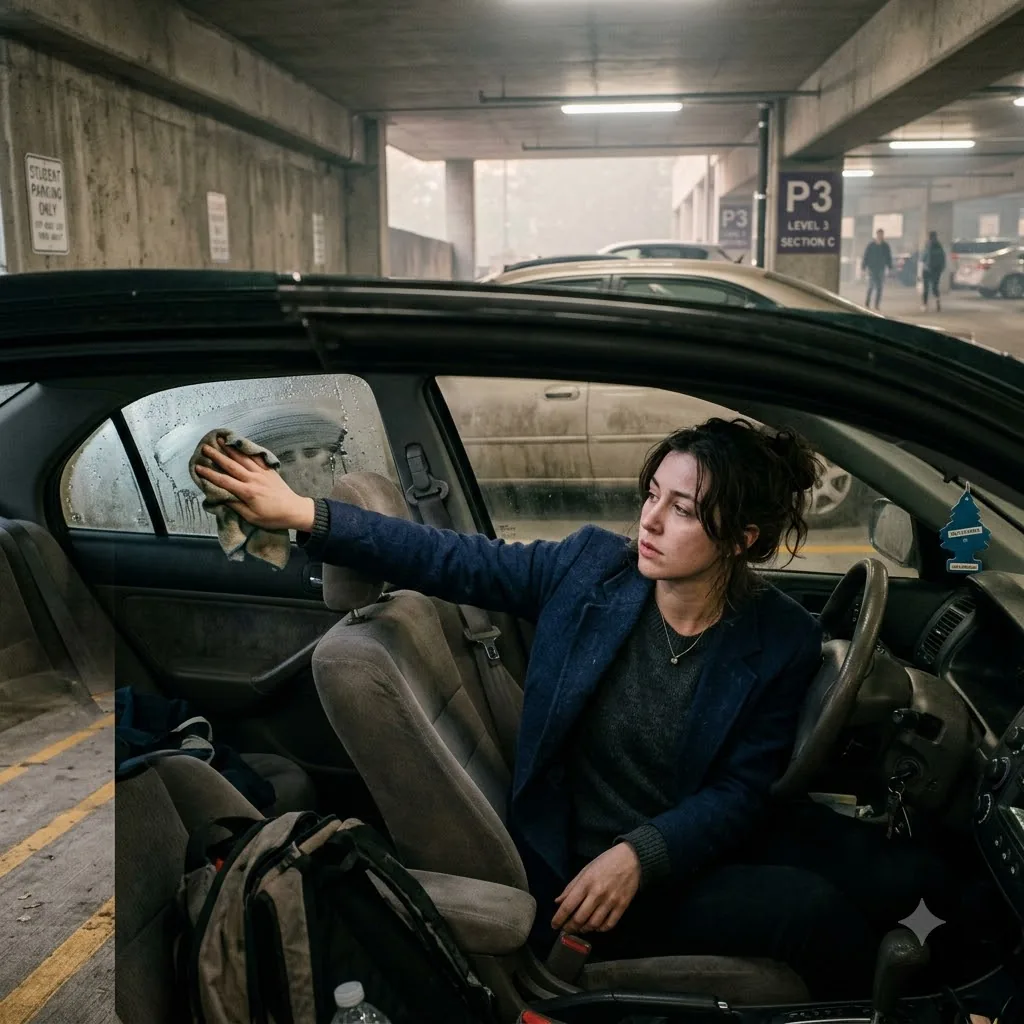
He said it so reasonably, as if he weren’t talking to a woman who had spent the last four nights using a stack of ecology midterms as a pillow.
“What qualifies as verifiable proof?” she asked, keeping her eyes fixed on the paper so Vance wouldn’t see the panic blooming in her pupils.
“Oh, the usual,” Vance said, waving a manicured hand. “A signed lease agreement for your new temporary rental. A utility bill in your name. Just something showing you have a roof over your head that isn’t liable to collapse. Once you upload that to the portal, I countersign, and the funds are wired within the hour.”
Sarah’s grip tightened on the gold pen until her knuckles turned white. She couldn’t provide a lease. She had exactly forty-two dollars in her checking account. She couldn’t even afford an application fee for a new apartment, let alone a security deposit. The relief money was supposed to be the safety net that *got* her the apartment.
“What if the housing market is currently impacted by the fires?” Sarah asked carefully, trying to keep her breathing shallow and even. “What if a faculty member is staying with… friends?”
Vance’s smile thinned, losing a fraction of its wattage. “Then the friend would need to provide a notarized letter of residency, along with their own utility bill, subjecting them to a background check by our housing liaison. It’s a bit of a bureaucratic headache, frankly. But you understand our position. We have a prestigious reputation to maintain. The university cannot employ vagrants, Sarah. The stability clause in your teaching contract demands a certain standard of living to maintain your position in the classroom.”
The threat was elegantly wrapped in corporate politeness, but it was unmistakable. If the university found out she was homeless, she wouldn’t just lose this predatory loan. She would lose her adjunct contract altogether. They would fire her for being destitute.
“Of course,” Sarah managed to say, her throat perfectly dry. “I wouldn’t want to violate the stability clause.”
“Exactly.” Vance leaned forward, tapping the desk. “Now, the allocation pool is finite. It’s first-come, first-served, and as I mentioned, my schedule is packed today. I strongly suggest you sign the acceptance of terms now to reserve your allocation.”
“But I don’t have my new lease agreement on me,” she lied, her voice remarkably steady. “I haven’t finalized the paperwork with the landlord.”
“That’s perfectly fine. Sign the advance agreement today to lock in the funds. You have until nine o’clock tomorrow morning to upload the proof of domicile to the portal. If the system doesn’t receive a verified lease or utility bill by 0900 hours, the contract is voided, and your allocation goes to the next person in line.”
He pushed the document a millimeter closer to her.
If she signed it, she was legally bound to the twenty-five percent wage garnishment the moment the funds cleared. But if she didn’t provide a lease by tomorrow morning, she got nothing, and Vance might start asking uncomfortable questions about where exactly she was sleeping.
She looked out the floor-to-ceiling windows behind Vance. Plumes of gray smoke still rose from the distant canyons, marking the exact spot where her apartment building used to stand. Her Honda was parked three lots away, hiding her sleeping bag and her soot-stained life.
Sarah pressed the gold nib to the paper. The ink bled into the heavy stock, thick and black, as she signed her name on the dotted line.
Vance beamed, sliding the documents back across the mahogany surface. “Excellent. I look forward to seeing your lease in the portal tomorrow morning, Dr. Hayes. Let’s get you back on your feet.”