Story code: ST-001455
Part 1: The Drop-Off
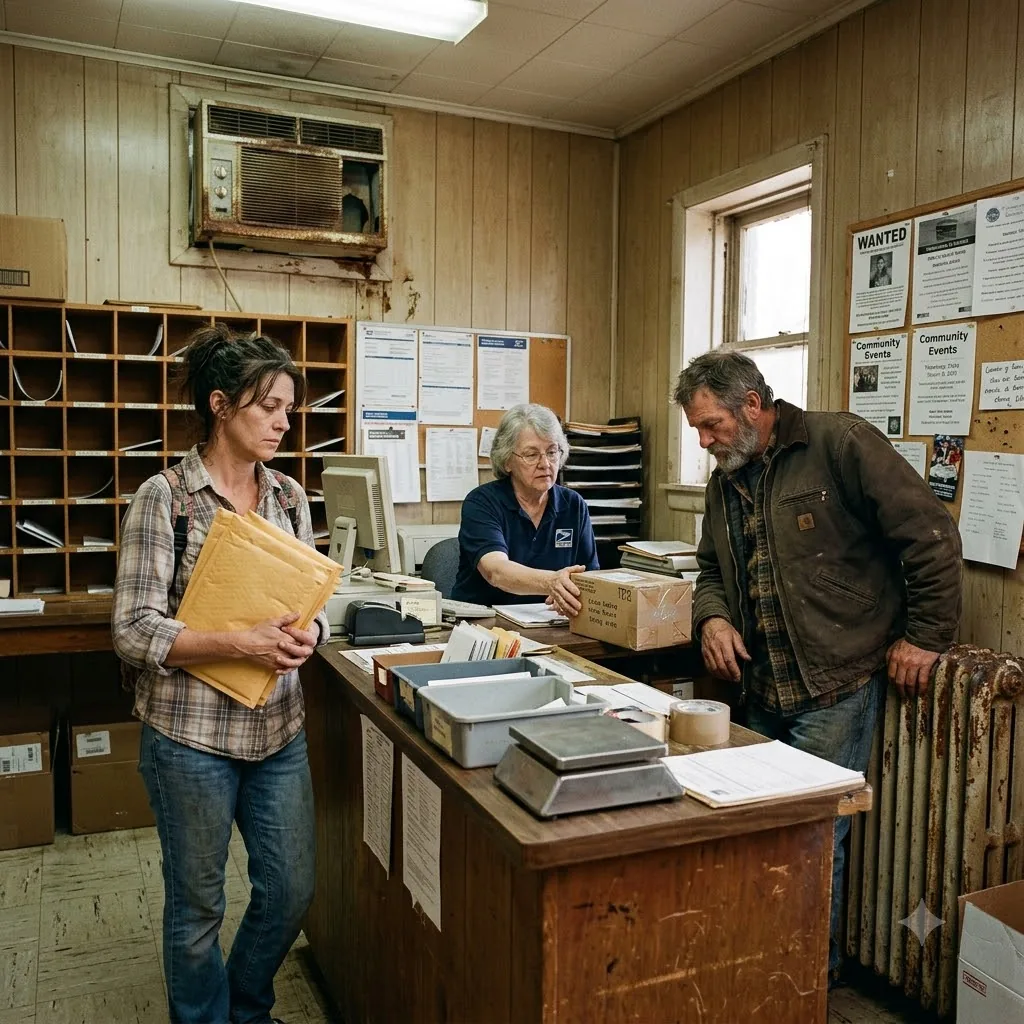
The cracked asphalt of the Oakhaven post office parking lot radiated the late-afternoon heat right through the soles of Beth’s sneakers. The industrial fan in the corner of the lobby did nothing but push hot, stale air over the peeling linoleum. Beth adjusted the heavy canvas tote bag on her shoulder, feeling the sharp corners of the six disguised bubble-mailers pressing against her ribs through her thin blue scrubs. Above the single open counter, a piece of neon poster board shouted EXACT CHANGE ONLY in faded red marker, taped directly over a printed notice that the town’s only ATM had been permanently removed by the bank.
She needed to drop the packages and get to the clinic for her shift. Every minute she spent standing in the stagnant air of the lobby was a minute her anxiety tightened its grip. Instead of a quick drop-off, she was stuck three paces behind Dwayne, a former machinist from the shuttered auto plant, who was currently leaning his elbows on the counter and preventing the line from moving.
Dwayne looked noticeably thinner than the last time Beth had seen him at the discount grocery store. His steel-toed work boots were scuffed down to the bare metal, and the collar of his plaid shirt was frayed to mere threads. He tapped a grease-stained finger against a folded newspaper on the counter, talking to Stan, the postmaster, in a voice that carried perfectly through the dead, humid air of the room.
Dwayne was talking about the new state tip line. Ten thousand dollars for a confirmed report. Ten thousand dollars, Dwayne kept repeating, letting the number hang in the air like absolute salvation. He told Stan about how the severance pay from the plant had dried up months ago, how the price of basic groceries kept climbing out of reach, how a man could fix a lot of ruin in his life with a stack of cash like that. The desperation in his posture was obvious. The hollow look in his eyes spoke of empty cupboards, past-due utility notices, and the crushing weight of a town that had entirely run out of second chances. He was a man pushed to the absolute edge of his finances, looking for any lifeline to keep his head above water.
Beth tightened her grip on her tote bag. The mailers inside felt suddenly heavier, as if they were generating their own heat. Each one was carefully wrapped, meticulously taped, and bore the legally required return address of the out-of-state NGO she was secretly supplying. She had disguised them the best she could, burying them beneath layers of ordinary thrift-store returns and bulky old catalogs, but the mandatory labeling was a glaring, terrifying vulnerability.
Stan nodded slowly at Dwayne, stamping a stack of outgoing letters with agonizing lethargy. He agreed that ten thousand was a lot of money, enough to make a man look twice at his neighbors. Dwayne chuckled, a dry and desperate sound, and turned his head just enough to acknowledge Beth standing behind him.
He gave her a tired nod, noting her faded scrubs. He told her she was one of the good ones, working long hours at the clinic while the rest of the town went to rot. Beth forced a tight, closed-mouth smile, desperate for him to leave, desperate for the space between her and the counter to clear so she could finish her task.
But Dwayne did not leave. He simply shifted his weight, sliding down to the far end of the counter to pack up his own meager stack of mail, perfectly positioning himself right next to the drop-off scale.
Beth stepped up to the scratched plexiglass window. The heat in the room seemed to spike. A bead of sweat rolled down the back of her neck, soaking into her collar. She pulled the first three bubble-mailers from her tote and slid them across the counter toward Stan. She kept her movements casual, practiced, dropping a handful of loose quarters onto the metal tray to cover the exact postage she had calculated at her kitchen table.
Stan dragged the first mailer onto the scale. The red digital numbers flickered and settled. He picked up his barcode scanner, a heavy, outdated piece of plastic that beeped with a shrill, piercing tone. He scanned the first label. Then he pulled the second mailer across the laminate.
On the second mailer, the shipping label had caught on the rough edge of her canvas bag and peeled back slightly, just enough to expose the bold, unmistakable acronym of the NGO’s return address that she had tried to fold over the seam.
Stan stopped. He lowered the scanner slowly, letting it rest on the counter.
Beth held her breath. She stared at the water-stained ceiling tiles, trying to project total, utter boredom, willing her heart to stop hammering against her ribs.
Stan pushed his thick glasses up the bridge of his sweating nose. He squinted at the label. The silence in the post office stretched out, thick and suffocating, broken only by the rhythmic clicking of the broken fan blades. Stan tapped his thick, ink-stained finger right over the exposed text. He muttered that his eyes were not what they used to be, especially with the tiny print these city organizations used on their automated labels.
Dwayne stopped organizing his envelopes at the end of the counter. The rustling of his paper ceased completely.
Stan picked up the bubble-mailer. Instead of leaning closer to his desk lamp, he turned to his left. He slid the package across the worn laminate directly toward Dwayne. Stan asked Dwayne to read the return address aloud, saying the glare from the overhead fluorescent tube was making the letters blur together.
Dwayne wiped his hands on his faded jeans and leaned over the package, his eyes narrowing as he focused on the small, printed text that Beth had tried so desperately to hide.
The cracked asphalt of the Oakhaven post office parking lot radiated the late-afternoon heat right through the soles of Beth’s sneakers. The industrial fan in the corner of the lobby did nothing but push hot, stale air over the peeling linoleum. Beth adjusted the heavy canvas tote bag on her shoulder, feeling the sharp corners of the six disguised bubble-mailers pressing against her ribs through her thin blue scrubs. Above the single open counter, a piece of neon poster board shouted EXACT CHANGE ONLY in faded red marker, taped directly over a printed notice that the town’s only ATM had been permanently removed by the bank.
She needed to drop the packages and get to the clinic for her shift. Every minute she spent standing in the stagnant air of the lobby was a minute her anxiety tightened its grip. Instead of a quick drop-off, she was stuck three paces behind Dwayne, a former machinist from the shuttered auto plant, who was currently leaning his elbows on the counter and preventing the line from moving.
Dwayne looked noticeably thinner than the last time Beth had seen him at the discount grocery store. His steel-toed work boots were scuffed down to the bare metal, and the collar of his plaid shirt was frayed to mere threads. He tapped a grease-stained finger against a folded newspaper on the counter, talking to Stan, the postmaster, in a voice that carried perfectly through the dead, humid air of the room.
Dwayne was talking about the new state tip line. Ten thousand dollars for a confirmed report. Ten thousand dollars, Dwayne kept repeating, letting the number hang in the air like absolute salvation. He told Stan about how the severance pay from the plant had dried up months ago, how the price of basic groceries kept climbing out of reach, how a man could fix a lot of ruin in his life with a stack of cash like that. The desperation in his posture was obvious. The hollow look in his eyes spoke of empty cupboards, past-due utility notices, and the crushing weight of a town that had entirely run out of second chances. He was a man pushed to the absolute edge of his finances, looking for any lifeline to keep his head above water.
Beth tightened her grip on her tote bag. The mailers inside felt suddenly heavier, as if they were generating their own heat. Each one was carefully wrapped, meticulously taped, and bore the legally required return address of the out-of-state NGO she was secretly supplying. She had disguised them the best she could, burying them beneath layers of ordinary thrift-store returns and bulky old catalogs, but the mandatory labeling was a glaring, terrifying vulnerability.
Stan nodded slowly at Dwayne, stamping a stack of outgoing letters with agonizing lethargy. He agreed that ten thousand was a lot of money, enough to make a man look twice at his neighbors. Dwayne chuckled, a dry and desperate sound, and turned his head just enough to acknowledge Beth standing behind him.
He gave her a tired nod, noting her faded scrubs. He told her she was one of the good ones, working long hours at the clinic while the rest of the town went to rot. Beth forced a tight, closed-mouth smile, desperate for him to leave, desperate for the space between her and the counter to clear so she could finish her task.
But Dwayne did not leave. He simply shifted his weight, sliding down to the far end of the counter to pack up his own meager stack of mail, perfectly positioning himself right next to the drop-off scale.
Beth stepped up to the scratched plexiglass window. The heat in the room seemed to spike. A bead of sweat rolled down the back of her neck, soaking into her collar. She pulled the first three bubble-mailers from her tote and slid them across the counter toward Stan. She kept her movements casual, practiced, dropping a handful of loose quarters onto the metal tray to cover the exact postage she had calculated at her kitchen table.
Stan dragged the first mailer onto the scale. The red digital numbers flickered and settled. He picked up his barcode scanner, a heavy, outdated piece of plastic that beeped with a shrill, piercing tone. He scanned the first label. Then he pulled the second mailer across the laminate.
On the second mailer, the shipping label had caught on the rough edge of her canvas bag and peeled back slightly, just enough to expose the bold, unmistakable acronym of the NGO’s return address that she had tried to fold over the seam.
Stan stopped. He lowered the scanner slowly, letting it rest on the counter.
Beth held her breath. She stared at the water-stained ceiling tiles, trying to project total, utter boredom, willing her heart to stop hammering against her ribs.
Stan pushed his thick glasses up the bridge of his sweating nose. He squinted at the label. The silence in the post office stretched out, thick and suffocating, broken only by the rhythmic clicking of the broken fan blades. Stan tapped his thick, ink-stained finger right over the exposed text. He muttered that his eyes were not what they used to be, especially with the tiny print these city organizations used on their automated labels.
Dwayne stopped organizing his envelopes at the end of the counter. The rustling of his paper ceased completely.
Stan picked up the bubble-mailer. Instead of leaning closer to his desk lamp, he turned to his left. He slid the package across the worn laminate directly toward Dwayne. Stan asked Dwayne to read the return address aloud, saying the glare from the overhead fluorescent tube was making the letters blur together.
Dwayne wiped his hands on his faded jeans and leaned over the package, his eyes narrowing as he focused on the small, printed text that Beth had tried so desperately to hide.