Story code: ST-001455
Part 4: The Cannibals
Dwayne’s hand went slack. The thick canvas strap of Beth’s tote bag slipped from his grease-stained fingers, dropping against her hip with a heavy, muffled thud. He didn’t blink. He just kept staring at the cracked screen of her phone, his eyes locked on the glowing red minus sign next to her checking account balance.
The frantic energy that had fueled his extortion evaporated into the humid air, leaving him entirely hollowed out.
“No,” Dwayne whispered, his voice cracking. He took a stumbling step backward, his scuffed steel-toed boots scraping against the asphalt. “No, the news said they have millions. The coastal groups. They said they were flooding the state with cash.”
“They buy television ads, Dwayne,” Beth said, her voice flat, devoid of the panic from moments ago. She locked her phone and slipped it back into her scrub pocket. “They pay for lobbyists in the capital. They don’t pay me. I take the risk for free.”
Dwayne raised his hands, pressing the heels of his palms against his eyes. A raw, ragged sound tore from his throat-a choked sob that he tried furiously to swallow down. He turned away from her, leaning his heavy shoulders against the side of her ten-year-old sedan. His chest heaved. The complete collapse of his extortion plan meant the end. There was no secret money. There was no five-thousand-dollar lifeline to stop the bank auction.
With trembling hands, Dwayne reached into the back pocket of his faded jeans. He pulled out a small, wire-bound pocket notebook. It was bent and stained with sweat. As he fumbled with the cover, the pages fluttered open. From where she stood, Beth could see the frantic, heavy pencil marks covering the cheap paper. It was a ledger. She saw a column of dollar signs-$10,000 at the top, followed by subtracted amounts for property taxes, overdue utility bills, and grocery budgets.
Next to the math were names. People in town. License plate numbers of women who visited the clinic. Dates of mail deliveries.
He had been tracking them. For weeks, he had been wandering the dying town, hunting his own neighbors, trying to find someone-anyone-to sacrifice to the state tip line to save his house.
A violent tremor overtook Dwayne’s hands. He stared at the ledger, his face contorting in an expression of pure, unadulterated self-loathing. He gripped the top of the notebook and pulled. The sound of tearing paper cut sharply through the heavy heat of the parking lot. He ripped the pages out in thick clumps. He tore them in half, then into quarters, his breathing accelerating into a panicked, hyperventilating rhythm. He threw the shredded pieces onto the melting asphalt, where they scattered around his boots like dirty snow.
He didn’t look at Beth again. He didn’t threaten to make the official call to the state. The reality of her negative bank balance had broken the illusion. She wasn’t a cartel boss; she was just another drowning woman. Dwayne turned and walked away, his heavy boots dragging across the pavement, leaving the shredded remains of his survival plan baking in the sun. He looked entirely like a ghost, a man already foreclosed upon and erased.
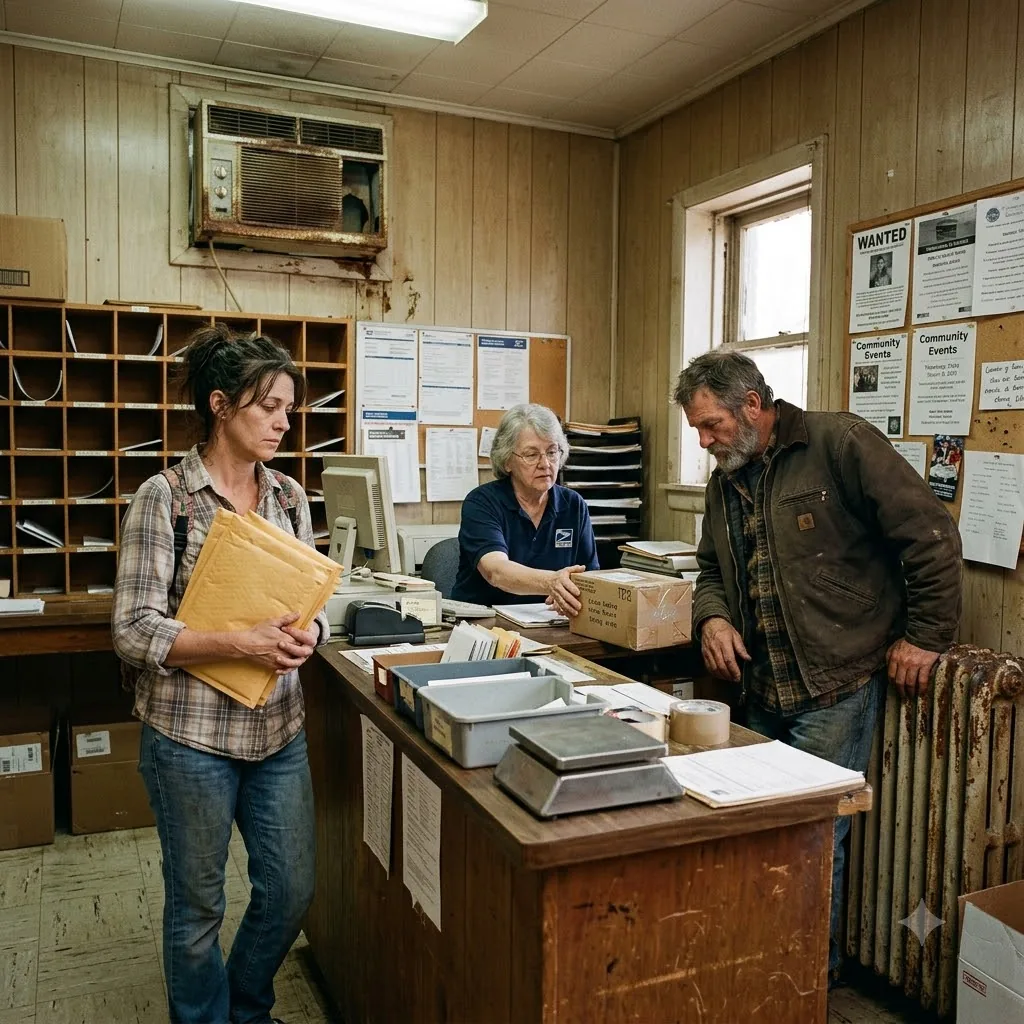
Beth stood frozen by her car door, watching his retreating back until he disappeared around the corner of the post office.
She looked down at the torn pieces of his ledger. A sickening realization settled deep in her stomach, colder than the air conditioning of the clinic. The politicians in the state capital hadn’t just banned the pills. They had engineered something vastly more malicious. They didn’t need to fund a task force or hire more police to enforce the new laws. They had simply looked at the shuttered factories, the empty bank accounts, and the pervasive despair of towns like Oakhaven, and they had dangled a ten-thousand-dollar carrot.
It was a system designed to make the poorest, most desperate citizens cannibalize each other. The politicians stayed clean, sitting in their air-conditioned chambers, while men like Dwayne were driven to hunt nurses like her just to keep a roof over their children’s heads.
Beth finally unlocked her car door and slid into the suffocating heat of the driver’s seat. She pulled the heavy canvas tote bag into her lap and unzipped it. The five remaining bubble-mailers stared back at her.
In the top left corner of every single package, the mandatory, legally required return address of the Chicago NGO sat boldly on the label.
The NGO demanded those labels for their own compliance, their own legal shielding. But out here, on the ground, those labels were a death sentence. They were neon signs practically begging desperate neighbors to claim the bounty. Beth traced the edge of the printed logo with her thumb.
She wasn’t going to be prey, and she refused to let the state turn the rest of her neighbors into predators.
Beth reached into the bag and began tearing the labels off the packages. She couldn’t use the NGO anymore. She couldn’t rely on their tracking numbers, their official packaging, or their out-of-state money. If she was going to keep supplying the women of Oakhaven, she had to cut the official ties completely. She would have to rebuild the network locally, entirely off the grid, hand-to-hand and completely untraceable.