Story code: ST-001119
Part 1: The Breach
The Sector 4 perimeter breach siren did not sound like a warning, but rather a profound, intoxicating validation. Ten years of quiet mockery, whispered jokes behind his back, and agonizing isolation evaporated in the single, piercing shriek of the proximity sensors at the outer boundary. It was finally happening. Arthur set down his coffee mug on the stainless-steel counter without spilling a single drop. His hand did not shake. The adrenaline hit his bloodstream exactly as he had planned during a decade of relentless, obsessive drills.
He moved to the central command console, his boots squeaking softly against the antimicrobial epoxy floor. His fingers danced across the illuminated panels with the ingrained muscle memory of a concert pianist. This was his masterpiece coming to life. Deadbolt sequence alpha, engaged. Magnetic locks on the subterranean ventilation shafts, sealed. The main blast doors slammed shut deep within the compound, emitting a hydraulic hiss that reverberated through the floorboards like the exhalation of a sleeping dragon.
His hollow success, the millions of dollars liquidated and poured into reinforced concrete, off-grid solar arrays, and deep-water wells, suddenly had an ironclad purpose. The sprawling underground facility was no longer a monument to his paranoia. It was the ultimate expression of foresight. He was safe, sealed inside a perfect ecosystem of his own design, while the unprepared masses were finally facing the consequences of their fragile society outside.
Arthur pivoted in his leather chair to face the wall of security monitors, ready to assess the threat. Sector 1 showed the empty, heavily forested access road. Sectors 2 and 3 displayed the dense, engineered thorn bushes swaying violently in the gathering wind. But the grid for Sector 4, the vulnerable western flank nestled against a steep, rocky ravine, was a patchwork of gray static and dark brown smears.
He leaned closer to the high-definition displays, his brow furrowing. The primary optics were entirely dark. The backup infrared lenses showed only a muted, shifting temperature gradient. It was not a hardware malfunction or a power surge. Thick, wet clay had been deliberately slapped over the reinforced glass of the camera housings.
A cold spike of tactical respect pierced his rising excitement. These were not panicked, disorganized looters stumbling blindly through the woods in search of canned goods. They were coordinated. They knew exactly where the motion trackers ended and the camera arcs began. They had crawled through the ravine mud, staying low below the thermal sweeps, specifically to blind his eyes on the western flank.
Arthur stood up and unholstered his sidearm from his hip, the heavy steel a comforting, familiar anchor against his thigh. He bypassed the remote intercom system entirely. If these intruders had the skill to neutralize the cameras without tripping the secondary tamper alarms, they might have rigged the exterior speakers to backfeed an audio spike. They might just be waiting in the blind spot, preparing thermal lances to breach the outer gate hinges. He needed a direct visual assessment. He needed to look the end of the world in the eye.
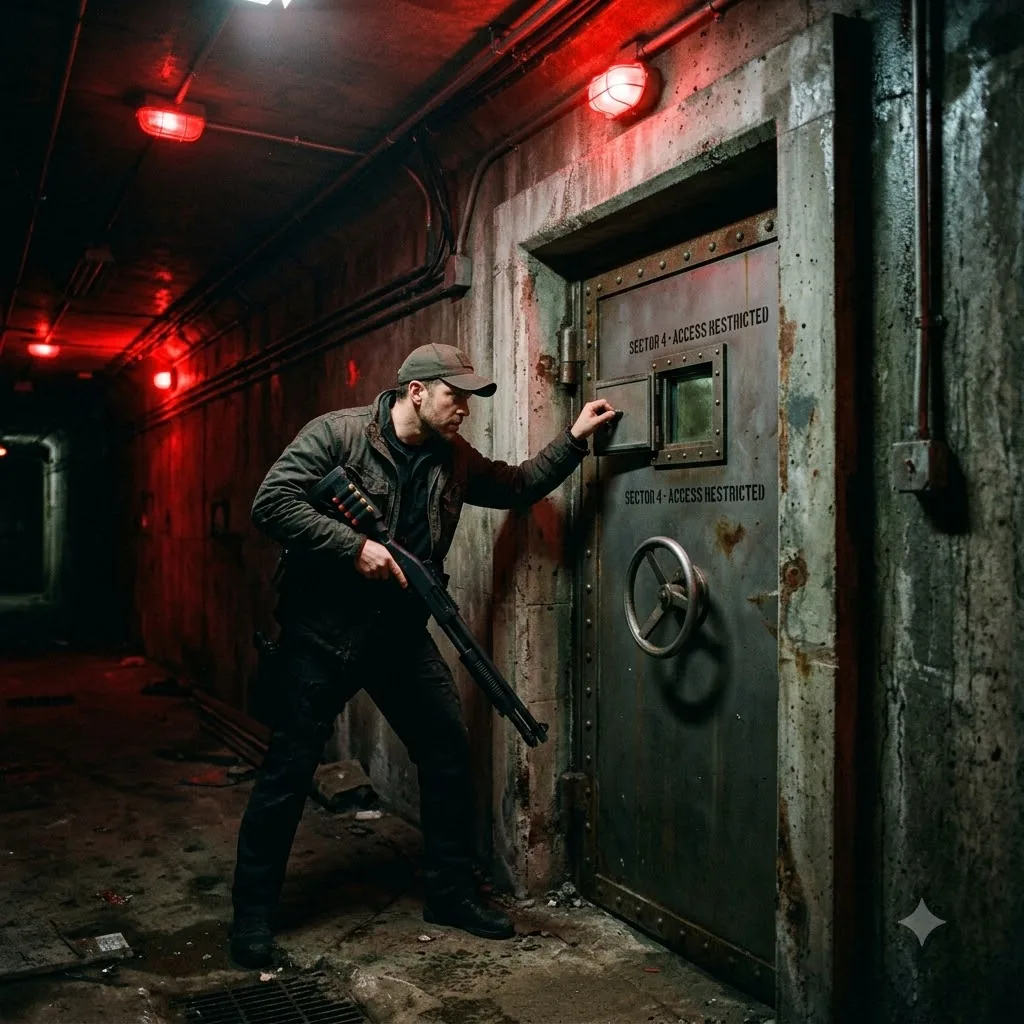
The primary access tunnel was bathed in a harsh, pulsing red emergency light. His heavy footsteps echoed off the curved, corrugated steel walls. Every stride was a physical testament to his preparation. Ten years of holidays spent alone down here, ten years of missed birthdays and unreturned phone calls, all leading to this absolute pinnacle of self-reliance. He felt a grim smile tugging at the corners of his mouth. Let them try to take it. He had kinetic defenses, chemical deterrents, and enough ammunition to hold out until the next ice age. The perimeter wall was three feet of solid, rebar-reinforced concrete.
He reached the inner side of the Sector 4 secondary gate, a massive bulkhead designed to withstand a direct blast. Beyond it lay a ten-foot concrete kill box, and then the primary titanium outer door holding back the wilderness. The siren continued its rhythmic, deafening pulse throughout the corridor, a steady heartbeat of crisis. Over the electronic wail, he could hear a faint, metallic scratching against the outer hull. They were already at the physical threshold, working on the lock housing.
Arthur stepped up to the reinforced threshold. He disengaged the manual override for the observation slot. The heavy locking bar slid back with a loud, metallic clack, intentionally announcing his presence to whoever stood on the other side. He did not care about stealth anymore. He held all the tactical advantages in this fortress. He gripped the brass handle of the armored viewport, taking one slow, controlled breath to steady his racing heart and prepare for the sight of armed scavengers.
He yanked the heavy steel plate down and pressed his face to the thick ballistics glass.
The muddy, exhausted face staring back at him from the other side of the viewport belonged to his daughter.
The Sector 4 perimeter breach siren did not sound like a warning, but rather a profound, intoxicating validation. Ten years of quiet mockery, whispered jokes behind his back, and agonizing isolation evaporated in the single, piercing shriek of the proximity sensors at the outer boundary. It was finally happening. Arthur set down his coffee mug on the stainless-steel counter without spilling a single drop. His hand did not shake. The adrenaline hit his bloodstream exactly as he had planned during a decade of relentless, obsessive drills.
He moved to the central command console, his boots squeaking softly against the antimicrobial epoxy floor. His fingers danced across the illuminated panels with the ingrained muscle memory of a concert pianist. This was his masterpiece coming to life. Deadbolt sequence alpha, engaged. Magnetic locks on the subterranean ventilation shafts, sealed. The main blast doors slammed shut deep within the compound, emitting a hydraulic hiss that reverberated through the floorboards like the exhalation of a sleeping dragon.
His hollow success, the millions of dollars liquidated and poured into reinforced concrete, off-grid solar arrays, and deep-water wells, suddenly had an ironclad purpose. The sprawling underground facility was no longer a monument to his paranoia. It was the ultimate expression of foresight. He was safe, sealed inside a perfect ecosystem of his own design, while the unprepared masses were finally facing the consequences of their fragile society outside.
Arthur pivoted in his leather chair to face the wall of security monitors, ready to assess the threat. Sector 1 showed the empty, heavily forested access road. Sectors 2 and 3 displayed the dense, engineered thorn bushes swaying violently in the gathering wind. But the grid for Sector 4, the vulnerable western flank nestled against a steep, rocky ravine, was a patchwork of gray static and dark brown smears.
He leaned closer to the high-definition displays, his brow furrowing. The primary optics were entirely dark. The backup infrared lenses showed only a muted, shifting temperature gradient. It was not a hardware malfunction or a power surge. Thick, wet clay had been deliberately slapped over the reinforced glass of the camera housings.
A cold spike of tactical respect pierced his rising excitement. These were not panicked, disorganized looters stumbling blindly through the woods in search of canned goods. They were coordinated. They knew exactly where the motion trackers ended and the camera arcs began. They had crawled through the ravine mud, staying low below the thermal sweeps, specifically to blind his eyes on the western flank.
Arthur stood up and unholstered his sidearm from his hip, the heavy steel a comforting, familiar anchor against his thigh. He bypassed the remote intercom system entirely. If these intruders had the skill to neutralize the cameras without tripping the secondary tamper alarms, they might have rigged the exterior speakers to backfeed an audio spike. They might just be waiting in the blind spot, preparing thermal lances to breach the outer gate hinges. He needed a direct visual assessment. He needed to look the end of the world in the eye.
The primary access tunnel was bathed in a harsh, pulsing red emergency light. His heavy footsteps echoed off the curved, corrugated steel walls. Every stride was a physical testament to his preparation. Ten years of holidays spent alone down here, ten years of missed birthdays and unreturned phone calls, all leading to this absolute pinnacle of self-reliance. He felt a grim smile tugging at the corners of his mouth. Let them try to take it. He had kinetic defenses, chemical deterrents, and enough ammunition to hold out until the next ice age. The perimeter wall was three feet of solid, rebar-reinforced concrete.
He reached the inner side of the Sector 4 secondary gate, a massive bulkhead designed to withstand a direct blast. Beyond it lay a ten-foot concrete kill box, and then the primary titanium outer door holding back the wilderness. The siren continued its rhythmic, deafening pulse throughout the corridor, a steady heartbeat of crisis. Over the electronic wail, he could hear a faint, metallic scratching against the outer hull. They were already at the physical threshold, working on the lock housing.
Arthur stepped up to the reinforced threshold. He disengaged the manual override for the observation slot. The heavy locking bar slid back with a loud, metallic clack, intentionally announcing his presence to whoever stood on the other side. He did not care about stealth anymore. He held all the tactical advantages in this fortress. He gripped the brass handle of the armored viewport, taking one slow, controlled breath to steady his racing heart and prepare for the sight of armed scavengers.
He yanked the heavy steel plate down and pressed his face to the thick ballistics glass.
The muddy, exhausted face staring back at him from the other side of the viewport belonged to his daughter.